 Temporary closure of Flower Field at Flower Dome on Thu, 8 Oct 2026
A section of the Flower Field at Flower Dome will be temporarily closed on Thu, 8 Oct 2026, from 6.30pm to 7.30pm for a launch event. The rest of Flower Dome will remain open and accessible to visitors.
Advisory for use of tripods at Disney Garden of Wonder at Floral Fantasy
For a better visiting experience and facilitate crowd movement, we seek your kind understanding that usage of tripods and camera stands will not be permitted in Floral Fantasy.
Bay South–Bay East Bridge Construction from 4 May 2026
To facilitate the construction of the bridge linking Bay South Garden and Bay East Garden, there will be no access for cyclists along the Waterfront Promenade from 4 May 2026. During the construction of the bridge, cyclists heading towards Marina Barrage are advised to take an alternative route around the perimeter of Bay South Garden. Pedestrians may still access the Waterfront Promenade, with a slight diversion to their route.
Click here to download the diversion map.

{{ suggestion.item }}
{{ noOfResults }} results found for "{{ submittedQuery }}"
Filter by
({{ currentFilters.length }})

Showing {{ searchResults.length }} out of {{ noOfResults }}
{{ result.category.label }}
We’re sorry. 0 results found for "{{ submittedQuery }}"
Try doing these:
- Check your spelling
- Try more general words
- Try different keywords
The Shining Coelogyne (Coelogyne nitida)
Secret Garden, Cloud Forest (near the miniature orchids display)
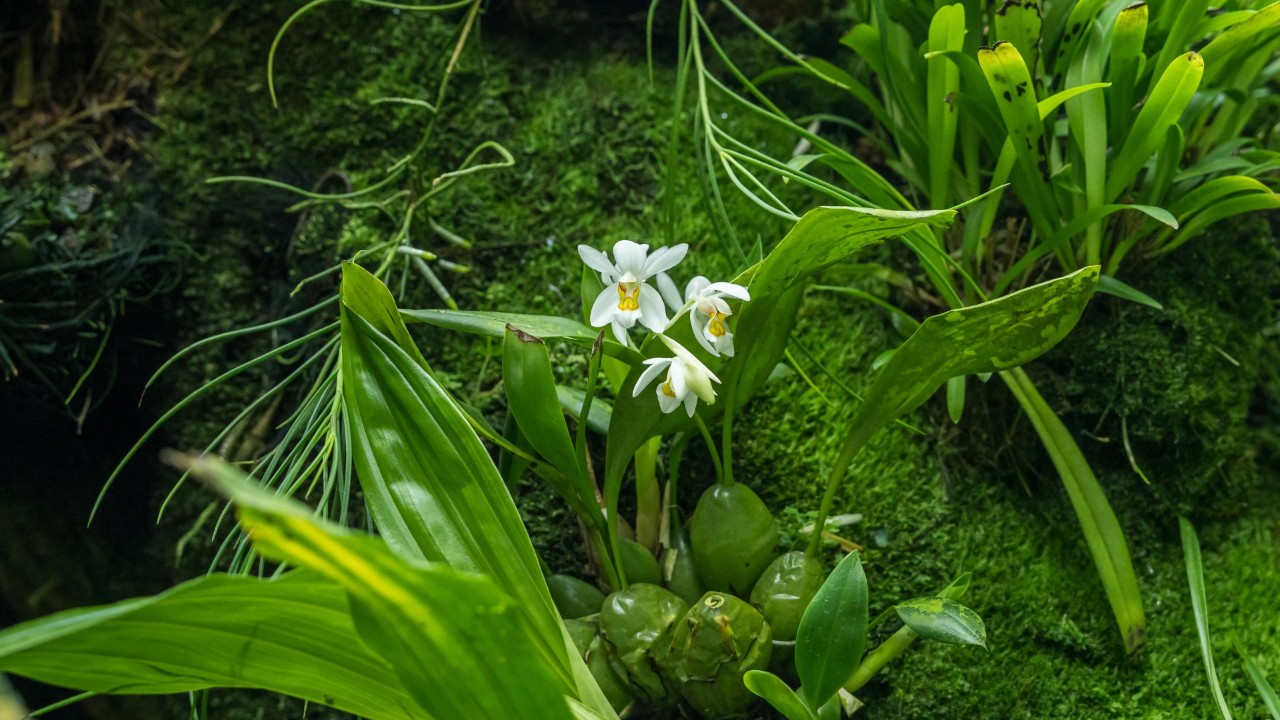 Coelogyne nitida growing on a piece of driftwood in Secret Garden, Cloud Forest. Other than the bright white flowers, did its round, shiny pseudobulbs catch your attention too?
The genus Coelogyne comprises an approximate of 200 species, distributed throughout tropical and subtropical Asia, from the Himalayas and Sri Lanka eastward though southern China, peninsular Southeast Asia, Indonesia, Papua New Guinea, and the Pacific Islands. Most of the Coelogyne species are found in these three main areas: Borneo, Sumatra, and the Himalayan mountain range. The majority of the Coelogyne species are epiphytic and can be found growing on large trees in primary forests, though some species can also be lithophytic and occasionally terrestrial. They can be found occurring in a wide range of elevations, ranging from sea-level to as high as 3000m elevation in alpine forests, with many of them being adapted to cool, montane conditions.
Coelogyne nitida, commonly known as the shining coelogyne, is a medium-sized, cool-growing epiphyte about 20-30cm in height native to the montane forests of the Himalayas and Southeast Asia, at altitudes between 1300 m and 2600 m. The genus name Coelogyne is derived from the Greek word koilos, meaning hollow and gyne, meaning woman, referring to the concave column characteristic of the genus. In contrast, the specific epithet nitida is derived from Latin, meaning ‘shiny’ or ‘glossy’, referring to the shiny surface of the pseudobulbs – the swollen stem bases characteristic of many species of sympodial orchids.
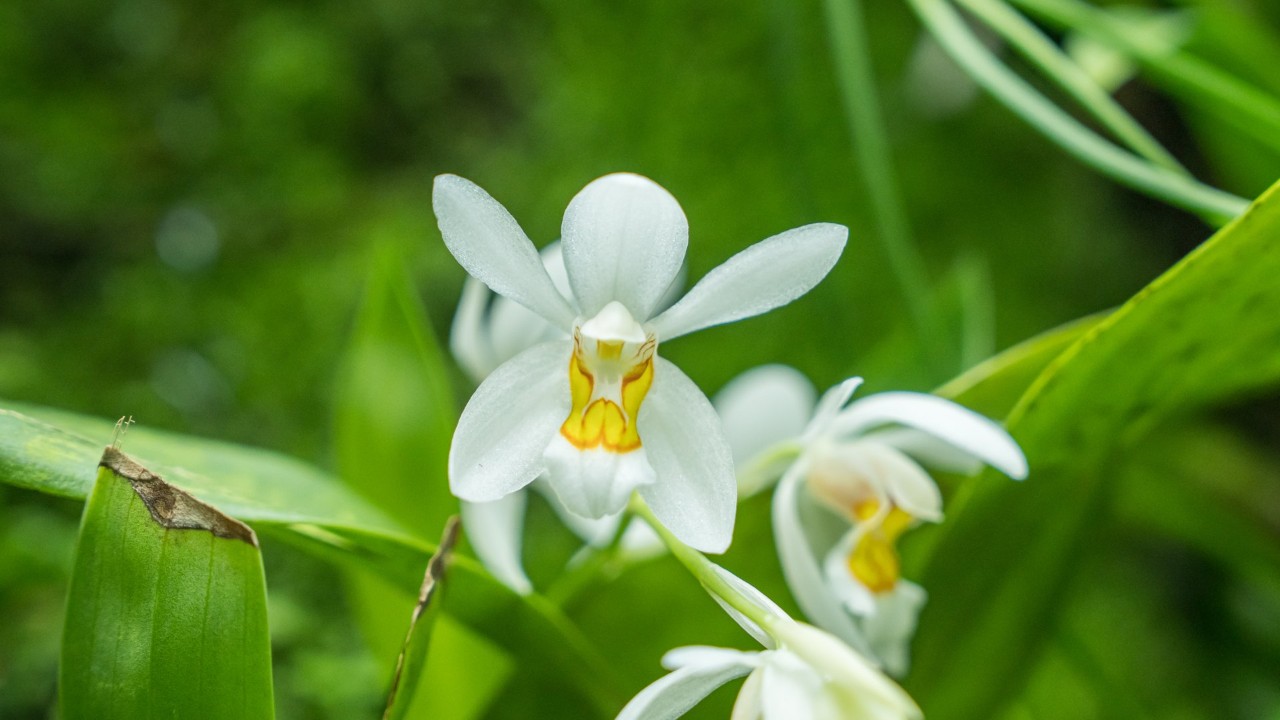 Closeup of the flower. Look at its unique yellow blotches on the lip!
The flowers are white and star-shaped, about 4cm across, with contrasting bright yellow eye-like blotches on the labellum or lip petal. These striking markings serve a deceptive function – they mimic pollen masses which attract pollinators that comes for a nectar reward but instead are tricked into helping to transfer pollen between flowers. The flowers of the shining coelogyne are one of the most fragrant of their genus, with a musky scent that helps attract their pollinators, including insects from two groups: Hymenoptera (which consists of wild bees, bumblebees and wasps) and Diptera (such as hoverflies). These insects will be lured in by the scent and the eye-catching yellow, pollen-like blotches, landing on the labellum of the flower. As they crawl inwards through the narrow passage between the lip and the column, their backs will brush against the rostellum, which sticks the pollen to its back. When they visit another flower and repeat the process, the pollen will rub against the stigma, completing pollination in the process.
Come and try to spot this species at the Secret Garden in Cloud Forest, near the miniature orchid display corner!
Written by: Ng Yu Qin, Senior Horticulturist, Research and Horticulture
Yu Qin is always looking for ways to pick up new skills and put them to use. Photography is one of her hobbies and she enjoys photographing the beautiful flora in the gardens. She spends most of her time with orchids and enjoys learning something new about them every day!
This article is part of our What's Blooming series.
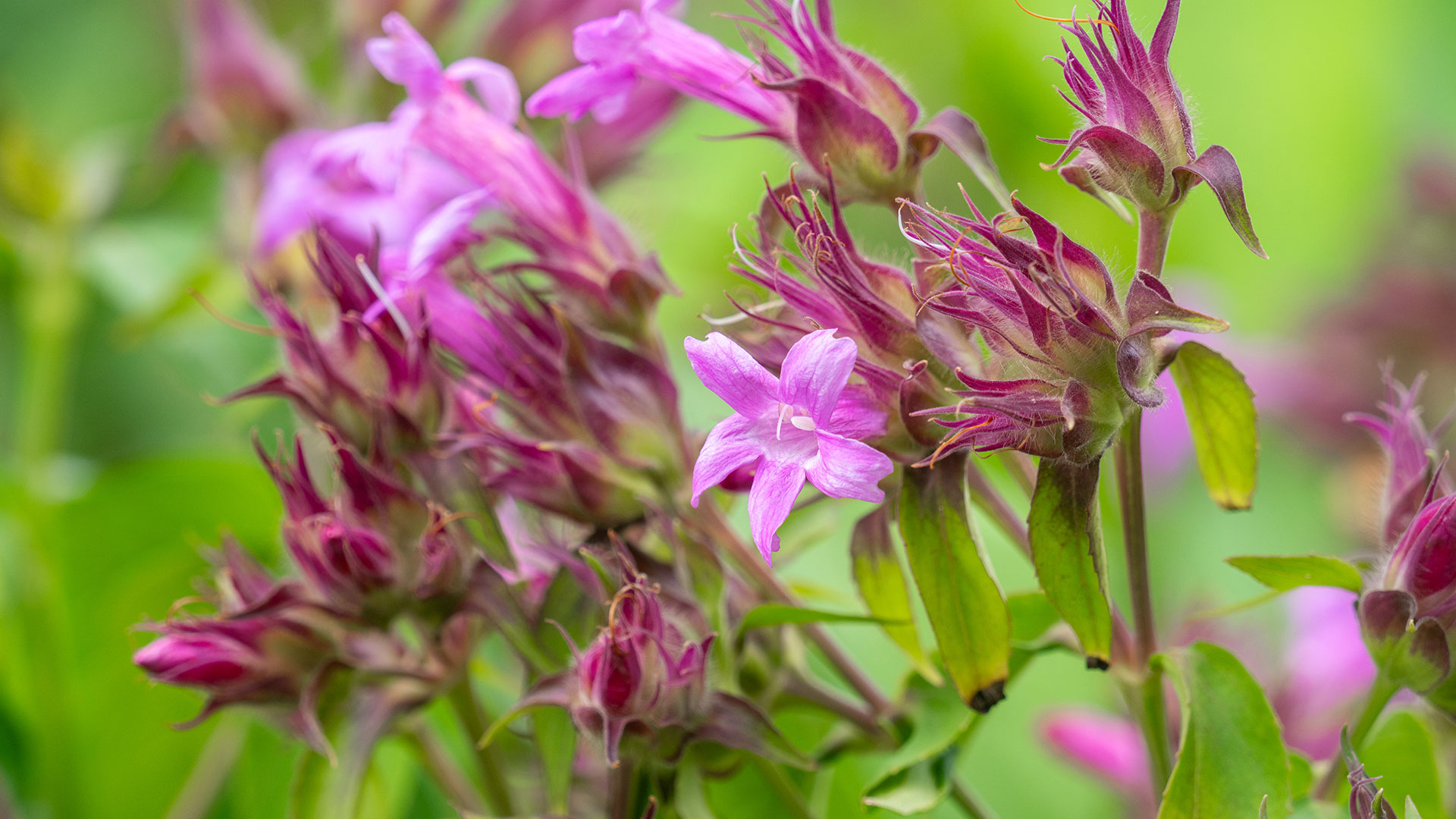
Read Next: Columbian Petunia (Suessenguthia multisetosa)
Love petunias? Step outside the conservatories and meet this pinkish-purple petunia lookalike blooming right here in our Outdoor Gardens!
You may also be
interested in
 Back To Top