 Closure of Cloud Forest on 26 Oct 2026
Cloud Forest will be closed on 26 Oct 2026 for Maintenance.
Traffic Advisory for Garmin Run Marathon Series 2026 Singapore on Sun, 25 Oct 2026
Please note the following carpark arrangements to facilitate the Garmin Run Marathon Series 2026 Singapore:
- Satay by the Bay Carpark: Closed from 12.01am to 8.00am.
- Main Entrance Basement Carpark: Opens earlier at 3.00am.
- Bayfront Plaza and The Meadow Carparks: Remain accessible throughout the event.
Traffic delays may be expected at the Gardens' carparks due to the Garmin Run Marathon Series 2026 Singapore.
For more details, click here for more details.
Advisory for use of tripods at Disney Garden of Wonder at Floral Fantasy
For a better visiting experience and facilitate crowd movement, we seek your kind understanding that usage of tripods and camera stands will not be permitted in Floral Fantasy.
Bay South–Bay East Bridge Construction from 4 May 2026
To facilitate the construction of the bridge linking Bay South Garden and Bay East Garden, there will be no access for cyclists along the Waterfront Promenade from 4 May 2026. During the construction of the bridge, cyclists heading towards Marina Barrage are advised to take an alternative route around the perimeter of Bay South Garden. Pedestrians may still access the Waterfront Promenade, with a slight diversion to their route.
Click here to download the diversion map.

{{ suggestion.item }}
{{ noOfResults }} results found for "{{ submittedQuery }}"
Filter by
({{ currentFilters.length }})

Showing {{ searchResults.length }} out of {{ noOfResults }}
{{ result.category.label }}
We’re sorry. 0 results found for "{{ submittedQuery }}"
Try doing these:
- Check your spelling
- Try more general words
- Try different keywords
Victoria Water Lilies (Victoria spp.)
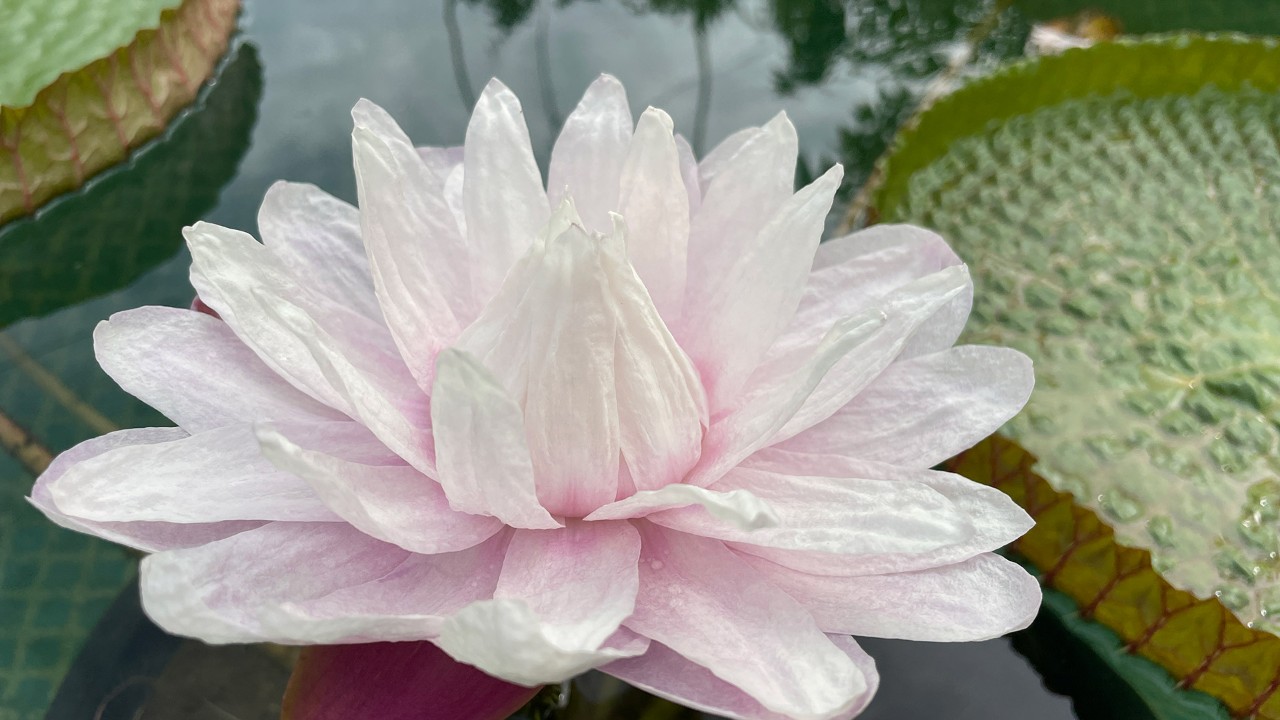
Deep in the forests and floodplains, floating on the warm, still waters of rivers in tropical South America live three Victoria water lily species (Victoria amazonica, V. cruziana, and V. boliviana). Famous for their leaves, which can grow 2-3m in diameter, a single plant can cover over 1500 sq. feet – that’s about the area of a three to four bedroom HDB apartment!
Known to the Guarani people of Paraguay as irupé – “water platter” – their origin folktale of Victoria cruziana is that of a beautiful maiden who fell in love with the reflection of the moon in a lake and drowned trying to reach it. The gods took pity on her, transforming her into a majestic aquatic plant whose night blooming flowers gazed up at the sky and whose high-rimmed, circular leaves resembled the full moon.
British explorers, astonished by the giant leaves and intricate, night-blooming flowers, named an even larger species Victoria regia (later renamed V. amazonica) to honour the newly crowned Queen Victoria in 1837. After seeds of V. amazonica British gardener and architect Joseph Paxton first successfully coaxed a plant of Victoria amazonica to flower in 1849, grown in his custom-designed, indoor, heated pond at Chatsworth House. Inspired by the natural engineering of intricately branched, air-filled girders that support the leaves’ huge width – and weights over 80kg - Paxton adopted the cross-braced system to support the cast iron and glass structure of the Crystal Palace for the Great Exhibition of 1851 in London’s Hyde Park. Reconstructed at Sydenham, the Crystal Palace was the first glasshouse to showcase Victoria water lilies in an Ancient Egypt-themed display - not Gardens by the Bay’s 2026 Lilytopia display!
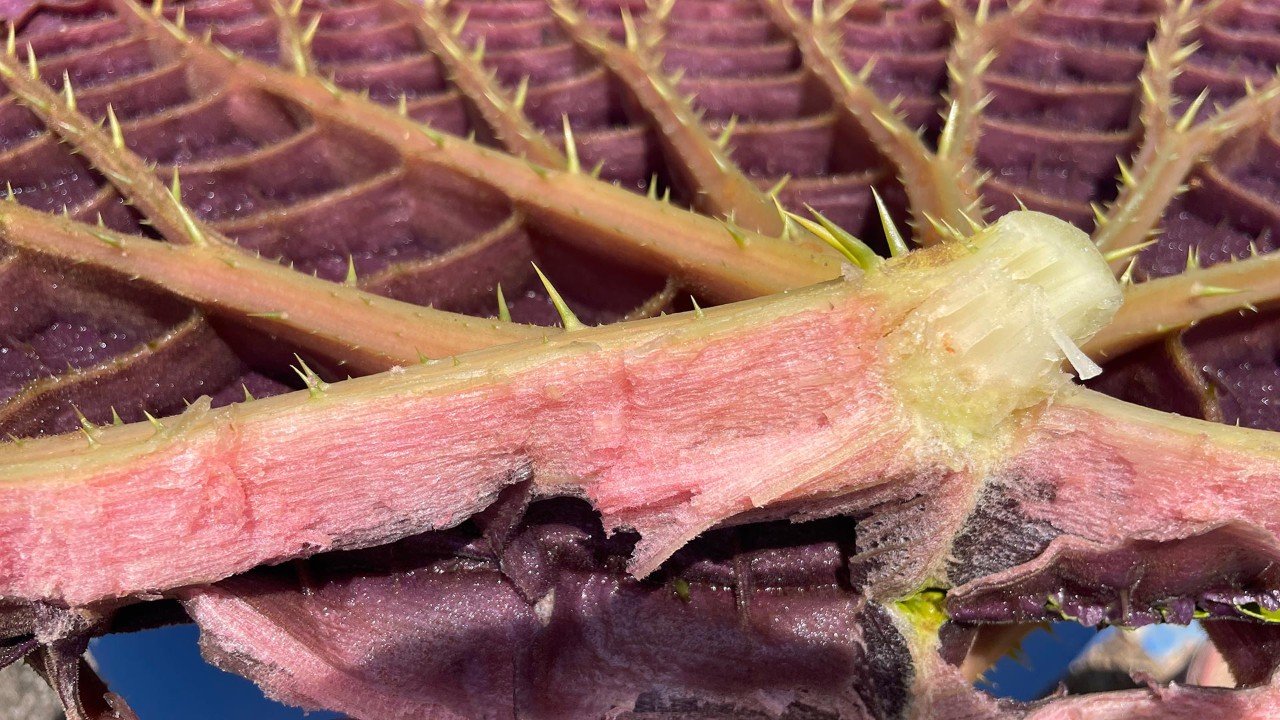 How do the Victoria waterlilies support their giant leaves up to 2-3m in diameter? By marvellous natural engineering! Thick, strong cross-braced veins form a network of branching ribs along the leaf undersides, providing strength. The buoyant, air-filled tissue inside the ribs, shown in this midrib cross-section on the underside of a V. amazonica leaf, allows the huge leaves to float, while sharp prickles deter hungry animals from munching the juicy insides.
Victoria water lilies are famous for their giant leaves, but their night-blooming flowers are equally amazing! Each 20 to 30cm flower lasts only 48 hours, slowly opening at sunset and closing by day in an intricate dance with their scarab beetle pollinators.
On the first night, the flower opens with bright white petals, a pineapple-like scent, and a high metabolic rate, warming the air in the stigmatic chamber by up to 5°C! Its colour, scent, and heat attract scarab beetles which bring pollen from other plants, feed on the inner flower parts, and mate.
Closing the following morning with well-fed beetles still inside, the flower turns off the heat and becomes pink, making it less visible and attractive at night. On the second night, it reopens, shedding its own pollen over the beetles as they fly out to other flowers.
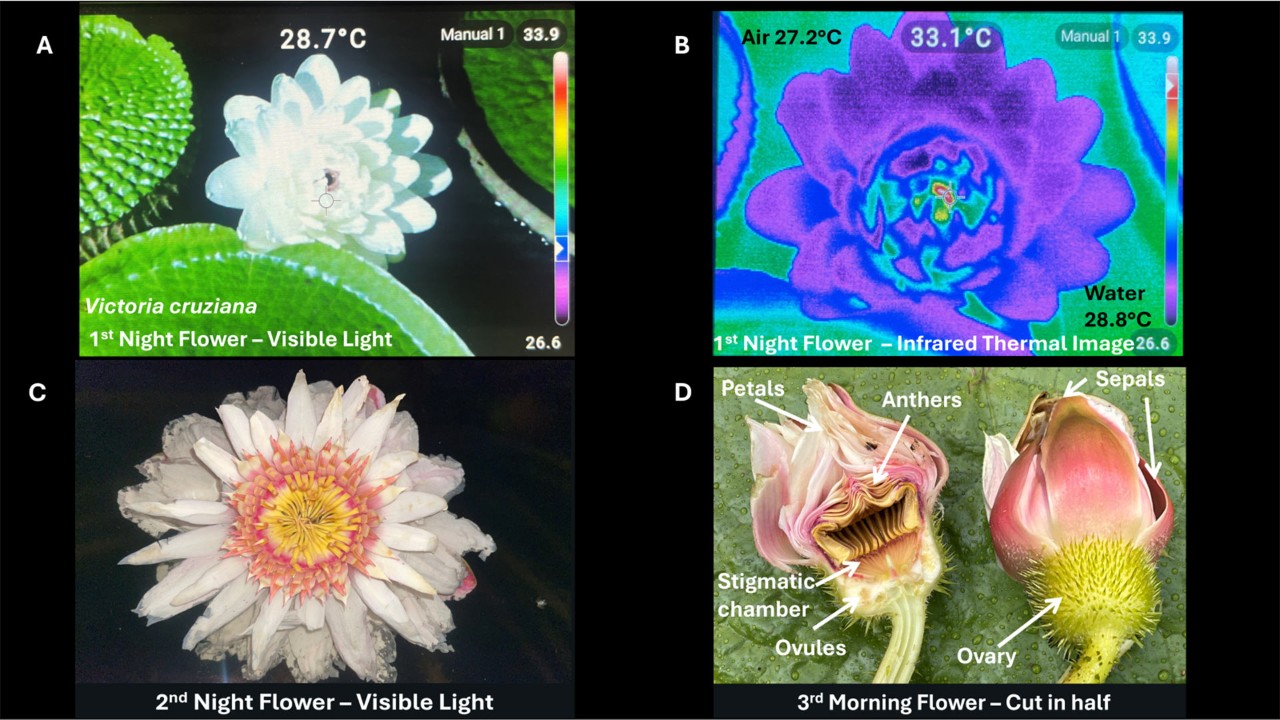 The colour changing, self-heating properties of Victoria flowers are illustrated in this photo montage of V. cruziana flowers. On the first night the white flower(A) is functionally female. It generates heat (B, red and orange areas) in its stigmatic chamber (D), to attract heat-seeking beetles to bring pollen from other plants. The second night (C) the flower turns pink, ceases to produce heat, and becomes functionally male, releasing pollen and pollinators to other plants.
Our Ancient Egypt-themed Lilytopia display brings together several species in the water lily family (Nymphaeaceae), described below, in an amazing showcase of diversity. The original "lotus" of Egyptian art, culture, and religion is modelled on two native species, the day-blooming blue water lily (Nymphaea nouchali var. caerulea) and night-blooming white water lily (Nymphaea lotus), recorded as early as 2400 BCE.
The true lotus (Nelumbo nucifera), a member of a different family, the lotus family (Nelumbonaceae) arrived much later during Persian rule in the 5th–6th centuries BCE. While the Victoria water lilies originated in not in the Nile River, but in and around the Amazon River basin in tropical South America, as the largest species in the water lily family, their impressive plant and leaf size quite befits the grandeur of Ancient Egyptian architecture in our display!
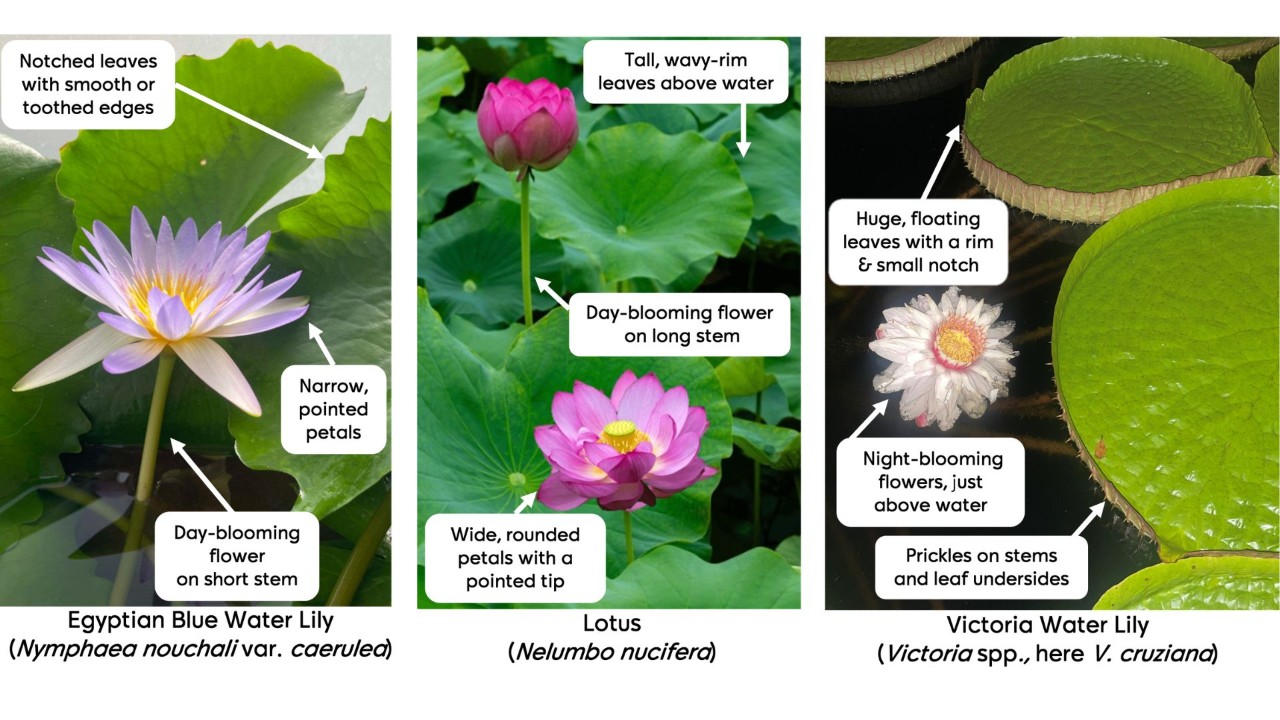 Here’s a handy visual guide to differentiate water lilies (left), lotus (centre) and the Victoria water lilies (right) from their leaves, flowers and bloom habits.
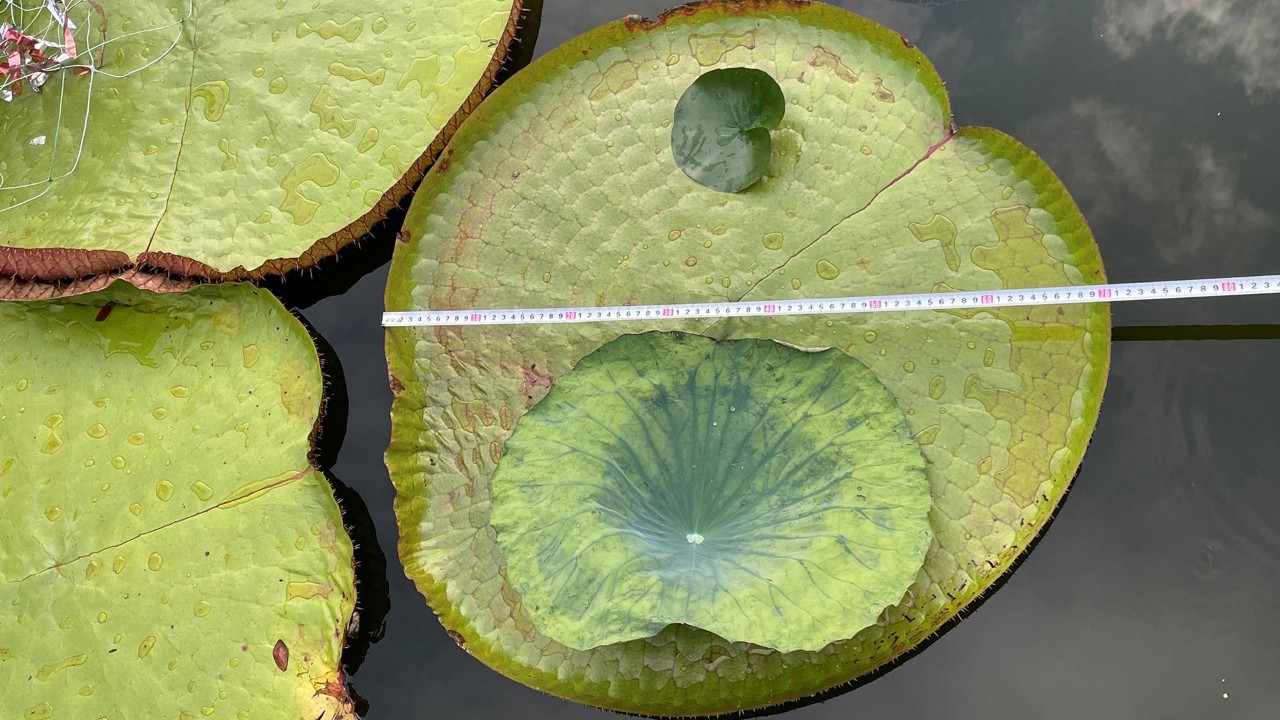 Even a small Victoria amazonica leaf just 70cm in diameter dwarfs a hardy water lily leaf 13 cm in diameter (top of large leaf) and a lotus leaf 44cm diameter (bottom of large leaf)!
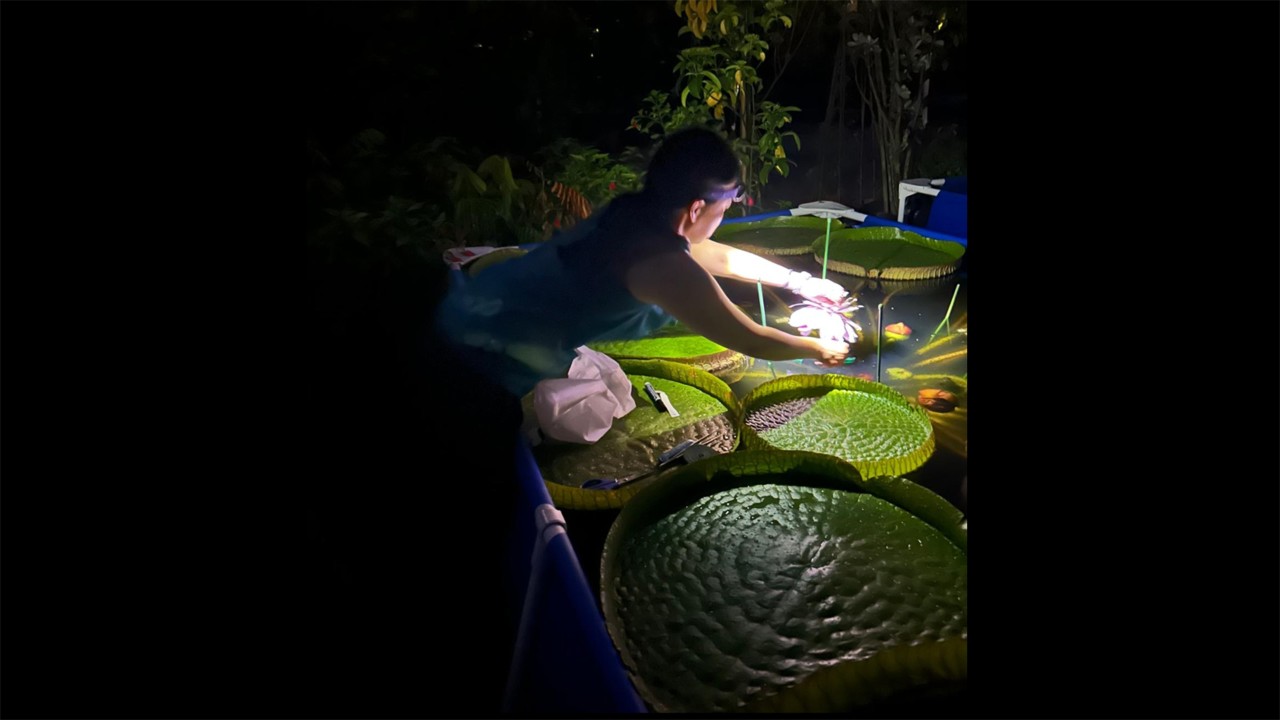 Hand-pollinating the Victoria’s night-blooming flowers required lots of core strength and dexterity to avoid getting pricked too severely! The large leaves made convenient floating tables to hold all our pollination tools and supplies.
The Victoria cruziana and V. amazonica water lilies in this Lilytopia display are quite special in that we grew them ourselves in an exhausting but rewarding process that took 1.5 years and two generations of plants. Not to mention countless late nights hand-pollinating plants with a headlamp, forceps and utility knife, while trying to avoid getting poked by the prickles all over the stems, leaves, and even flowers of the plants!
Now, having collected over 1,200 pure bred, hybrid, and naturally pollinated seed, we’ve also produced enough plants not just for the Lilytopia display but to repopulate our outdoor lakes and ponds and share with other gardens as well!
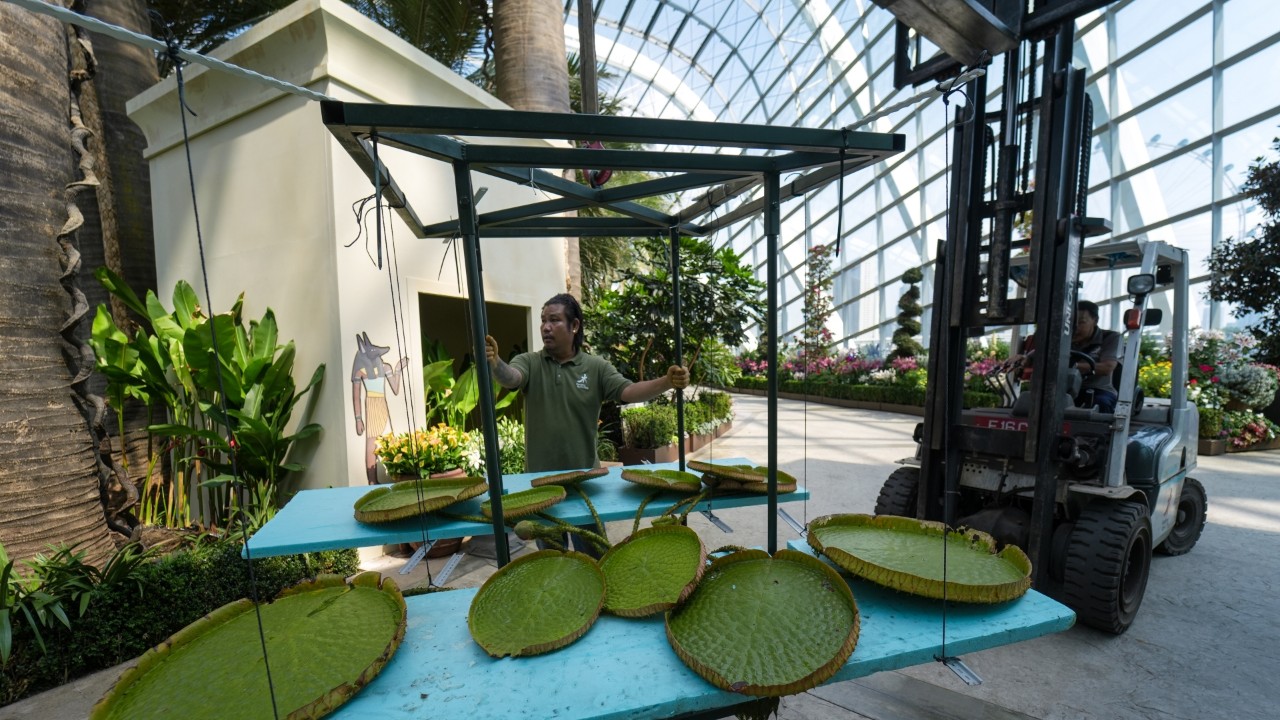 Transport and installation of the Victorias from their back-of-house nursery to their display pools inside Flower Dome required weeks of detailed planning and precision engineering to ensure the plants could be safely moved without unnecessary damage.
How did we get such huge plants into the Flower Dome from their outdoor nursery pools? Using a unique contraption designed to support the prickly plants with minimal damage to both plants and people alike! Edwin Ong, Senior Technical Specialist from Garden Operations, shown here driving the forklift, designed and built this modular platform and leaf support system to carefully support the delicate, prickly leaves and heavy root ball of each individual Victoria plant on its way to the Flower Dome.
Visit our Victoria water lilies in our ongoing Lilytopia display from now to 27 September, 2026. Marvel at the size of their leaves, test your newfound ability to tell them apart from lotus and other waterlilies, and see if you are lucky enough to catch one in bloom after dark! Then, go outside and see if you can find more plants around our outdoor gardens, in Waterlily Pond, Dragonfly Lake, and Serene Garden.
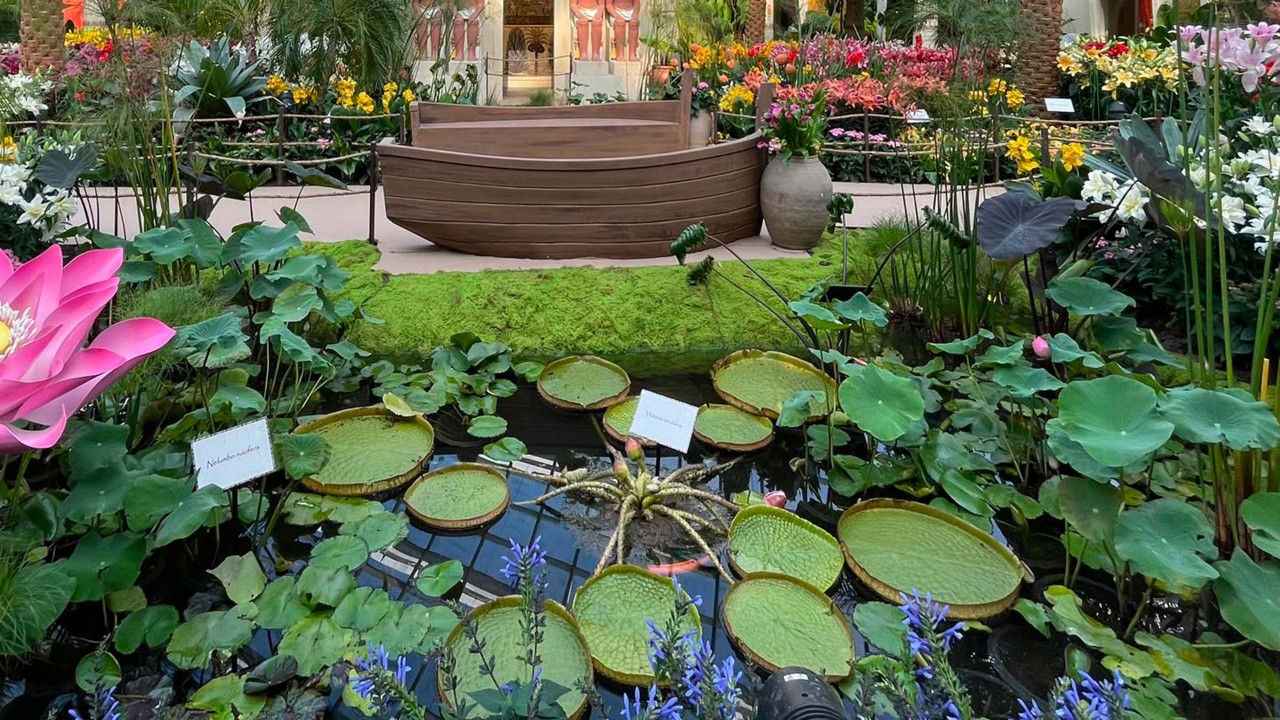 After 1.5 years of planning, learning, and growing, here is one of our Victoria cruziana plants on full display in Flower Field. Can you find the flower buds at the centre of the plant?
Written by: Janelle Jung, Senior Researcher (Research and Horticulture)
A transplanted pake (Hawai'i-born Chinese), she's finding her own Singaporean roots. Every plant has a story, and Janelle helps discover and share these with colleagues and guests, hoping to spark a mutual plant passion! Ask her what plant she named her cat after!
This article is part of our What's Blooming series.

Read Next: The Ball Dendrobium (Dendrobium glomeratum)
Did you know some orchids flower best on bare, leafless canes? Discover the fascinating life cycle of this deciduous Indonesian Dendrobium!
You may also be
interested in
/1000x1000-thumb-waqanki-01.jpg)
 Back To Top