 Advisory for use of tripods at Disney Garden of Wonder at Floral Fantasy
For a better visiting experience and facilitate crowd movement, we seek your kind understanding that usage of tripods and camera stands will not be permitted in Floral Fantasy.
Bay South–Bay East Bridge Construction from 4 May 2026
To facilitate the construction of the bridge linking Bay South Garden and Bay East Garden, there will be no access for cyclists along the Waterfront Promenade from 4 May 2026. During the construction of the bridge, cyclists heading towards Marina Barrage are advised to take an alternative route around the perimeter of Bay South Garden. Pedestrians may still access the Waterfront Promenade, with a slight diversion to their route.
Click here to download the diversion map.

{{ suggestion.item }}
{{ noOfResults }} results found for "{{ submittedQuery }}"
Filter by
({{ currentFilters.length }})

Showing {{ searchResults.length }} out of {{ noOfResults }}
{{ result.category.label }}
We’re sorry. 0 results found for "{{ submittedQuery }}"
Try doing these:
- Check your spelling
- Try more general words
- Try different keywords
Cavendishia bracteata
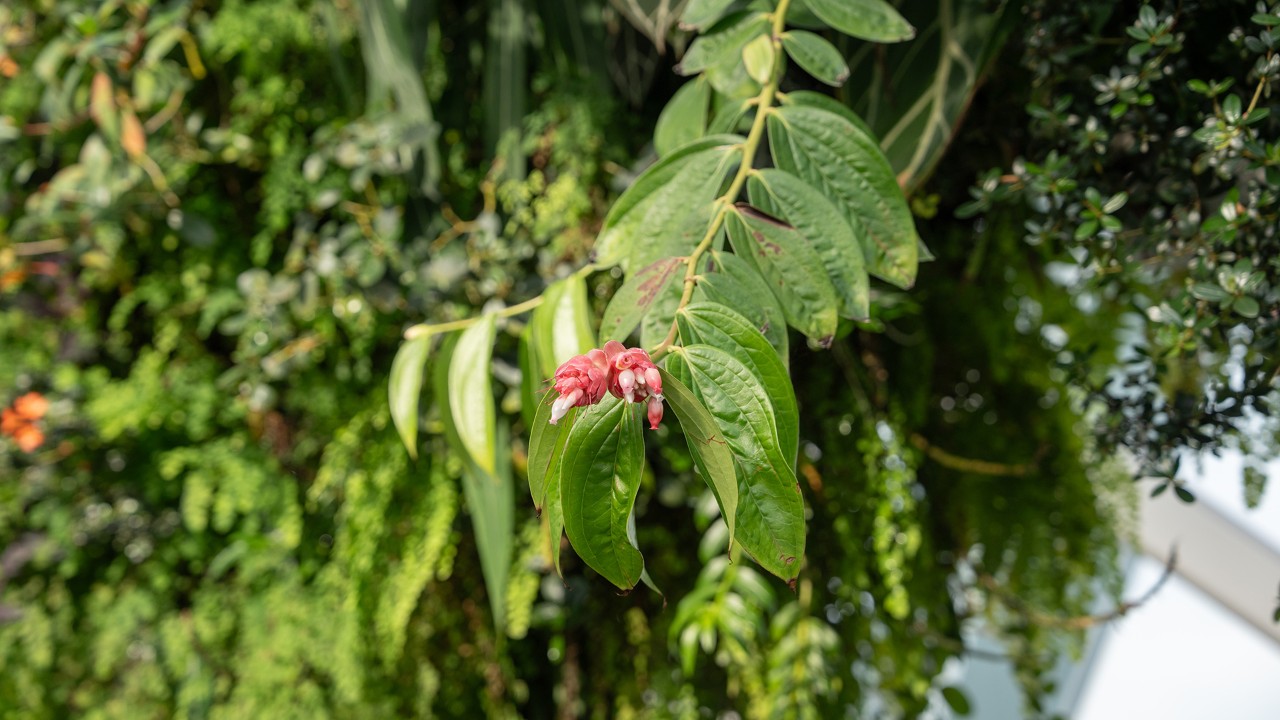 Cavendishia bracteata in bloom, hanging down from the arch before the Cloud Walk in Cloud Forest!
Cavendishia bracteata belongs to the genus Cavendishia, a diverse group of about more than 100 neo-tropical species in the heath family (Ericaceae), which also includes many edible fruits such as blueberry (Vaccinium corymbosum) and cranberry (Vaccinium macrocarpon). The genus was named in honour of Lord William George Spencer Cavendish, the 6th Duke of Devonshire (1790-1858) by John Lindley, an English botanist, in 1835. Being one of the major genera of neo-tropical endemics in the Ericaceae family, Cavendishia species are largely associated with the cool, wet uplands of tropical America, especially the cloud forests, but some species can be found in elevations ranging from 300m low tropical forests to as high as 5000m high elevation páramo - a unique and diverse range of tropical cold, humid ecosystems above the timberline in the Andes. The genus is widely distributed from Veracruz in Mexico south to northern Bolivia, with Colombia having the largest diversity. Some species are endemic only to the individual mountains they evolved on.
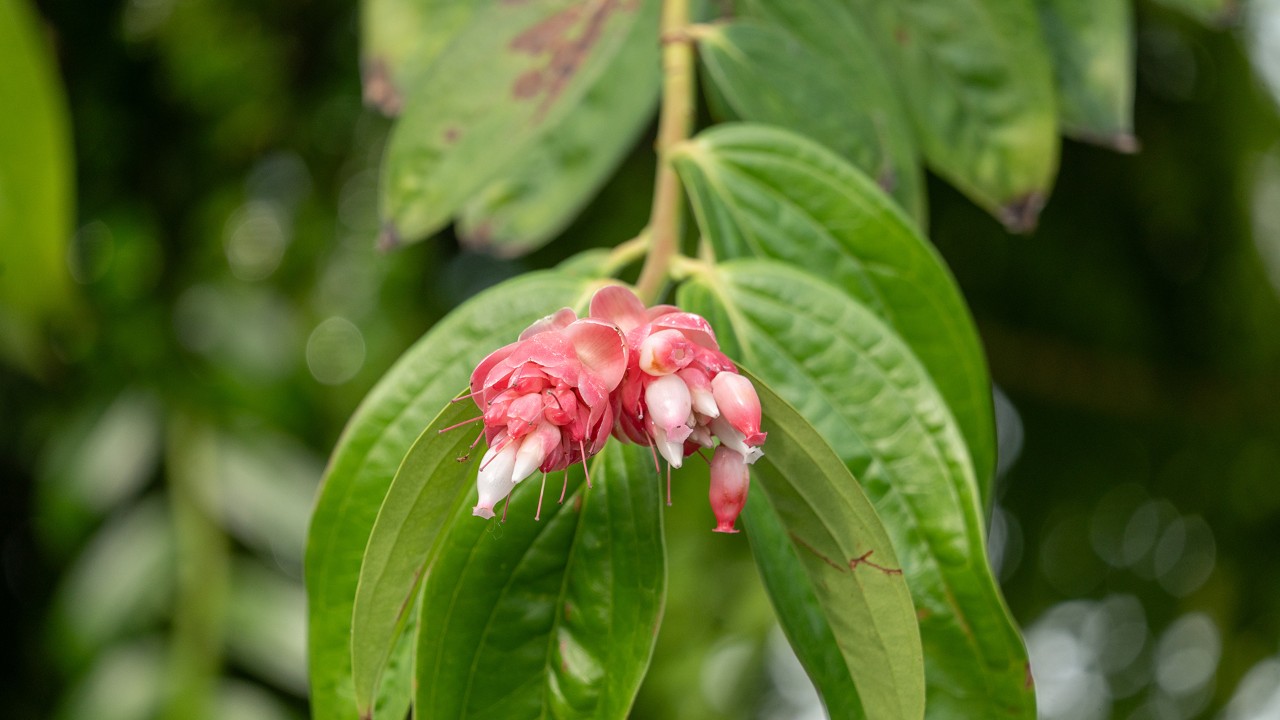 A closeup of the inflorescence of Cavendishia bracteata. Can you find any berries that are just starting to form?
Cavendishia bracteata has one of the widest native ranges of all species in its genus, stretching from the montane forests and cloud forests of southern Mexico all the way through Central America and as far south as Bolivia. The plants are morphologically very variable, ranging from shrubs from 0.5-4m tall to small trees up to 15m tall, and may be either terrestrial, growing on the ground, or epiphytic, growing on the branches of larger trees, likely from seed deposited in the droppings of the birds that consume its fruits. Depending on its population and form, its leaves can range in shape from oblong or oval to lance-shaped (lanceolate) from as small as 2.5cm in length, to as long as 22cm, with newly emerged leaves a bright red in colour.
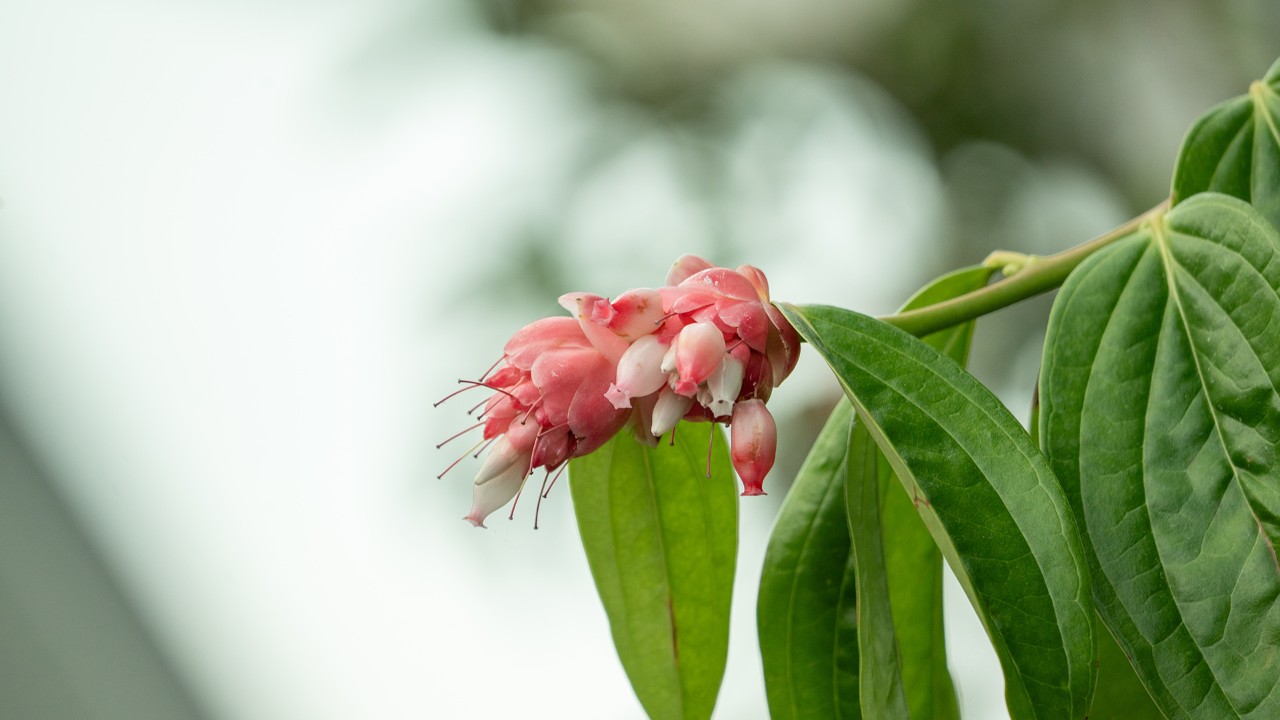 Sideview of the tubular Cavendishia bracteata flowers. Flowers of the accession currently flowering in Cloud Forest start out white in bud and gradually turn pink as they mature.
Like most members of the heath family, the flowers of Cavendishia bracteata have characteristically narrow-lipped, red and white or pinkish vase or bell-shaped flowers formed from petals fused into a tubular form. These emerge in clusters from beneath large, bright pink bracts that help make the flowers more noticeable in the forest, acting like a visual signpost for pollinators. With a long and narrow flower shape, Cavendishias are typically pollinated by hummingbirds, whose bills can reach deep into the floral tube to access the nectar at its base, transferring pollen between flowers in the process.
The ripe sweet berries of this species are also known as uva de anís, which means 'anise grape', as they have a pleasant anise-like flavour. They are globose and ripen from green to pink or purple when fully mature and are eaten and distributed by birds as well as people. Both the berries and the leaves are used medicinally, particularly as an astringent and anti-rheumatic, and they have also been used traditionally to relieve toothache. Current research is investigating both the medicinal and nutritional properties of this cloud forest species and developing better ways to propagate it in order to explore its cultivation potential as a wild fruit crop.
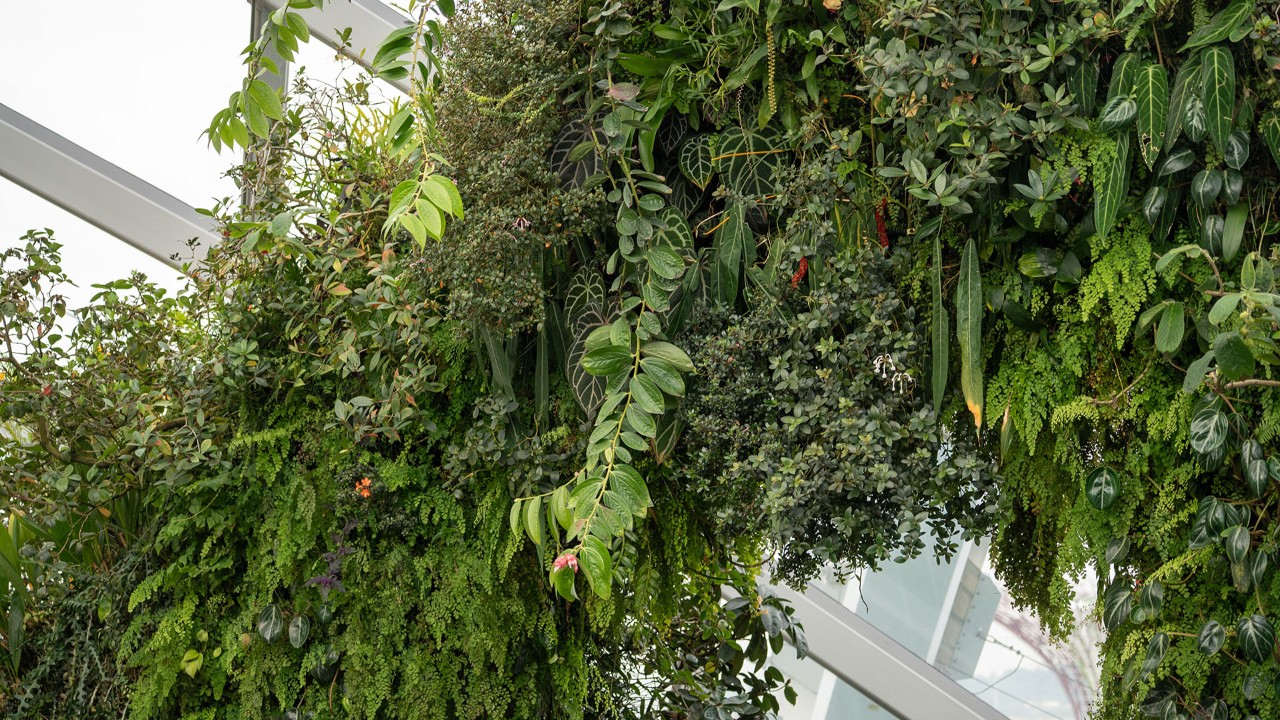
As you are wandering though the Lost World, look up to the left of the arch and try spotting this plant cascading down before venturing onto the Cloud Walk!
Written by: Ng Yu Qin, Senior Horticulturist, Research and Horticulture
Yu Qin is always looking for ways to pick up new skills and put them to use. Photography is one of her hobbies and she enjoys photographing the beautiful flora in the gardens. She spends most of her time with orchids and enjoys learning something new about them every day!
This article is part of our What's Blooming series.
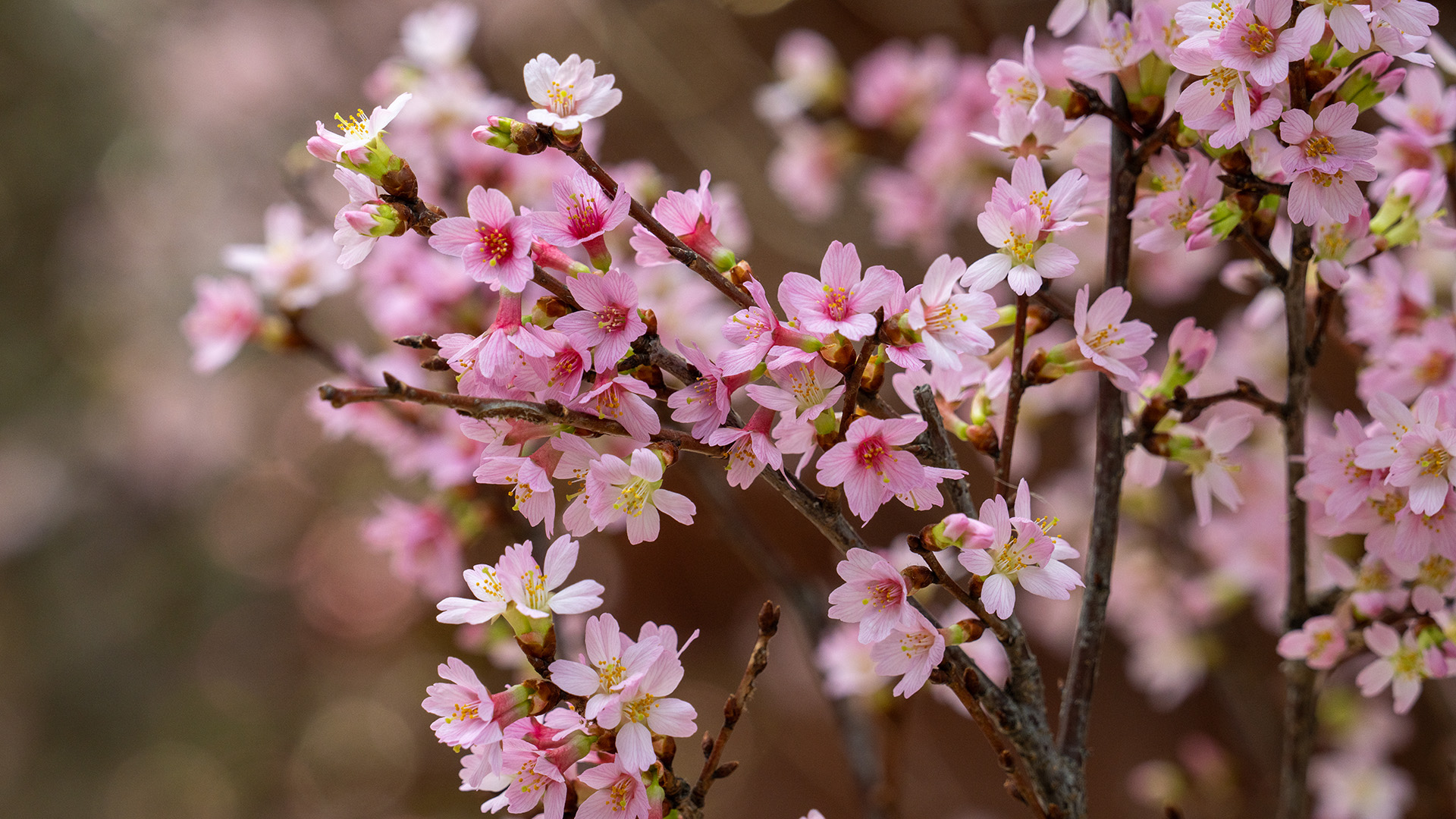
Read Next: Cherry and Peach (Prunus spp. and cv.)
The sakuras are back! But can you tell the difference between the cherry (sakura) trees and their close cousin, the peach (momo) trees?
You may also be
interested in
 Back To Top