 Closure of Floral Fantasy on 13 Oct 2026
Floral Fantasy will be closed on 13 Oct 2026 for Maintenance.
Closure of OCBC Skyway on 14 Oct 2026
OCBC Skyway will be closed on 14 Oct 2026 for maintenance.
Closure of Supertree Observatory on 15 Oct 2026
Supertree Observatory will be closed on 15 Oct 2026 for Maintenance.
Advisory for use of tripods at Disney Garden of Wonder at Floral Fantasy
For a better visiting experience and facilitate crowd movement, we seek your kind understanding that usage of tripods and camera stands will not be permitted in Floral Fantasy.
Bay South–Bay East Bridge Construction from 4 May 2026
To facilitate the construction of the bridge linking Bay South Garden and Bay East Garden, there will be no access for cyclists along the Waterfront Promenade from 4 May 2026. During the construction of the bridge, cyclists heading towards Marina Barrage are advised to take an alternative route around the perimeter of Bay South Garden. Pedestrians may still access the Waterfront Promenade, with a slight diversion to their route.
Click here to download the diversion map.

{{ suggestion.item }}
{{ noOfResults }} results found for "{{ submittedQuery }}"
Filter by
({{ currentFilters.length }})

Showing {{ searchResults.length }} out of {{ noOfResults }}
{{ result.category.label }}
We’re sorry. 0 results found for "{{ submittedQuery }}"
Try doing these:
- Check your spelling
- Try more general words
- Try different keywords
Yellow Firecracker Plant
(Russelia equisetiformis ‘Lemon Falls’)
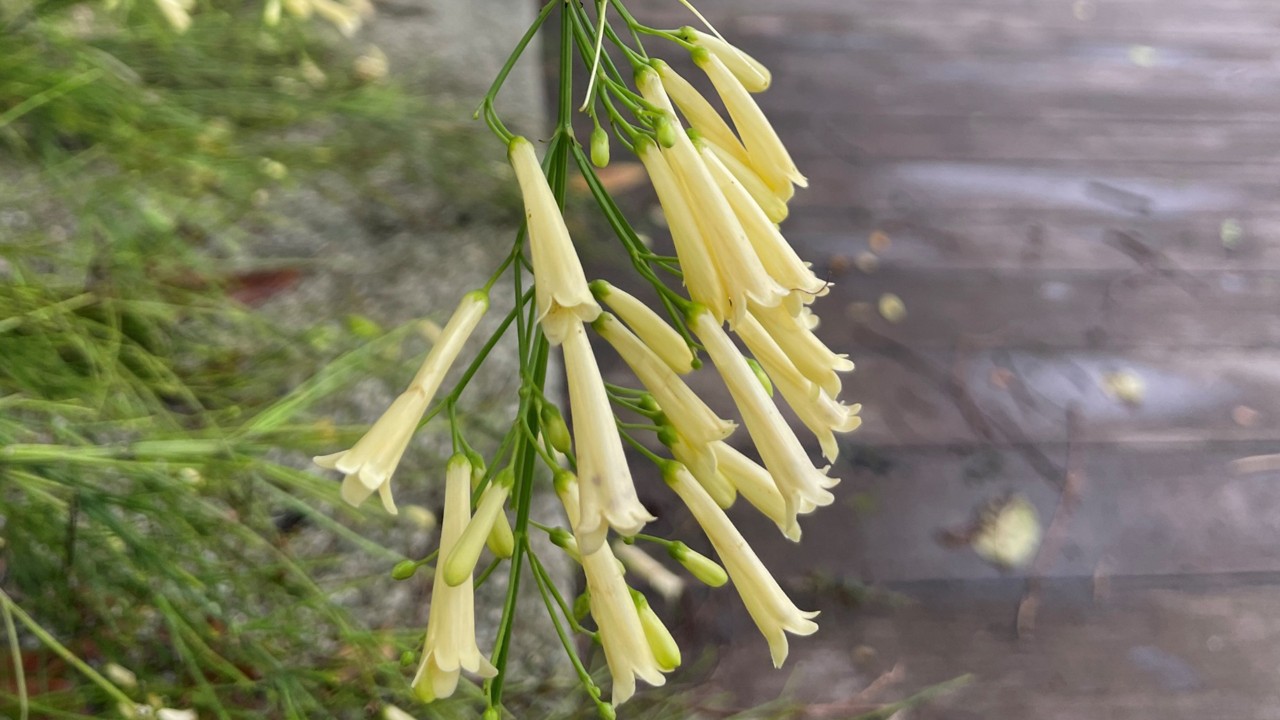 Isn’t ‘Lemon Falls’ the perfect name for this yellow firecracker plant cultivar, with its arching sprays of tubular flowers in creamy yellow?
Looking for a graceful, free-flowering plant to cascade over the sides of sunny window boxes, raised planter beds, and hanging baskets? This uncommon ‘Lemon Falls’ cultivar of the firecracker plant (Russelia equisetiformis) might just be the perfect fit!
Captivated by the sprays of slender, pale yellow to ivory five-petaled flowers just 2.5cm long, it can be easy to overlook that this creeping, weeping subshrub, which only rarely tops 1.5m in height, is seemingly missing a key plant part: leaves!
A closer look at the left and centre photos in the montage below reveals that the bright green young branches of the plant have small scale-like leaves about 8.5 to 15mm long in whorls along each node, but these soon drop off as the branch ages. How then does the plant continue to photosynthesise with no leaves, making sugars from sunlight, water, and carbon dioxide? Through the chloroplasts in its finely branched whorls of deep green stems, of course!
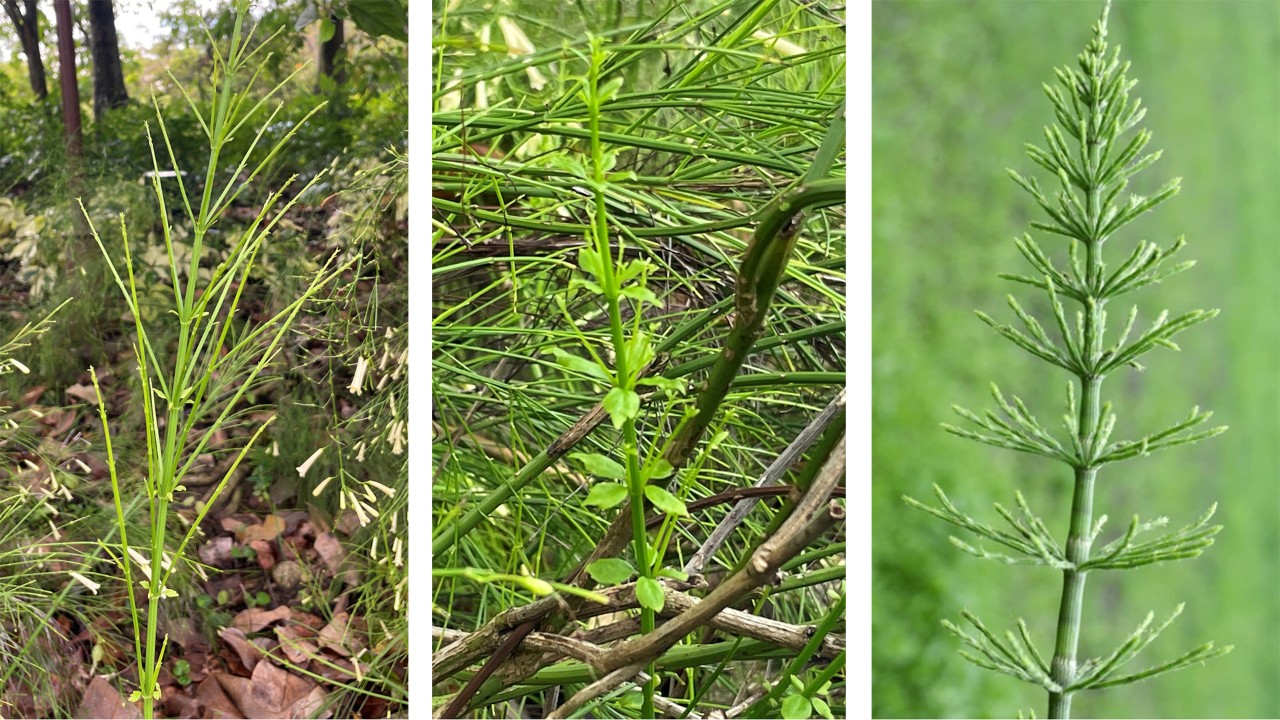 The new branches of the firecracker plant bear tiny scale-like leaves (left and centre) along the nodes, but these soon fall, leaving the plant to photosynthesise through its green stems and branches. Its species name, equisetiformis, alludes to the plant’s similar whorled branching habit as the horsetails (Equisetum spp.), an unrelated ancient genus of non-flowering plants, here represented by the field horsetail (Equisetum arvense, right).
Want something brighter and bolder? In the seasonally dry areas of Mexico and Guatemala where this species is native, wild populations of the firecracker plant bear nectar-rich flowers of brilliant red to attract their slender-beaked hummingbird pollinators! Here in Singapore and other areas of the Old World tropics, some birds visit the bright red blooms as well! Sunbirds, the African and Asian nectar-feeding counterparts of hummingbirds, also feed from firecracker plant flowers. Most sunbirds are unable to hover quite as well as hummingbirds and usually look for a convenient branch to perch on while sipping nectar from flowers.
After successful pollination and fertilisation, the flower develops into a small, round, inedible capsule that splits open when dry and ripe to shed its seeds. Firecracker plant can also be easily propagated by rooting stem cuttings or by clump division.
A member of the plantago family (Plantaginaceae), a large family of about 2,260 species, the firecracker plant is also related to several other popular ornamental flowering plants, including snapdragons (Antirrhinum spp. and cultivars) and foxgloves (Digitalis spp. and cultivars). As you might guess from its common name, red is also the most common flower colour of this species in cultivation! The origins of this pale yellow ‘Lemon Falls’ cultivar are unclear, but it may have come about from a sharp-eyed horticulturist’s selection of a chance ‘sport’ or naturally occurring genetic mutation that resulted in a branch bearing flowers lacking red pigments in the petals. Reversions back to the natural red petal colour can also happen, if rarely, resulting in ‘Lemon Falls’ plants with branches bearing both yellow and red, or sometimes even two-toned flowers as shown in the photo below.
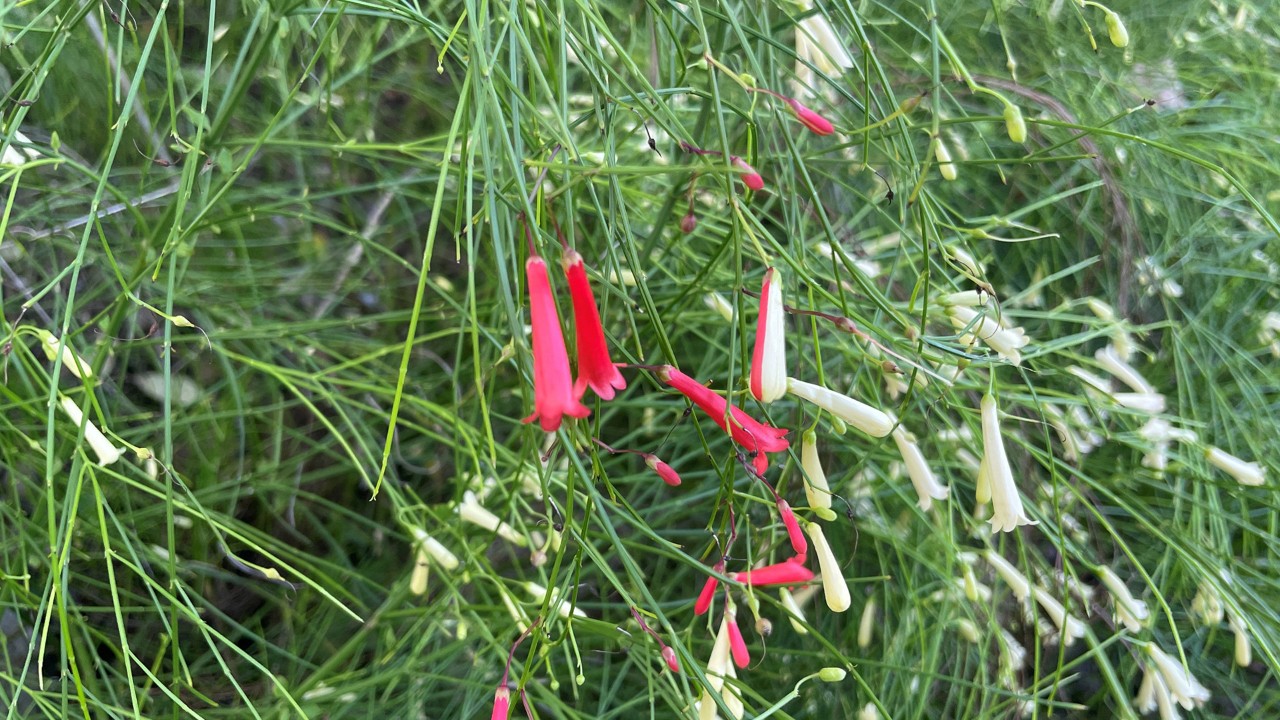 One branch tip of this pale yellow-flowering ‘Lemon Falls’ firecracker plant has undergone a spontaneous reversion to its naturally red flower colour, resulting in red, yellow, and even bi-coloured flowers on a single branch! Might it be the genesis of a new cultivar with multi-coloured flowers? Perhaps!
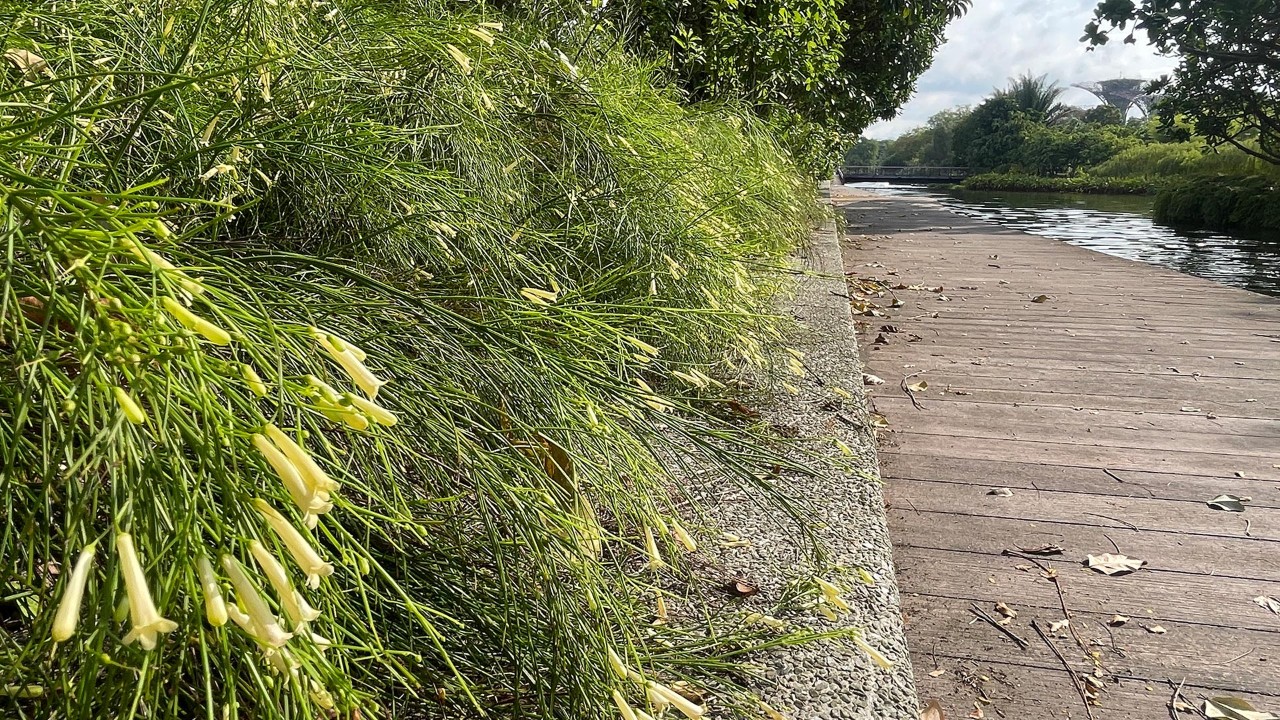
Find the ‘Lemon Falls’ cultivar of the firecracker plant cascading over the raised planter beds along boardwalk on the southwestern side of Dragonfly Lake!
Written by: Janelle Jung, Senior Researcher (Research and Horticulture)
A transplanted pake (Hawai'i-born Chinese), she's finding her own Singaporean roots. Every plant has a story, and Janelle helps discover and share these with colleagues and guests, hoping to spark a mutual plant passion! Ask her what plant she named her cat after!
This article is part of our What's Blooming series.
Read Next: Cavendishia bracteata
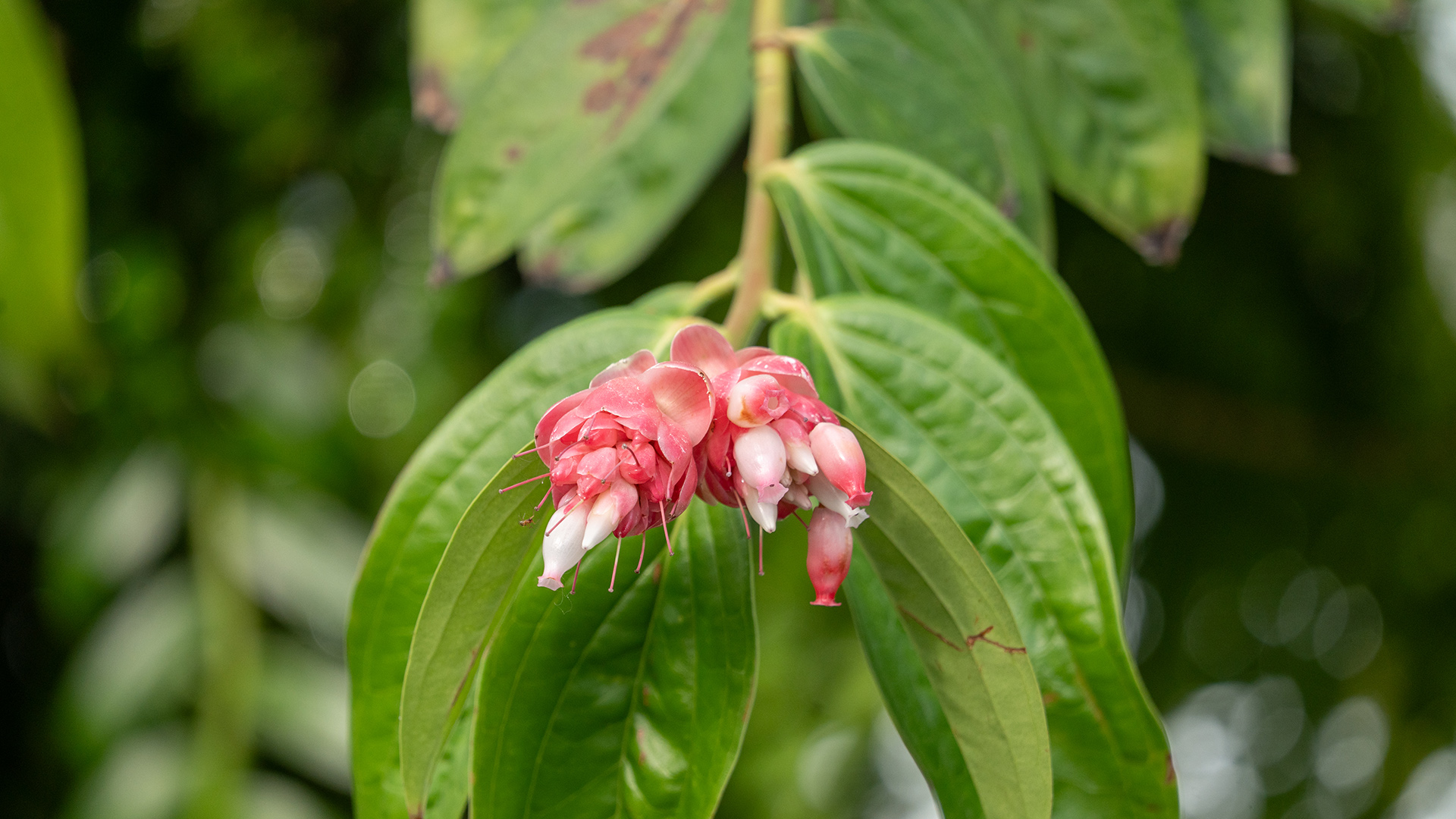
One of the hidden gems in Cloud Forest – a pink-flowered tropical American blueberry relative - is in bloom now! Can you guess what its native pollinator might be?
You may also be
interested in
 Back To Top