 Advisory for use of tripods at Disney Garden of Wonder at Floral Fantasy
For a better visiting experience and facilitate crowd movement, we seek your kind understanding that usage of tripods and camera stands will not be permitted in Floral Fantasy.
Bay South–Bay East Bridge Construction from 4 May 2026
To facilitate the construction of the bridge linking Bay South Garden and Bay East Garden, there will be no access for cyclists along the Waterfront Promenade from 4 May 2026. During the construction of the bridge, cyclists heading towards Marina Barrage are advised to take an alternative route around the perimeter of Bay South Garden. Pedestrians may still access the Waterfront Promenade, with a slight diversion to their route.
Click here to download the diversion map.

{{ suggestion.item }}
{{ noOfResults }} results found for "{{ submittedQuery }}"
Filter by
({{ currentFilters.length }})

Showing {{ searchResults.length }} out of {{ noOfResults }}
{{ result.category.label }}
We’re sorry. 0 results found for "{{ submittedQuery }}"
Try doing these:
- Check your spelling
- Try more general words
- Try different keywords
Tulipa ‘Pretty Princess’
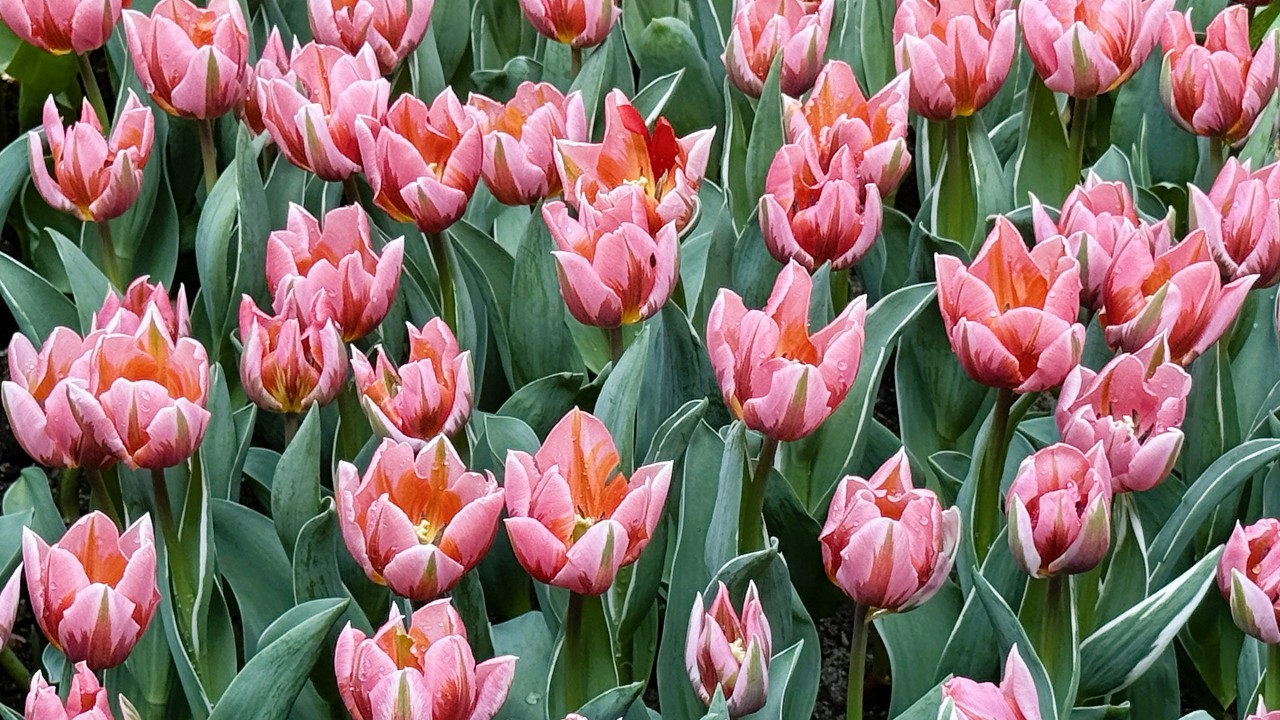 A sweeping display of Tulipa ‘Pretty Princess’ in full bloom.
Derived as a sport (a natural genetic mutation) of Tulipa ‘Prinses Irene’, with no formally recorded year of introduction, Tulipa ‘Pretty Princess’ shares the same strong, compact habit and purple-flamed markings, however, it features bright pink flowers, whereas ‘Prinses Irene’ is an orange variety. The flowers are characteristically cup-shaped, composed of evenly proportioned tepals (flower parts that resemble petals but cannot be clearly distinguished as either true petals or sepals) with a soft pink background colour. This base is overlaid by irregular feathering in deeper magenta to crimson tones, concentrated along the midrib and subtly diffusing outward.
Unlike the historical “broken” tulips whose desirable but inconsistent streaks or flame-like patterns on their tepals arose from infection with the tulip breaking virus, the variegation in ‘Pretty Princess’ is genetically stable, resulting in more consistent colouration across successive flowering seasons and across the genetically identical bulbs of this cultivar.
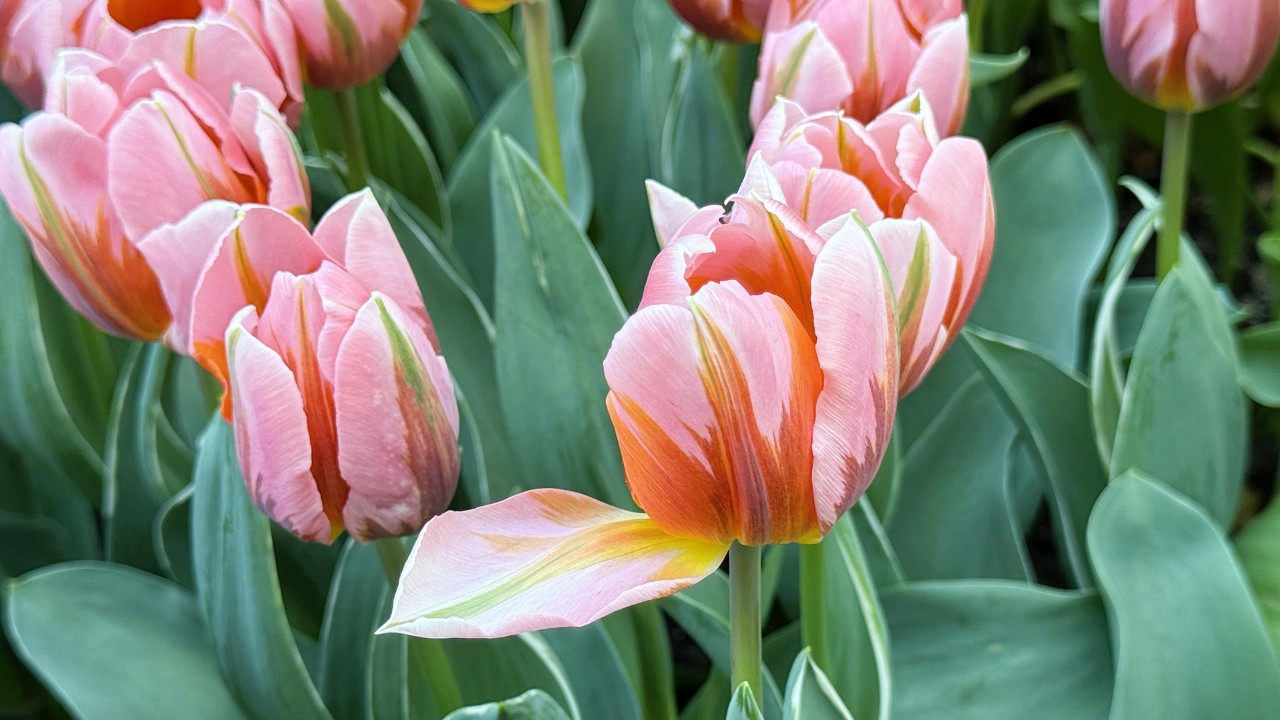 Tulipa ‘Pretty Princess’ in bloom, its soft blush-pink petals delicately feathered with deeper magenta and warm apricot tones, rising from smooth, glaucous green foliage. Its glaucous leaves appear bluish green to greyish due to a fine waxy or powdery coating that also gives it a slightly dull, matte look.
Each flower is borne singly on an upright, sturdy scape (leafless flower stalk) 25-45cm in height that arises directly from the bulb. The foliage forms a basal rosette of smooth, glaucous leaves that clasp the flower stem, contributing to both structural support and visual balance. The overall habit is neat and composed, reflecting the selective breeding that characterises modern cultivated tulips.
Classified within the Triumph tulip Group, the lineage of ‘Pretty Princess’ confers an intermediate flowering period, with flowering occurring in mid-spring. Tulips in this group have tepals that are moderately thick and resilient, allowing their flowers to maintain their form under variable spring conditions, including fluctuations in temperature and light. Such durability is a defining feature of Triumph tulips, making them reliable performers in both indoor cooled environments and outdoor fields and gardens that experience a variety of weather conditions.
The native range of wild tulips (Tulipa spp.) spans a vast “tulip belt” from southern Europe and North Africa to northwest China. Despite their association with the Netherlands, they originate from the rugged highlands of Central Asia. As with other members of the genus Tulipa, Tulipa ‘Pretty Princess’ is also a bulbous geophyte, a plant that survives harsh seasons by overwintering in the form of a bulb. Tulip bulbs, like onion or garlic bulbs, are underground structures consisting of a short stem and leaf bases that store energy in the form of sugars and starches, allowing the plant to go dormant over the fall and winter and regrow when conditions are favourable in the spring.
A requisite cool period is essential to initiate proper floral development, after which the plant progresses through a rapid growth and flowering phase. This cyclical adaptation reflects its evolutionary origins in temperate regions, where climatic rhythms govern the timing of emergence and bloom. As a tropical country one degree north of the equator, Singapore doesn’t experience the seasonal cooling needed to induce flowering in tulips, which is why the only place in Singapore that you’ll find tulips in spring flower is in the Garden’s annual tulip display!
Find Tulipa ‘Pretty Princess’ making its Tulipmania debut at Gardens by the Bay in a massed planting across a harmonious field of tulip blooms at the centre of the Flower Field in Flower Dome!
Written by: Ziana Yacob, Senior Manager (Research and Horticulture)
Ziana's fascination with the many wonders of plants led her to study Horticulture. She has been involved in propagating and nurturing in-house plant collections, with a special focus on orchids. Keeping plants thriving is both a rewarding challenge and a continuous journey of learning for her!
This article is part of our What's Blooming series.
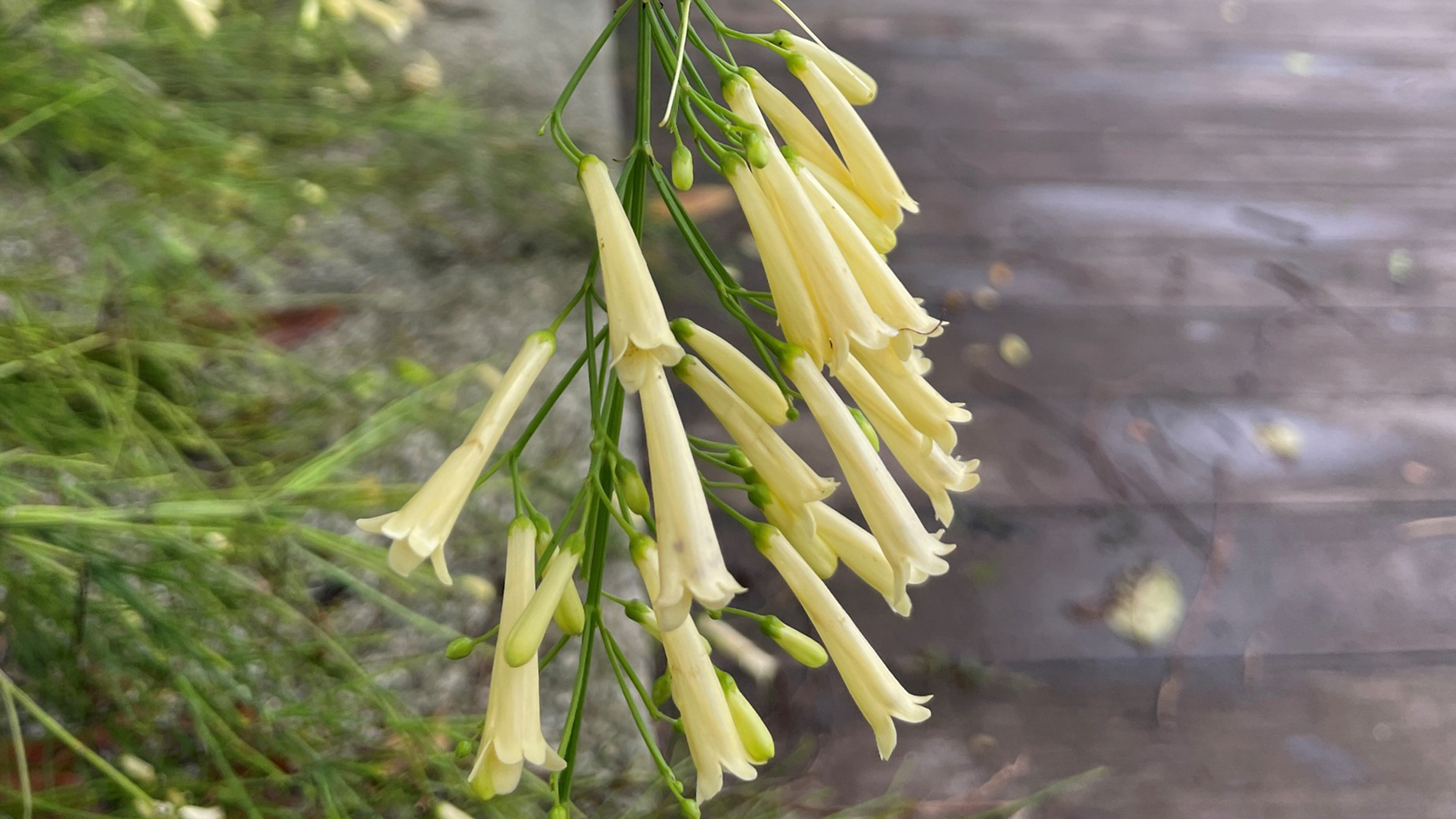
Read Next: Yellow Firecracker Plant (Russelia equisetiformis ‘Lemon Falls’)
The soothing, creamy yellow flowers of this cultivar can sometimes revert back to their bold, hummingbird-attracting natural colour!
You may also be
interested in
/1000x1000-thumb-Pink%20Flamingo%20Heliconia-01.jpg)
 Back To Top