 Scheduled maintenance for online ticketing portal on 14 Oct 2026
Closure of Floral Fantasy on 13 Oct 2026
Closure of OCBC Skyway on 14 Oct 2026
Closure of Supertree Observatory on 15 Oct 2026
Advisory for use of tripods at Disney Garden of Wonder at Floral Fantasy
Bay South–Bay East Bridge Construction from 4 May 2026
Scheduled maintenance for online ticketing portal on 14 Oct 2026
Scheduled maintenance for online ticketing portal on 14 Oct 2026
Closure of Floral Fantasy on 13 Oct 2026
Closure of OCBC Skyway on 14 Oct 2026
Closure of Supertree Observatory on 15 Oct 2026
Advisory for use of tripods at Disney Garden of Wonder at Floral Fantasy
Bay South–Bay East Bridge Construction from 4 May 2026
Scheduled maintenance for online ticketing portal on 14 Oct 2026
Our online ticketing portal will undergo maintenance on 14 Oct 2026 from 12.30am to 3.00am. Tickets will not be available for online purchase during this period. We apologise for any inconvenience caused.
Closure of Floral Fantasy on 13 Oct 2026
Floral Fantasy will be closed on 13 Oct 2026 for Maintenance.
Closure of OCBC Skyway on 14 Oct 2026
OCBC Skyway will be closed on 14 Oct 2026 for maintenance.
Closure of Supertree Observatory on 15 Oct 2026
Supertree Observatory will be closed on 15 Oct 2026 for Maintenance.
Advisory for use of tripods at Disney Garden of Wonder at Floral Fantasy
For a better visiting experience and facilitate crowd movement, we seek your kind understanding that usage of tripods and camera stands will not be permitted in Floral Fantasy.
Bay South–Bay East Bridge Construction from 4 May 2026
To facilitate the construction of the bridge linking Bay South Garden and Bay East Garden, there will be no access for cyclists along the Waterfront Promenade from 4 May 2026. During the construction of the bridge, cyclists heading towards Marina Barrage are advised to take an alternative route around the perimeter of Bay South Garden. Pedestrians may still access the Waterfront Promenade, with a slight diversion to their route.
Click here to download the diversion map.

{{ suggestion.item }}
{{ noOfResults }} results found for "{{ submittedQuery }}"
Filter by
({{ currentFilters.length }})

Showing {{ searchResults.length }} out of {{ noOfResults }}
{{ result.category.label }}
We’re sorry. 0 results found for "{{ submittedQuery }}"
Try doing these:
- Check your spelling
- Try more general words
- Try different keywords
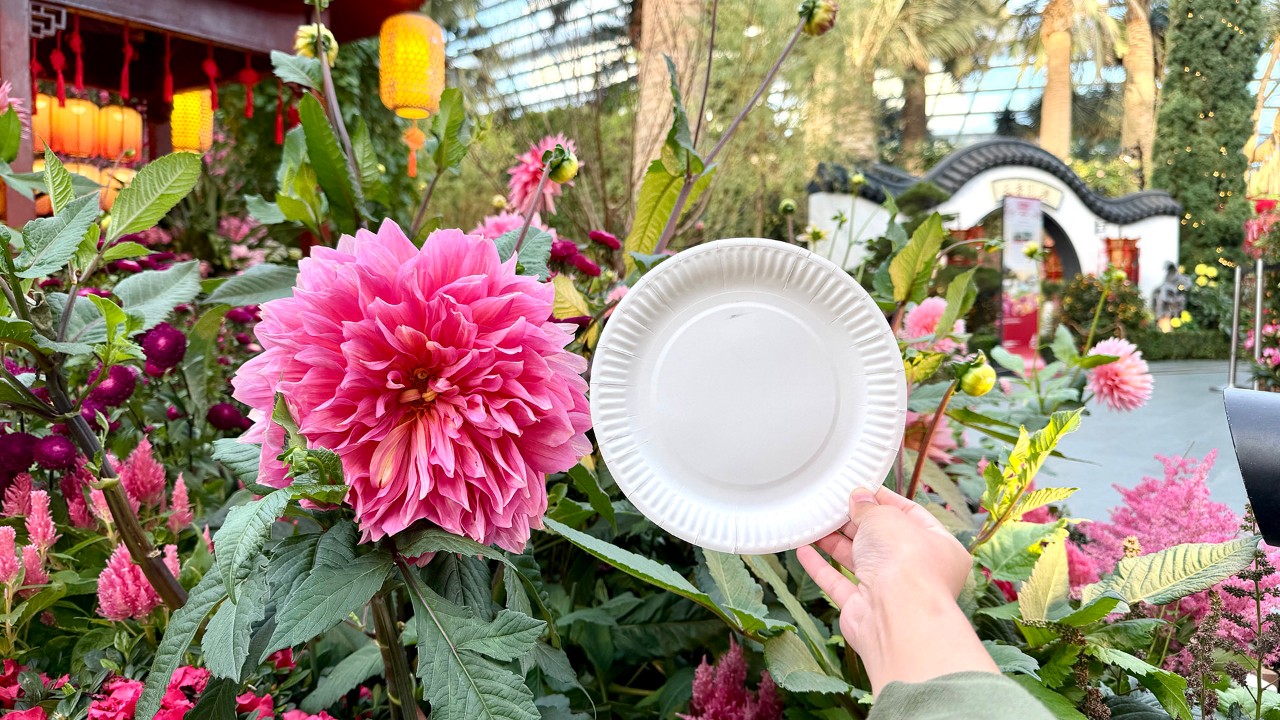 A strikingly huge bloom of Dahlia ‘Kohara Coast’ with a plate for comparison! This flower is about 22cm in diameter!
Once again, our striking dinnerplate dahlias makes their comeback on our annual Lunar New Year show! This time, we’re showcasing more cultivars of dahlias with huge blooms over 20cm wide, all lovingly grown by our horticulturists who dedicated great care and effort to nurture them to such impressive sizes.
Native to Mexico and Central America, dahlias can be found growing on the uplands and mountains, from elevations between 1500 meters and 3700 meters, which makes them a temperate beauty! They like it cool and classy, needing temperatures between 15 to 25°C to grow their best, which is why you’ll never find dahlias growing outdoors in tropical Singapore! I’m sure you find them bearing similarities to sunflowers, daisies and the classic chrysanthemums. That's because they all belong to the same family – the aster family (Asteraceae).
Like all these relatives, dahlias also sport the family resemblance in the form of specialized flower heads composed of many tiny florets. Single-flowered dahlias have an outer ring of sterile ray florets, each bearing a petal-like projection from their corolla of fused petals. They are arranged around the outside of the bloom head, and are largely responsible for the bloom’s colour, form, and overall appearance. These ray florets surround an inner centre of lessshowy, tubular disc florets, similar in arrangement to a sunflower or a daisy. In most ornamental dahlia cultivars, however, most or all of the disc florets have been converted to ray florets, resulting in the so-called ‘doubled’ flower form with what seems like a never-ending starburst of ‘petals’.
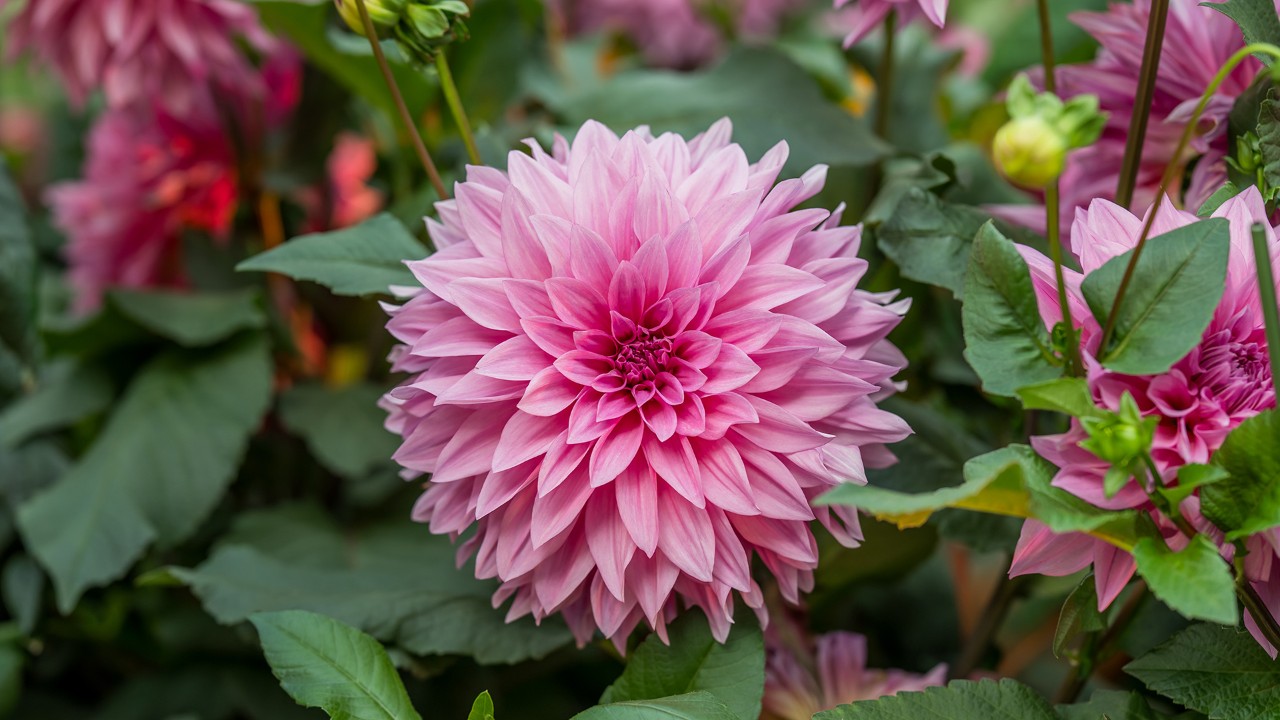 Dahlia ‘Café Au Lait Rose’, a classic dinnerplate dahlia with a diameter of about 23cm.
You might think that ‘dinnerplate’ dahlias are a fancy name for a certain flower class or form, but they are actually an informal term for any dahlia cultivar with an average flower diameter of at least 20cm! (In case you’re wondering, Western-sized dinner plates are about 25 to 30cm in diameter and Asian dinner plates around 20 to 23cm in diameter.) Some of our “classic” cultivars that we grow year after year for their vigorous growth and fantastic flower size are making a repeat appearance, including ‘Kelvin Floodlight’ (not pictured) and ‘Café Au Lait Rose’ (above).
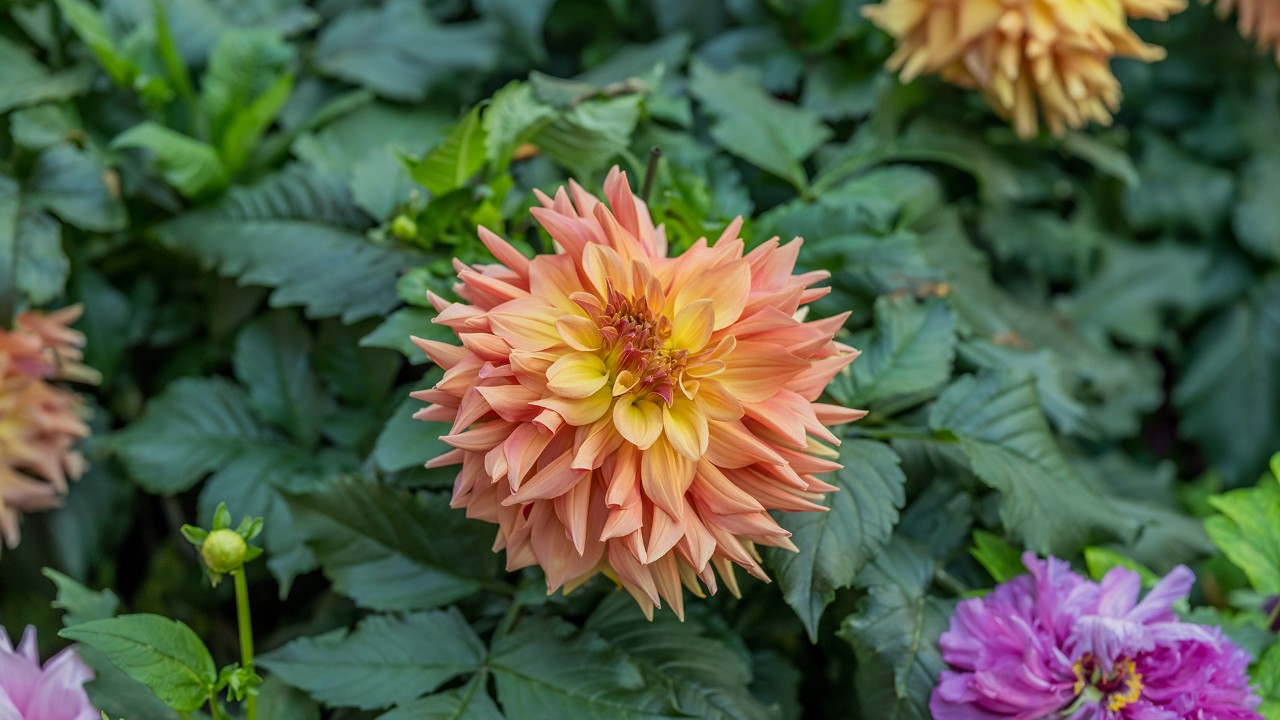 Dahlia ‘Igen’, a decorative form dinnerplate dahlia with revolute petals.
There are 14 groups of dahlia floral forms as described by the Royal Horticultural Society (RHS), the International Cultivar Registration Authority for dahlias. Many dinnerplate dahlias seem to be a part of the Decorative group, whereby they have fully double-petaled flowers with straight, twisted, curled, or wavy ray florets, which sometimes may be curled downward (revolute) or curled upwards (involute), giving them an irregular look. Can you spot the difference in petal curling between in the two dahlia cultivars in the photos above? Dahlia ‘Igen’ has downward curling petals and Dahlia ‘Café au lait Rose’ has upward curling ones.
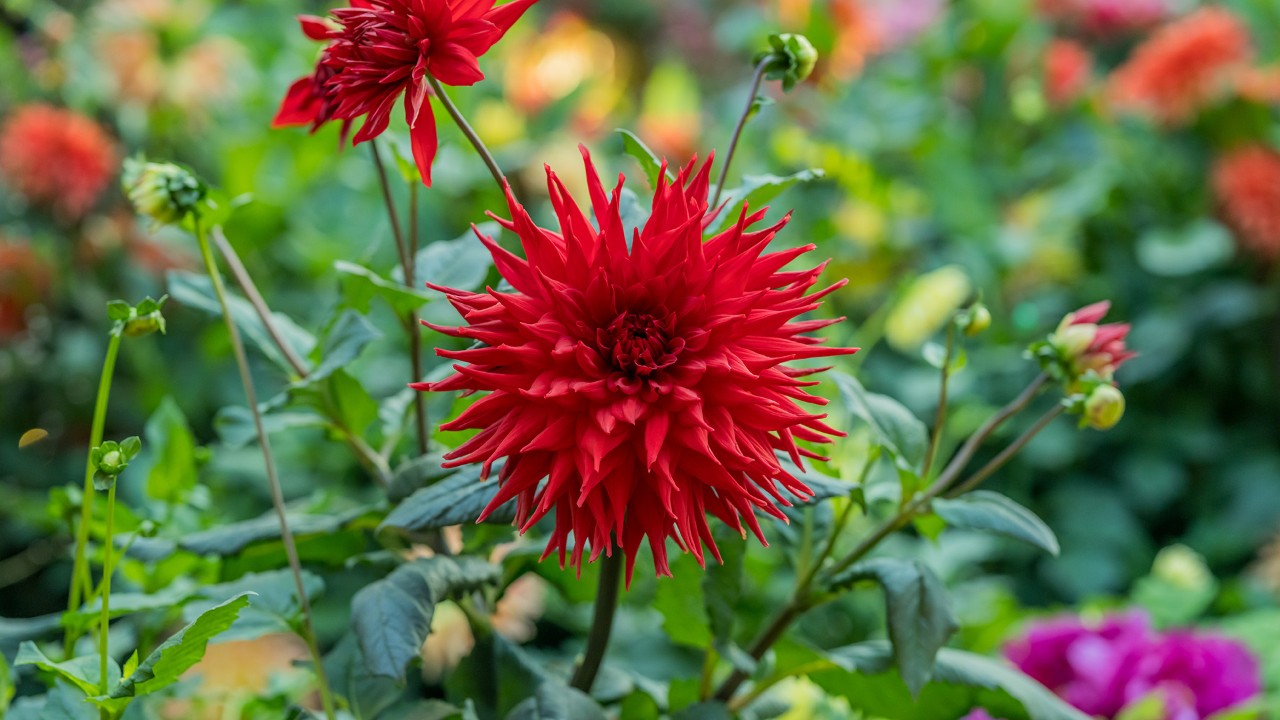 Dahlia ‘Shiranui’ - this semi-cactus cultivar sports partially rolled ray florets, creating pointy tips but a lush, wide base. The huge flower pictured is 26cm in diameter!
Featured above in the example of Dahlia ‘Shiranui’ is one of the more uncommon groups of floral forms groups in the dinnerplate dahlia size range: the semi-cactus group. You’ll notice that semi-cactus dahlias produce fully double blooms with ray florets that are usually pointed and rolled backward for more than 25% but less than 50% of their length. The florets are broad at the base and may be either straight or slightly curved inwards.
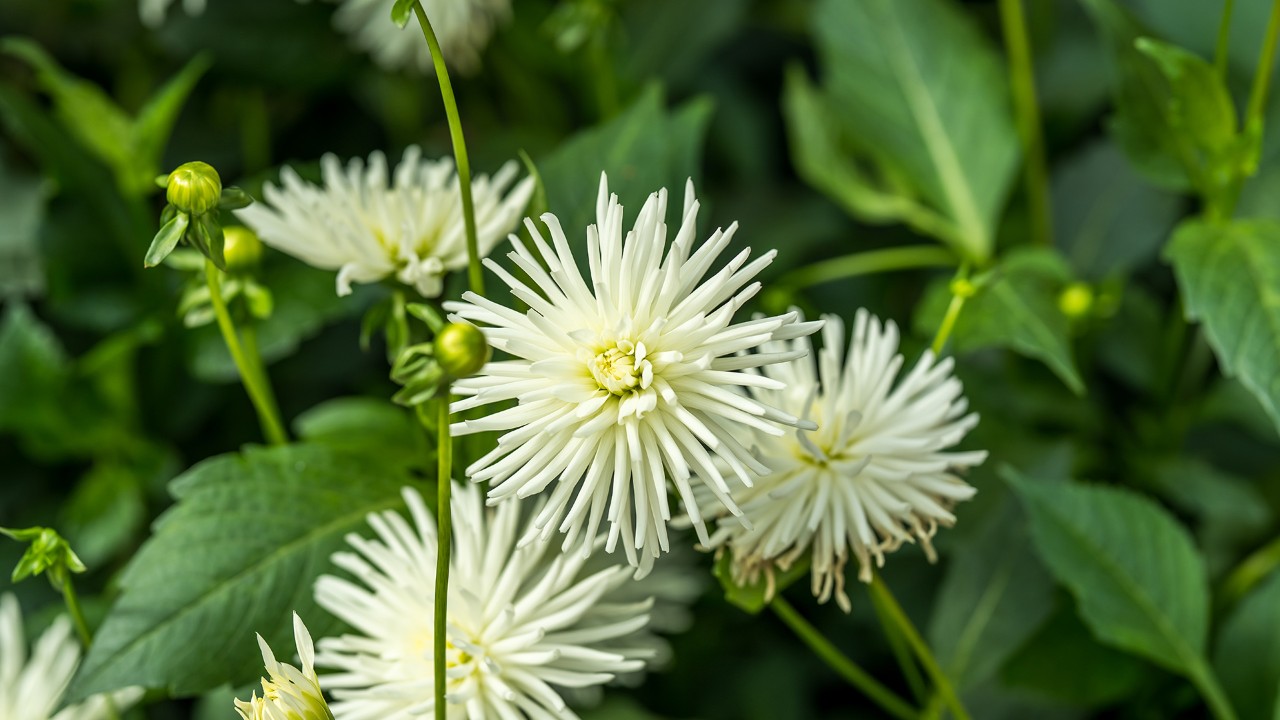 Dahlia ‘My Love’ - a dahlia in the Cactus group. It has a diameter of about 10cm, smaller in comparison to the dinnerplate dahlias.
Other than the dinnerplate dahlias, here are some of the forms of dahlias which I find equally mesmerising for their unique petals. Shown in the photo above is Dahlia ‘My Love’, a stunning cultivar in the Cactus group, characterised by their double-petaled flowers with ray florets that are downward-curling (revolute) for more than one-half of their length, making them narrow, pointed, and sharp-looking, like the spines of a cactus!
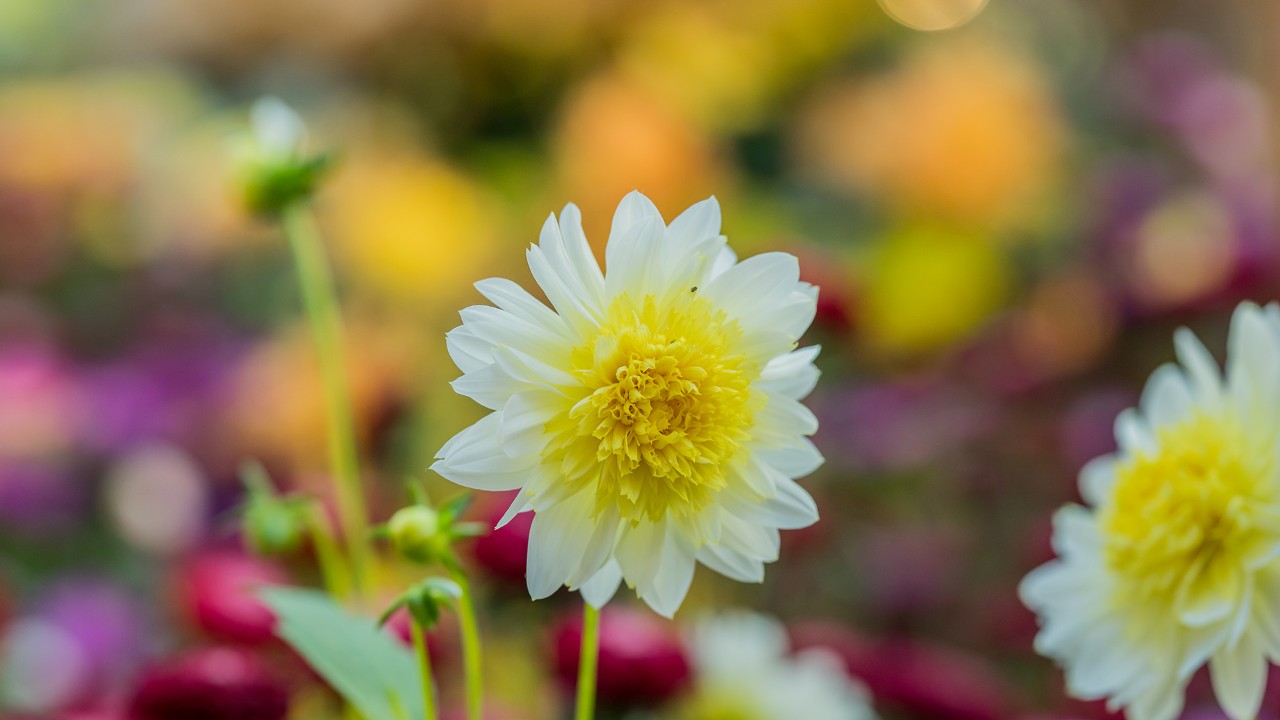 Dahlia ‘Lambada’, an Anemone group dahlia, so named for its tubular, tentacle-like disc florets. It has a flower diameter of about 10cm.
Another one of my favourites is Dahlia ‘Lambada’, which is an Anemone group dahlia. This form of dahlia has one or more rows of ray florets surrounding a rounded cluster of elongated, tube-shaped disc florets. In this dahlia group, the disc florets are visible, unlike with the double-flowered dinnerplate dahlias which have had most of their disc florets converted to ray florets. Also, doesn’t the white and yellow colour contrast makes the flowers look like sunny side up eggs?
This year, we are featuring some new dinnerplate cultivars! Come and spot them in Flower Dome and be mesmerised by the variety of dahlias we have on display! For a behind-the-scenes look at how our horticulturists grew these dahlias, check out this feature article!
Written by: Ng Yu Qin, Senior Horticulturist, Research and Horticulture
Yu Qin is always looking for ways to pick up new skills and put them to use. Photography is one of her hobbies and she enjoys photographing the beautiful flora in the gardens. She spends most of her time with orchids and enjoys learning something new about them every day!
This article is part of our What's Blooming series.
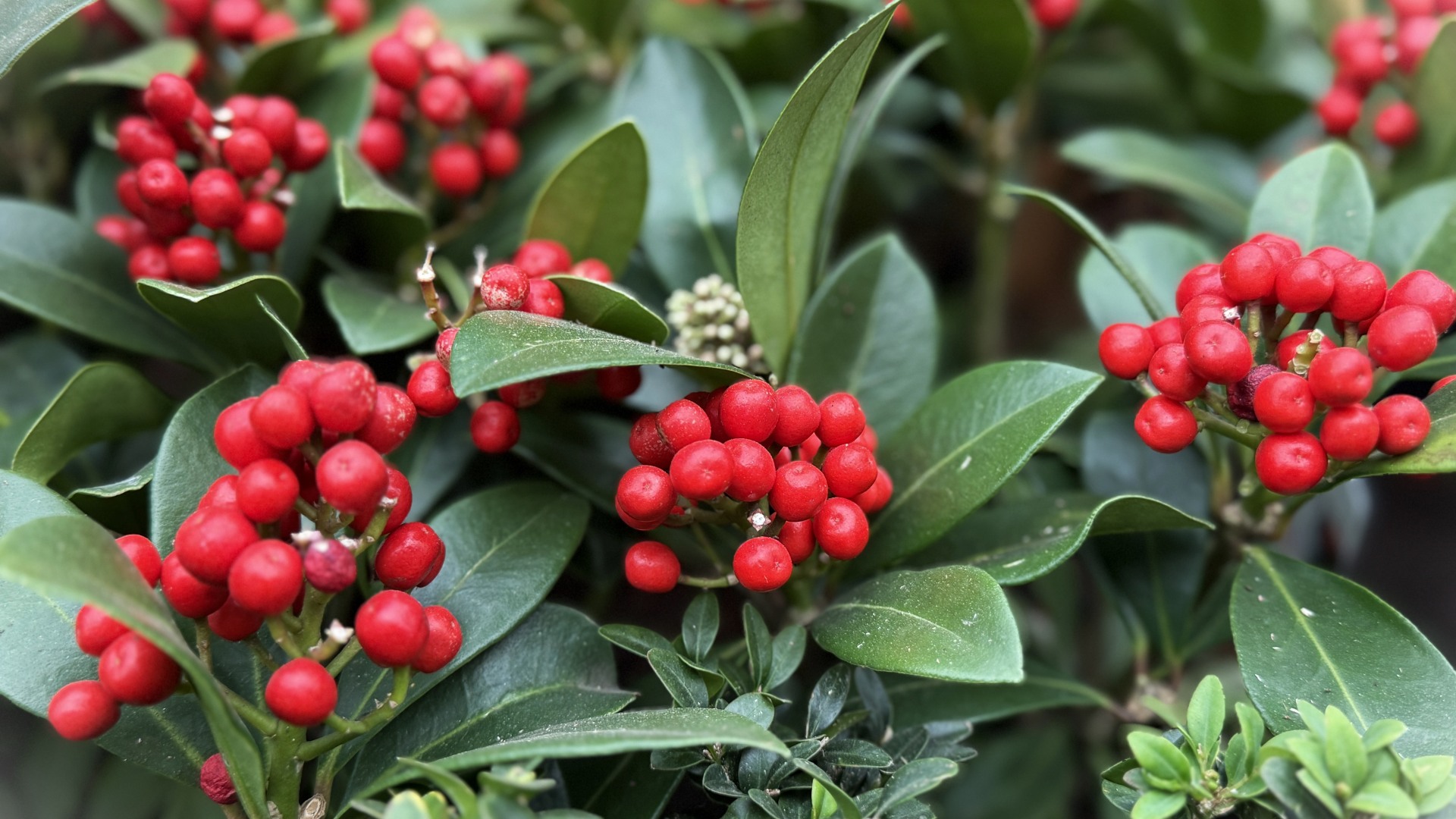
Read Next: Japanese Skimmia (Skimmia japonica ‘Temptation’)
This is a plant that works hard all year round. From producing fragrant spring blossoms to vivid-coloured winter berries, this compact shrub provides standout interest in every season, including ...
You may also be
interested in
/2023-1000x1000-whatsblooming-raphiaaustralis-image01.jpg)
 Back To Top