 Closure of Supertree Observatory on 15 Oct 2026
Supertree Observatory will be closed on 15 Oct 2026 for Maintenance.
Advisory for use of tripods at Disney Garden of Wonder at Floral Fantasy
For a better visiting experience and facilitate crowd movement, we seek your kind understanding that usage of tripods and camera stands will not be permitted in Floral Fantasy.
Bay South–Bay East Bridge Construction from 4 May 2026
To facilitate the construction of the bridge linking Bay South Garden and Bay East Garden, there will be no access for cyclists along the Waterfront Promenade from 4 May 2026. During the construction of the bridge, cyclists heading towards Marina Barrage are advised to take an alternative route around the perimeter of Bay South Garden. Pedestrians may still access the Waterfront Promenade, with a slight diversion to their route.
Click here to download the diversion map.

{{ suggestion.item }}
{{ noOfResults }} results found for "{{ submittedQuery }}"
Filter by
({{ currentFilters.length }})

Showing {{ searchResults.length }} out of {{ noOfResults }}
{{ result.category.label }}
We’re sorry. 0 results found for "{{ submittedQuery }}"
Try doing these:
- Check your spelling
- Try more general words
- Try different keywords
Marguerite Daisy (Argyranthemum frutescens)
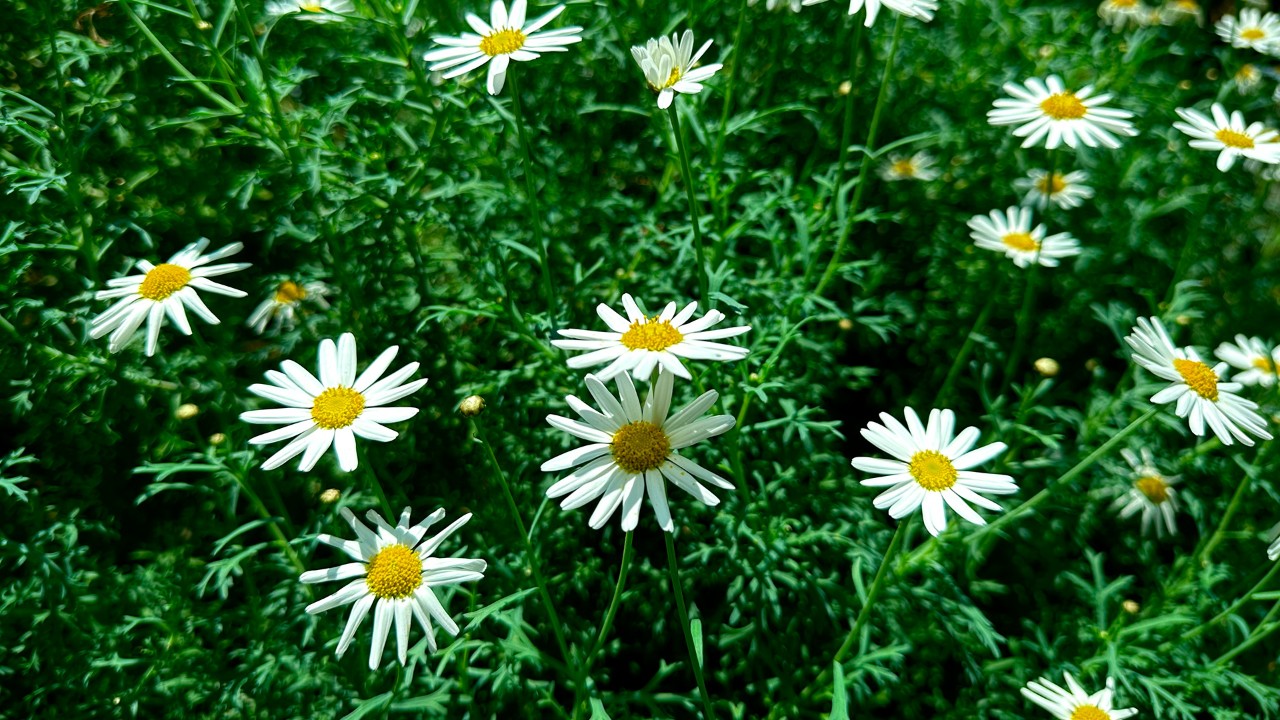
The Marguerite daisy, known scientifically as Argyranthemum frutescens, is a beloved ornamental shrub that brings a refreshing, sun-kissed aesthetic to the landscape. Native to the Canary Islands, a Spanish Autonomous Community off the northwestern coast of Africa, this plant prefers mild daytime temperatures (20 to 29°C) and cool nights (15 to 20°C), and has become a staple in many temperate gardens for its enduring beauty and prolific blooming habit.
Belonging to one of the largest families in the plant kingdom – the daisy family (Asteraceae), the same group that includes sunflowers and dahlias, the Marguerite daisy is a tender perennial with an exquisite and feathery appearance. It typically grows as a bushy, rounded subshrub, reaching heights of one to two meters. Its foliage is one of its most attractive features: the leaves are finely divided, and feathery or fern-like, providing a delicate, lacy texture that complements its bright white flowers.
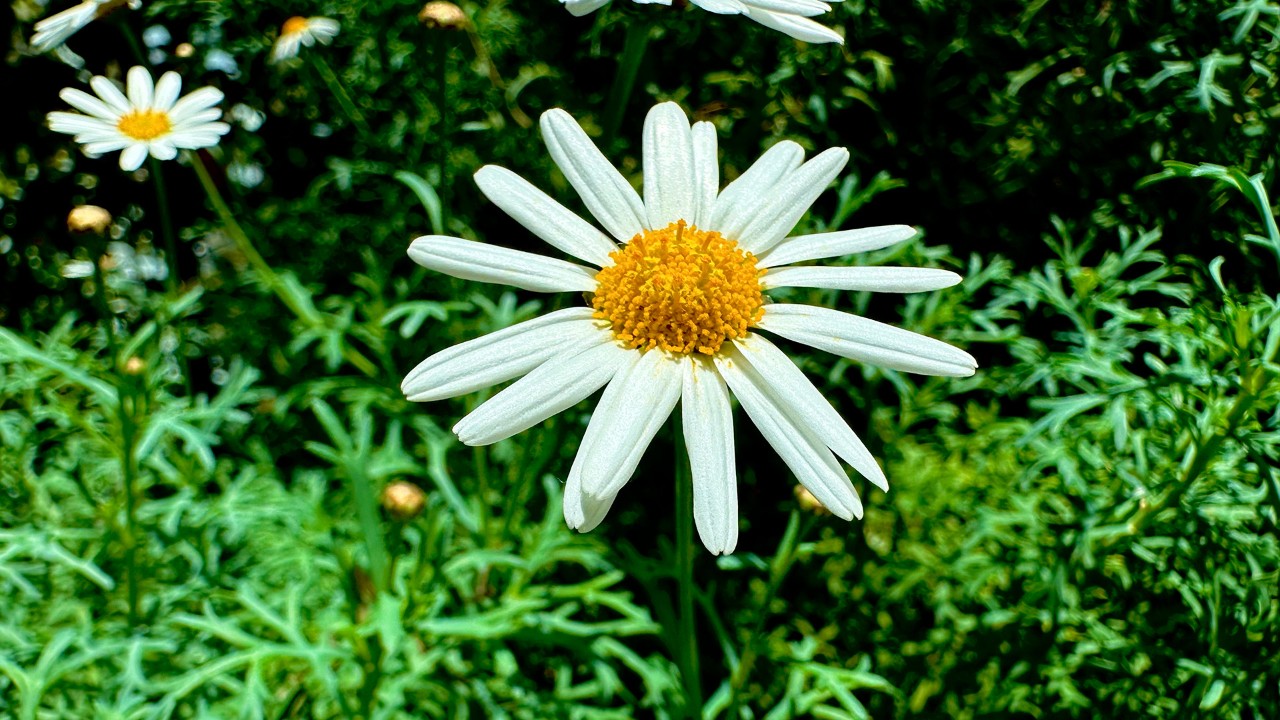 Each white petal-like structure on the edge of the capitulum is actually an elongated ligule of the fused petals on a single ray floret, and the centre is composed of multiple yellow disc florets. Thus, what looks like a lone daisy flower is in fact, botanically, an extremely contracted inflorescence with countless flowers!
The Marguerite daisy has a unique floral structure. As a typical member of the Asteraceae family, it does not produce single, individual flowers. Instead, what looks like a single white-petaled, yellow-centred flower is actually composed of numerous tiny flowers, or florets, on a specialised flower stalk inflorescence called a capitulum.
What looks like individual petals around the edge of the capitulum are tiny flowers called ray florets, which are usually sterile, sometimes female, and serve to attract pollinators with the conspicuous colourful ligules (the outward protrusion of the fused petals on a ray floret). These ray florets with their petal-like ligules surround a centre of dozens or sometimes hundreds of tiny, tubular, bisexual florets, called disc florets (or tubular florets). If properly pollinated and fertilised, each disc floret will produce a single-seeded dry fruit called a cypsela, which features a tuft of fine hairs that act like a parachute, similar to fluffy-headed, pointed-tip dandelion “seeds”, which are also cypselas.
With the Marguerite daisy, the petal-like projections of the ray florets are a crisp, clean white, radiating outward from a dense, golden-yellow centre of disc florets. This high-contrast pairing creates the iconic "daisy" look.
Because this species is so outstandingly beautiful, horticulturists have spent years breeding a vast array of its cultivars. Modern varieties have evolved far beyond the natural white form found in the wild, and cultivated varieties are now available with ligules in shades of soft primrose yellow, blush pink, and deep cherry red. Some cultivars even feature double blooms, where some or all of the disc florets are transformed into extra rings of ray florets, creating a ruffled, full appearance.
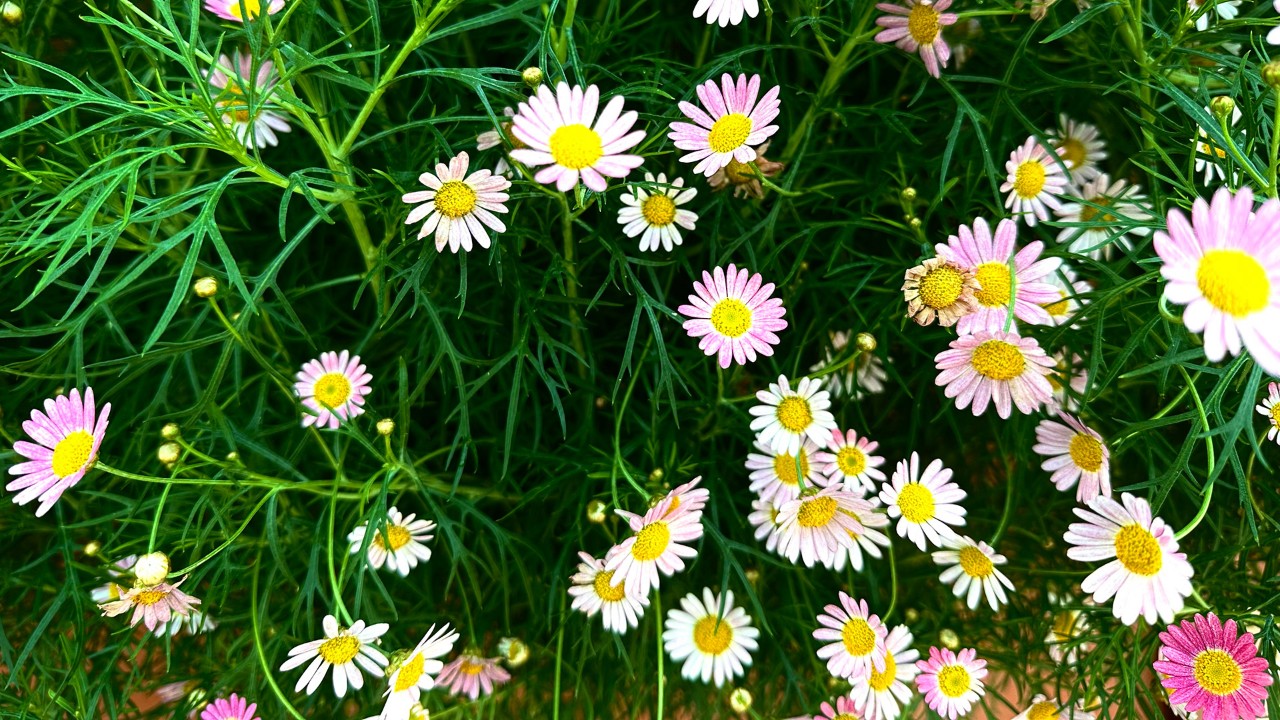 A pink cultivar of Marguerite daisy, which can also be found in Flower Dome.
In Flower Dome of Gardens by the Bay, after you admire the strikingly luxuriant and milky Marguerite daisy in Mediterranean Garden, don't miss the pink cultivar just around the corner!
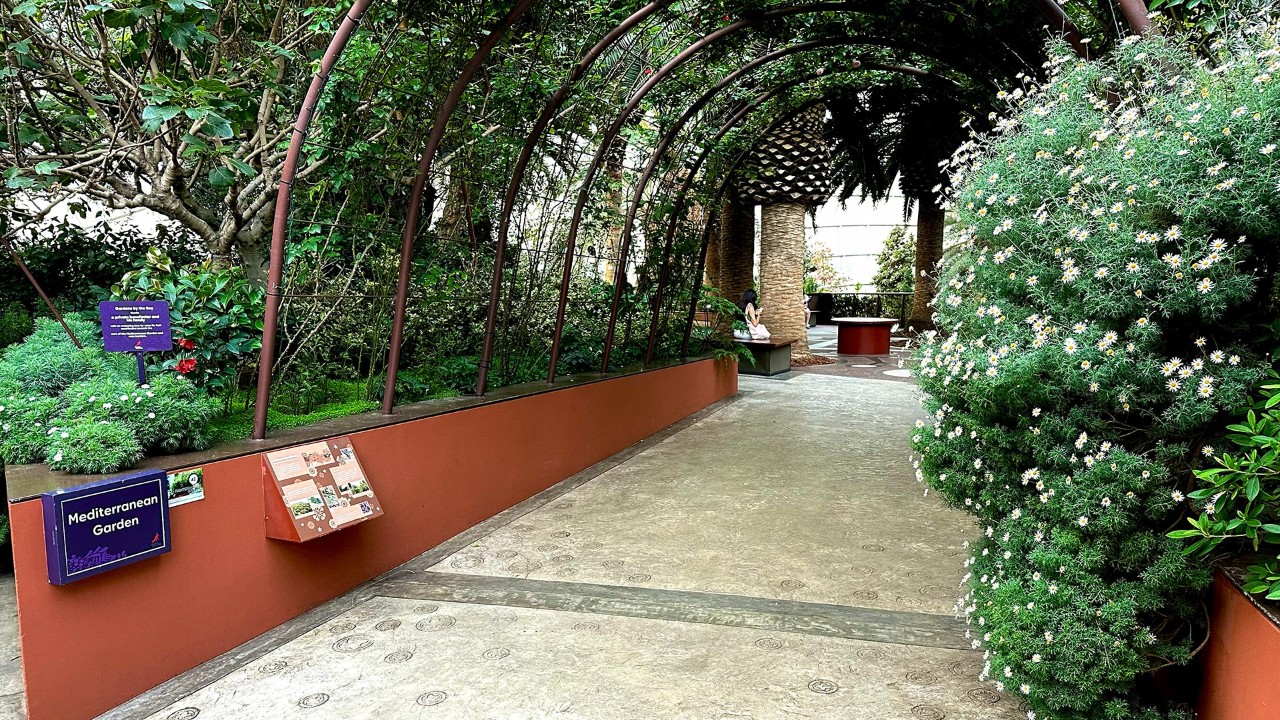 At the entrance of Mediterranean Garden, you can easily spot the bushy white-flowered Marguerite daisy on your right! As for the pink variety, it can be found at the foot of the stairs at the lower entrance/exit of Mediterranean Garden.
Zeke Chen, Manager (Conservatory Operations)
Ever since his tiny hands could hold on to a small toy shovel and sowed the first apricot seed in the garden, the passion for plants has started to grow in Zeke’s heart.
This article is part of our What's Blooming series.
Read Next: Tulipa 'Pretty Princess'
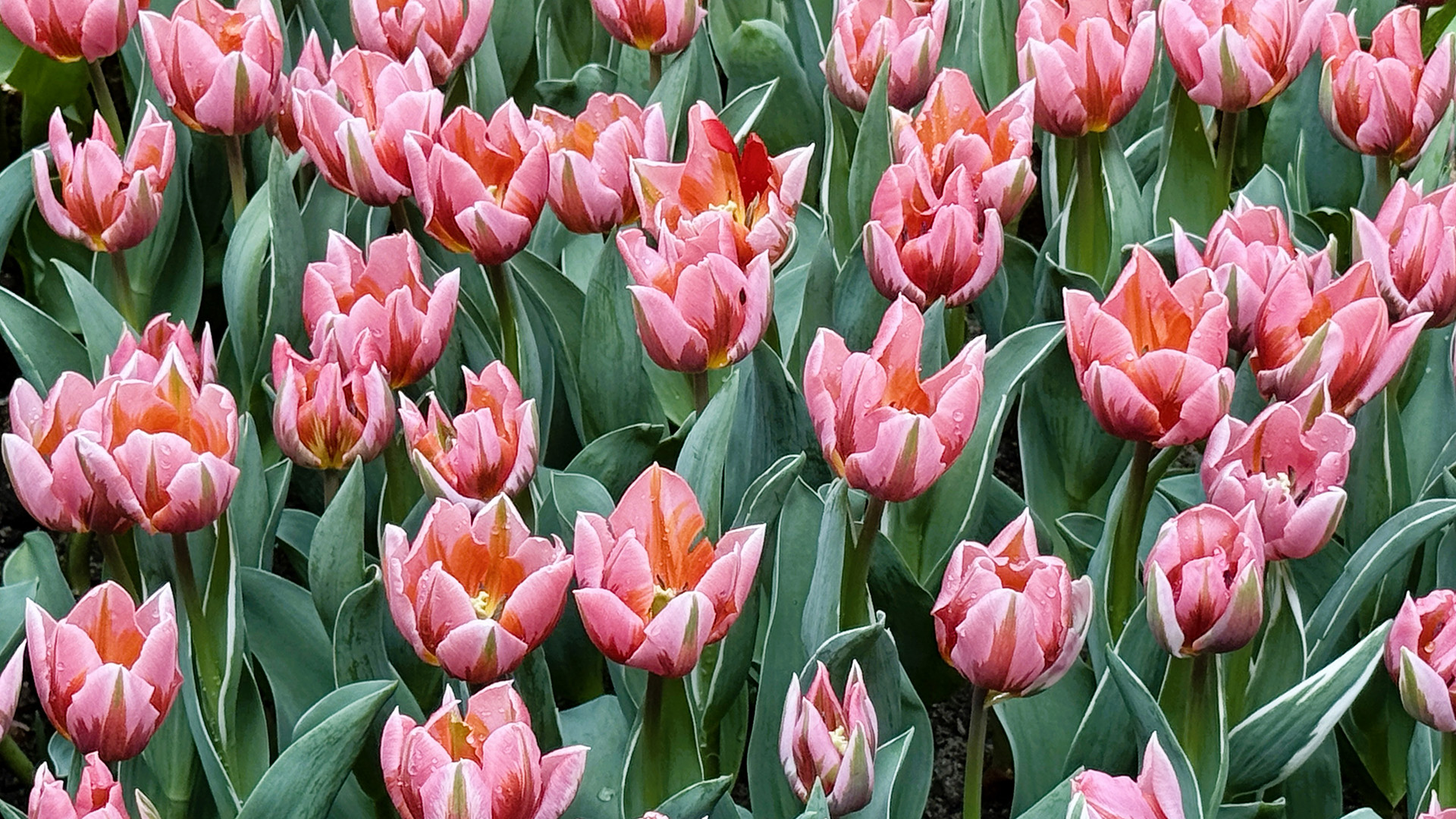
Meet Tulipa ‘Pretty Princess’, a Triumph tulip cultivar with elegant pink blooms featuring bold feathered streaks!
You may also be
interested in
 Back To Top