 Carparks Closure and Traffic Arrangements for the 2026 BYD Singapore International Marathon on 5 and 6 Dec 2026
In conjunction with the 2026 BYD Singapore International Marathon, access along Marina Boulevard and Marina Gardens Drive towards Gardens by the Bay will be affected on 5 and 6 December 2026. The following carpark and traffic arrangements will apply during these periods.
1. Carparks closure
All carparks at Gardens by the Bay (Main Entrance Basement, The Meadow, Satay by the Bay and Bayfront Plaza carparks) will be closed during the following periods:
- Sat, 5 Dec 2026: 12.00am to 8.00am
- Sun, 6 Dec 2026: 12.00am to 11.00am
2. Taxi and Ride-Hailing Pick-up and Drop-off
During the above periods, taxi and ride-hailing pick-up and drop-off will still be available along Marina South Avenue. Traffic marshals will be on-site to direct traffic and guide drivers.
Access routes to Marina South Avenue:
- From the East: ECP (City) → MCE → Central Boulevard → Marina South Avenue
- From the West: AYE (City) → MCE → Central Boulevard → Marina South Avenue
For more information, visit www.singaporeinternationalmarathon.com
Upcoming works for Wetlands by the Bay
To facilitate the upcoming works for Wetlands by the Bay, parts of Kingfisher Wetlands will be closed. Visitors will continue to be able to access the vicinity of Kingfisher Lake, and the existing footpaths within the accessible areas of Kingfisher Wetlands will remain open.
Advisory for use of tripods at Disney Garden of Wonder at Floral Fantasy
For a better visiting experience and facilitate crowd movement, we seek your kind understanding that usage of tripods and camera stands will not be permitted in Floral Fantasy.
Bay South–Bay East Bridge Construction from 4 May 2026
To facilitate the construction of the bridge linking Bay South Garden and Bay East Garden, there will be no access for cyclists along the Waterfront Promenade from 4 May 2026. During the construction of the bridge, cyclists heading towards Marina Barrage are advised to take an alternative route around the perimeter of Bay South Garden. Pedestrians may still access the Waterfront Promenade, with a slight diversion to their route.
Click here to download the diversion map.

{{ suggestion.item }}
{{ noOfResults }} results found for "{{ submittedQuery }}"
Filter by
({{ currentFilters.length }})

Showing {{ searchResults.length }} out of {{ noOfResults }}
{{ result.category.label }}
We’re sorry. 0 results found for "{{ submittedQuery }}"
Try doing these:
- Check your spelling
- Try more general words
- Try different keywords
Spider Flower (Grevillea species, hybrids, and cultivars)
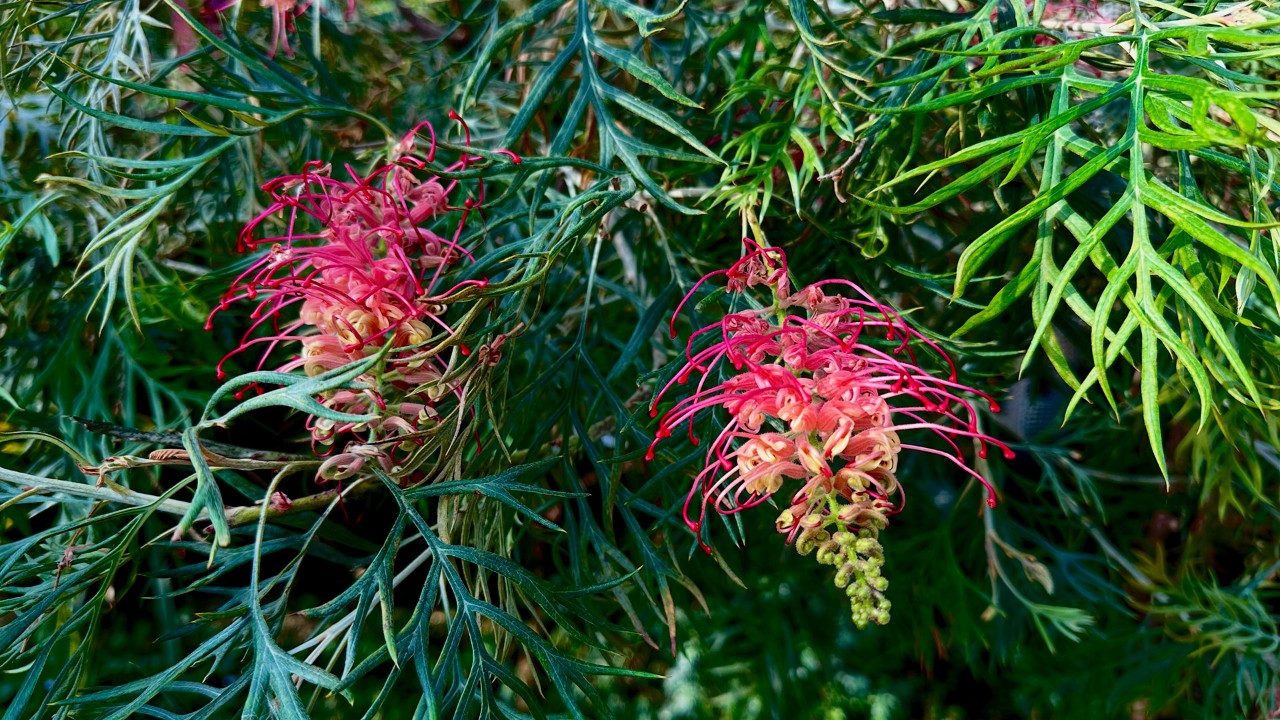
The Grevillea hybrids in Flower Dome’s Australian Garden belong to the Proteaceae family - an evolutionarily ancient group of flowering plants primarily native to the Southern Hemisphere. It is classified within the genus Grevillea, commonly known as spider flowers or the toothbrush plant, due to the long, delicate style in each of their flowers, which together resemble spider legs or toothbrush bristles! There are more than 300 species and around 200 registered cultivars in this genus, many of which are hybrids between two or more Grevillea species.
We have several grevillea hybrids represented in the Australian Garden, mostly in the form of bushy, rounded evergreen shrubs. Their foliage features finely divided leaves with downward-drooping edges. Echoing the delicate form of the multi-lobed leaves are the spidery flower clusters, each featuring dozens of small flower buds that develop successively. Bloom starts from the flowers at the base of the stalk and progresses slowly toward the tip. In its earliest stages, each flower bud is a pale green. Depending on the species or cultivar, as the flowers develop and open, the fused tubular petals and sepals may remain a single colour- often red, orange, yellow, pink, purple or white. Others, like the hybrid pictured above, undergo a striking colour shift, turning from brilliant apricot to pinkish red and giving each developing inflorescence a striking ombre effect!
Each flower features a narrow perianth tube (a cylindrical structure formed when the outer parts of a flower - the sepals and petals, or undifferentiated tepals - fuse together at their bases) paired with an extended, thread-like style (the long, slender stalk that connects the stigma at the top to the ovary at the base of a pistil - the female reproductive parts of the flower) measuring 20 to 40 mm long. The primary pollinators for Grevillea species are nectar-feeding birds, such as honeyeaters and wattlebirds, which are drawn to vivid red, pink, or orange flowers. Insects such as bees and beetles and occasional small mammals also visit paler, less visually attractive flowers or species that flower near the ground.
Speaking of pollination, here comes the most fascinating part of a Grevillea flower! Instead of presenting its pollen on its anthers - the male, pollen-bearing organs – as most flowers do, it has evolved a special adaptation called secondary pollen presentation, where other floral structures, such as the style, a female flower part, pick up pollen off the anthers and present it to pollinators instead. To prevent self-pollination, Grevillea flowers also exhibit protandry, a timing delay where male parts mature before female parts. Taken together, this means Grevillea flowers have one of the most sophisticated and highly specialised pollination strategies in the plant kingdom!
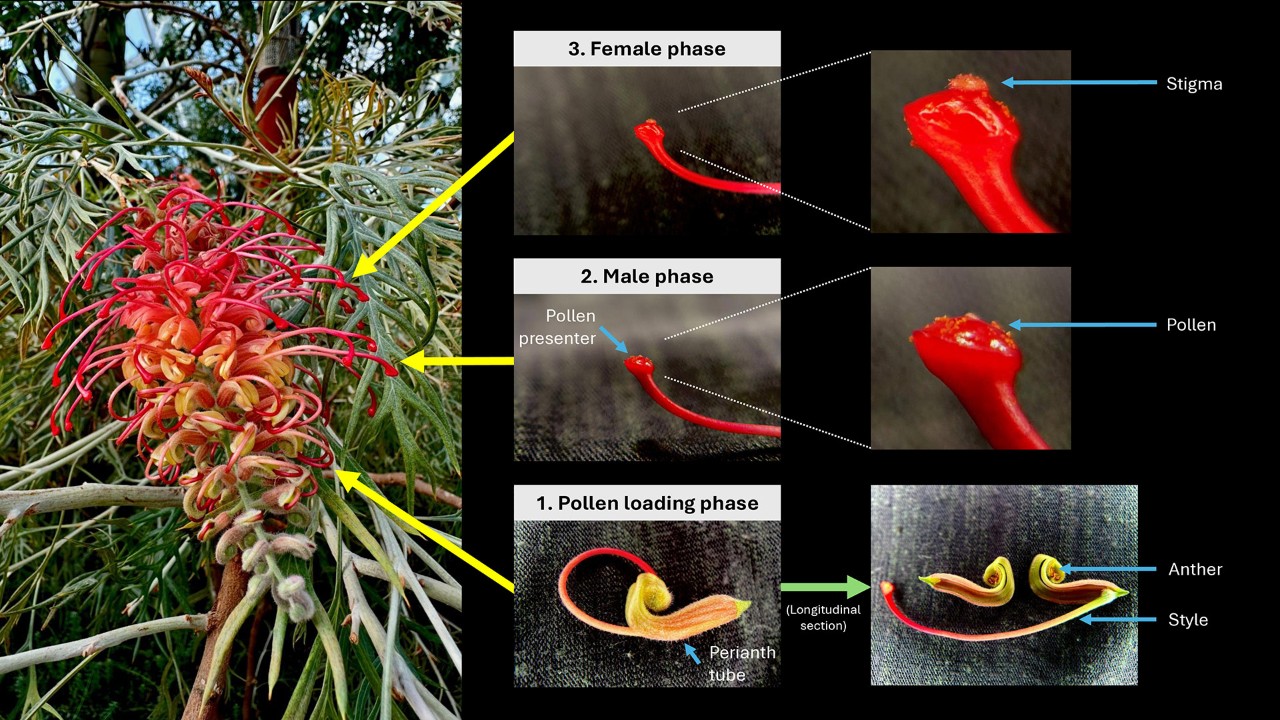 The 3 phases of secondary pollen presentation combined with protandry can be observed on multiple flowers in different developmental stages borne on the same inflorescence. Look closely, the stigma emerges at the centre of the previous pollen presenter in the female phase.
The pollination mechanism occurs in three distinct phases:
- Pollen loading phase: Before the flower opens, the male anthers become mature and release pollen directly onto a specialised disk at the tip of the female style, called the pollen presenter.
- Male phase (Presentation): As the flower opens, the long, spring-like style loops outward and releases, presenting its pollen to brush against visiting bird, insect, or mammal pollinators who have come to drink nectar at the inner base of the flowers.
- Female phase (Receptivity): Once the flower's own pollen is carried away or becomes unviable due to heating up or drying out, the stigma at the centre of the disk becomes mature and ready to receive fresh pollen delivered from other plants by the pollinator.
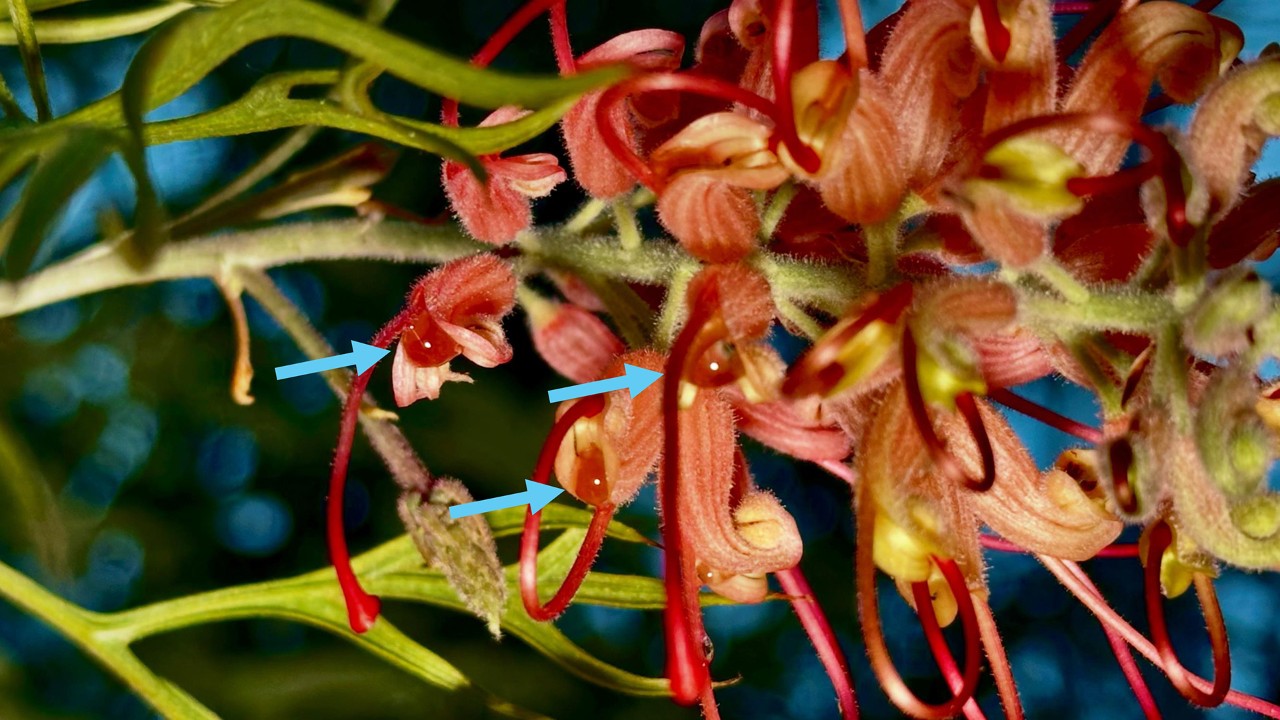 The blue arrows indicate the exuding nectar droplets. Imagine yourself as a pollinator flying up and down around the shrubs, don’t they look tempting to you?
This ingenious, precisely timed pollination mechanism ensures accurate and thrifty pollen placement on a pollinator's head or body exactly where it needs to be delivered to the next Grevillea flower its pollinator visits. It also cleverly minimizes the occurrence of undesirable self-pollination, which can reduce genetic diversity and the ability to adapt to changing climates or emerging diseases!
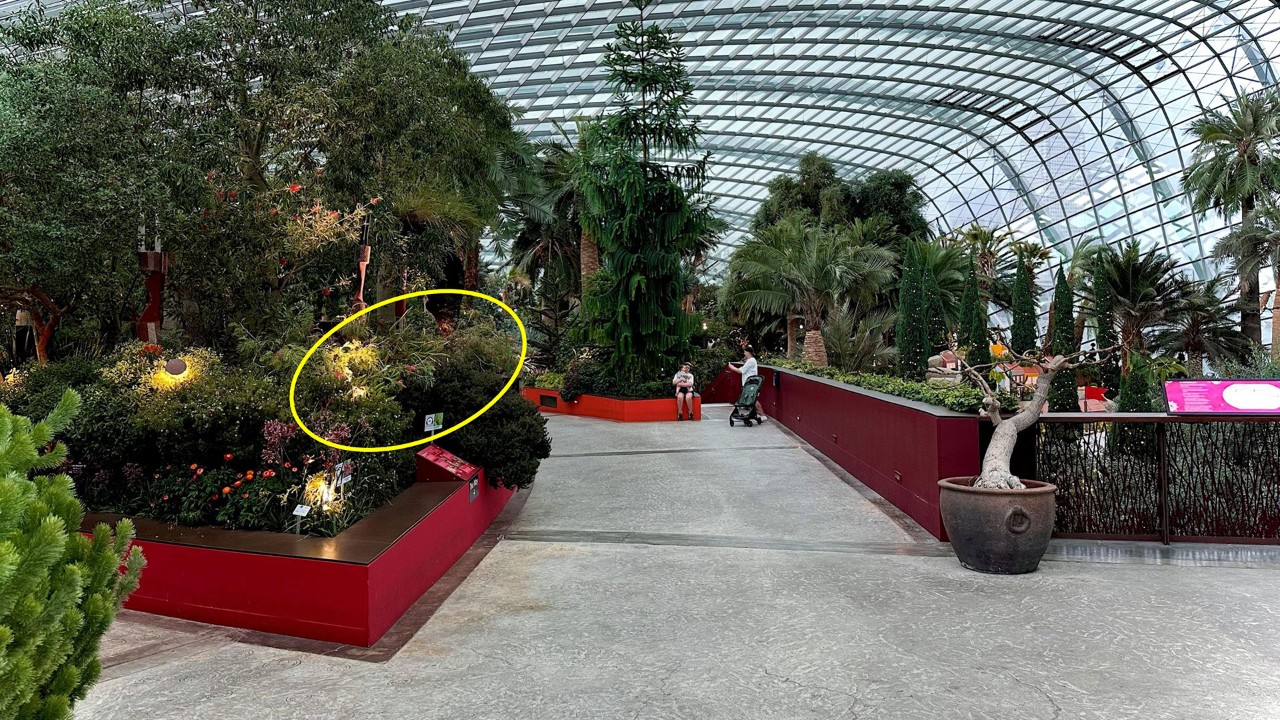 You can find the erect-lobed spider flowers here in Australian Garden, Flower Dome!
Turn left after you enter Flower Dome and you will see this intriguing Grevillea hybrid and many other relatives in the same genus in the first theme garden - Australian Garden! Don’t forget to take a closer look at the flowers to witness their sophisticated pollination mechanism!
Zeke Chen, Manager (Conservatory Operations)
Ever since his tiny hands could hold on to a small toy shovel and sowed the first apricot seed in the garden, the passion for plants has started to grow in Zeke’s heart.
This article is part of our What's Blooming series.
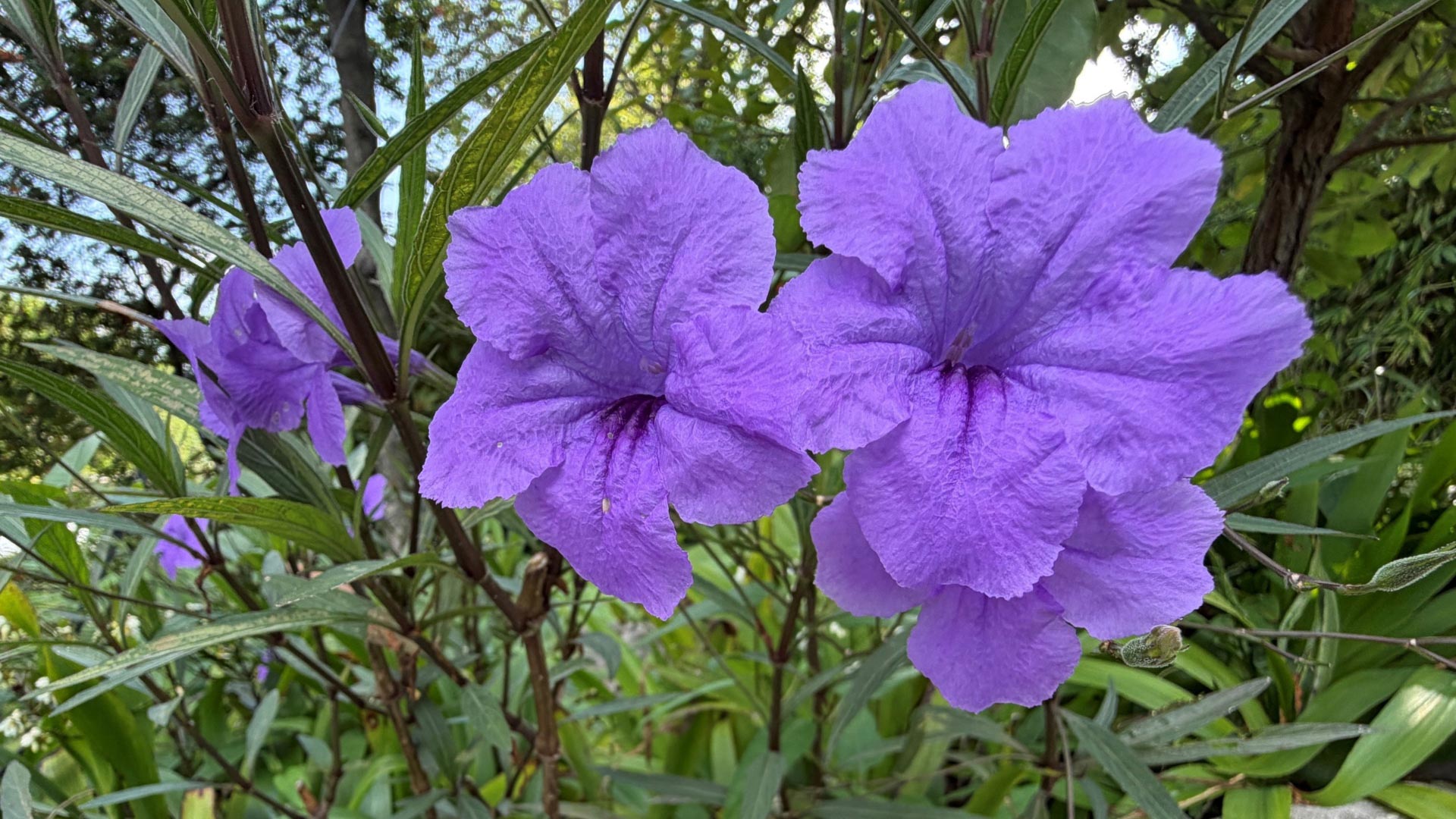
Read Next: Mexican Petunia (Ruellia simplex)
Not only do the snappy purple, pink, or white flowers of this plant stand out from their planter beds, but under just the right conditions, their ripe fruits burst open with startling pops!
You may also be
interested in
 Back To Top