 Temporary closure of Flower Field at Flower Dome on Fri, 20 Nov 2026
Carparks Closure and Traffic Arrangements for the 2026 BYD Singapore International Marathon on 5 and 6 Dec 2026
Upcoming works for Wetlands by the Bay
Advisory for use of tripods at Disney Garden of Wonder at Floral Fantasy
Bay South–Bay East Bridge Construction from 4 May 2026
Temporary closure of Flower Field at Flower Dome on Fri, 20 Nov 2026
A section of the Flower Field at Flower Dome will be temporarily closed on Fri, 20 Nov 2026, from 1.00pm to 2.15pm for a launch event. The rest of Flower Dome will remain open and accessible to visitors.
Carparks Closure and Traffic Arrangements for the 2026 BYD Singapore International Marathon on 5 and 6 Dec 2026
In conjunction with the 2026 BYD Singapore International Marathon, access along Marina Boulevard and Marina Gardens Drive towards Gardens by the Bay will be affected on 5 and 6 December 2026. The following carpark and traffic arrangements will apply during these periods.
1. Carparks closure
All carparks at Gardens by the Bay (Main Entrance Basement, The Meadow, Satay by the Bay and Bayfront Plaza carparks) will be closed during the following periods:
- Sat, 5 Dec 2026: 12.00am to 8.00am
- Sun, 6 Dec 2026: 12.00am to 11.00am
2. Taxi and Ride-Hailing Pick-up and Drop-off
During the above periods, taxi and ride-hailing pick-up and drop-off will still be available along Marina South Avenue. Traffic marshals will be on-site to direct traffic and guide drivers.
Access routes to Marina South Avenue:
- From the East: ECP (City) → MCE → Central Boulevard → Marina South Avenue
- From the West: AYE (City) → MCE → Central Boulevard → Marina South Avenue
For more information, visit www.singaporeinternationalmarathon.com
Upcoming works for Wetlands by the Bay
To facilitate the upcoming works for Wetlands by the Bay, parts of Kingfisher Wetlands will be closed. Visitors will continue to be able to access the vicinity of Kingfisher Lake, and the existing footpaths within the accessible areas of Kingfisher Wetlands will remain open.
Advisory for use of tripods at Disney Garden of Wonder at Floral Fantasy
For a better visiting experience and facilitate crowd movement, we seek your kind understanding that usage of tripods and camera stands will not be permitted in Floral Fantasy.
Bay South–Bay East Bridge Construction from 4 May 2026
To facilitate the construction of the bridge linking Bay South Garden and Bay East Garden, there will be no access for cyclists along the Waterfront Promenade from 4 May 2026. During the construction of the bridge, cyclists heading towards Marina Barrage are advised to take an alternative route around the perimeter of Bay South Garden. Pedestrians may still access the Waterfront Promenade, with a slight diversion to their route.
Click here to download the diversion map.

{{ suggestion.item }}
{{ noOfResults }} results found for "{{ submittedQuery }}"
Filter by
({{ currentFilters.length }})

Showing {{ searchResults.length }} out of {{ noOfResults }}
{{ result.category.label }}
We’re sorry. 0 results found for "{{ submittedQuery }}"
Try doing these:
- Check your spelling
- Try more general words
- Try different keywords
Mexican Petunia (Ruellia simplex)
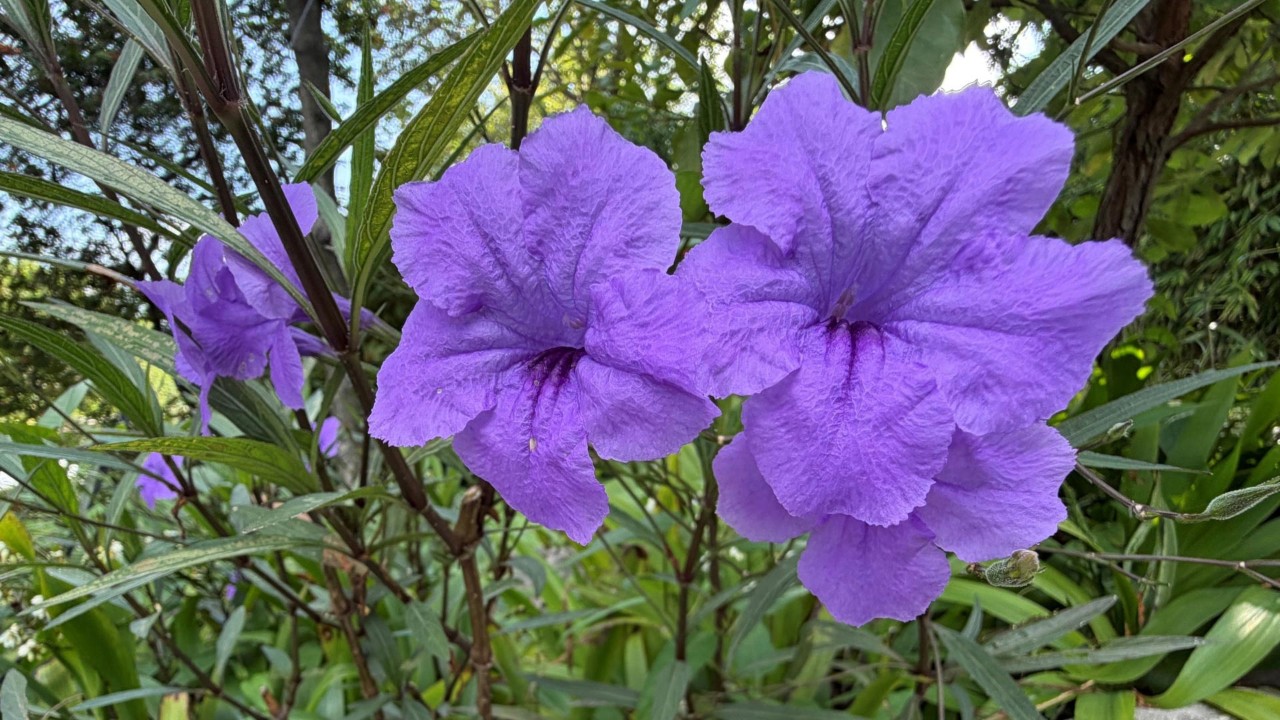
Despite its similar-looking tubular flowers with a showy skirt of five fused petals and long tubular throat, the Mexican petunia (Ruellia simplex) is not a true petunia, but a member of the sea holly family (Acanthaceae). Native to Mexico, the Caribbean, and parts of Central and South America, the Mexican petunia is a short, shrubby, herbaceous plant up to 1.2m tall with slender stems that have prominent swellings at the stem nodes from which their slender, lance-shaped leaves arise.
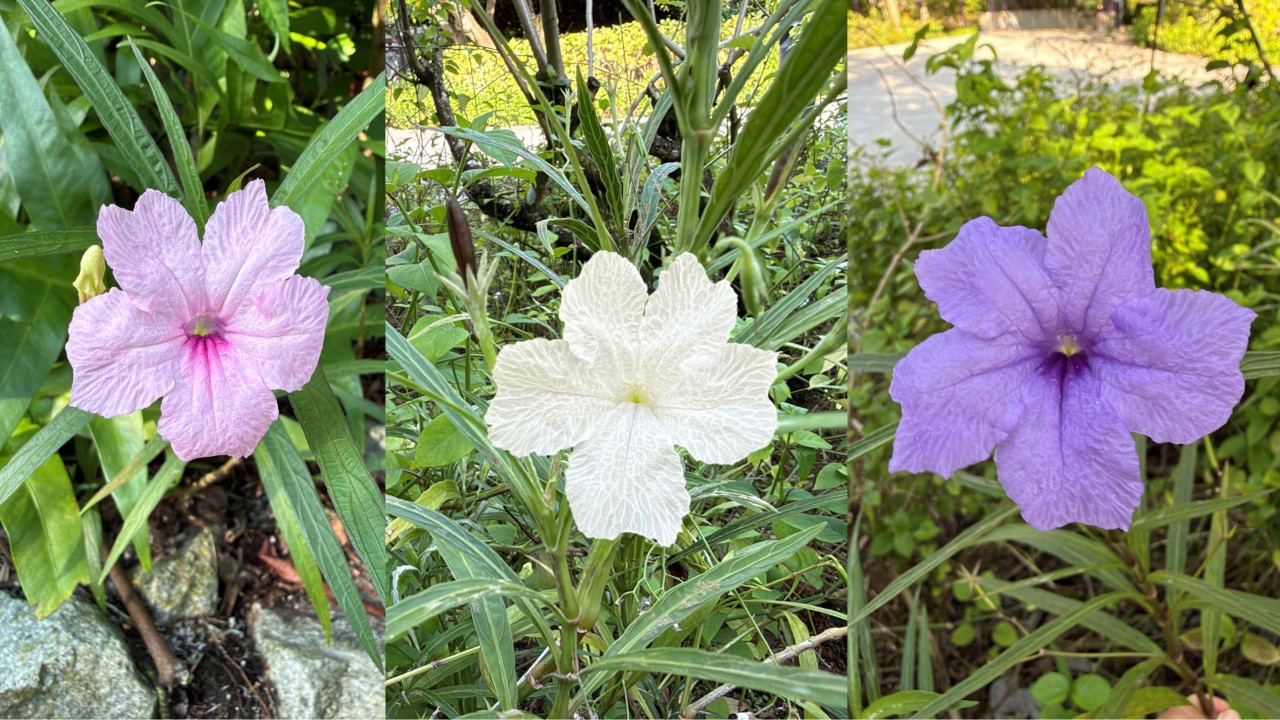 Can you spot the ripe brown fruit capsule to the back left of the white flower?
Each Mexican petunia flower lasts only for a single day, but the freely flowering plants produce a brand-new crop of flowers on a daily basis! Flowers are produced either singly or on short-stemmed clusters called cymes, growing from leaf axils on the main stem. Their nectar-rich flowers are pollinated mostly by bees but are also visited by butterflies, the occasional moth, as well as hummingbirds in their native range and sunbirds here in Singapore.
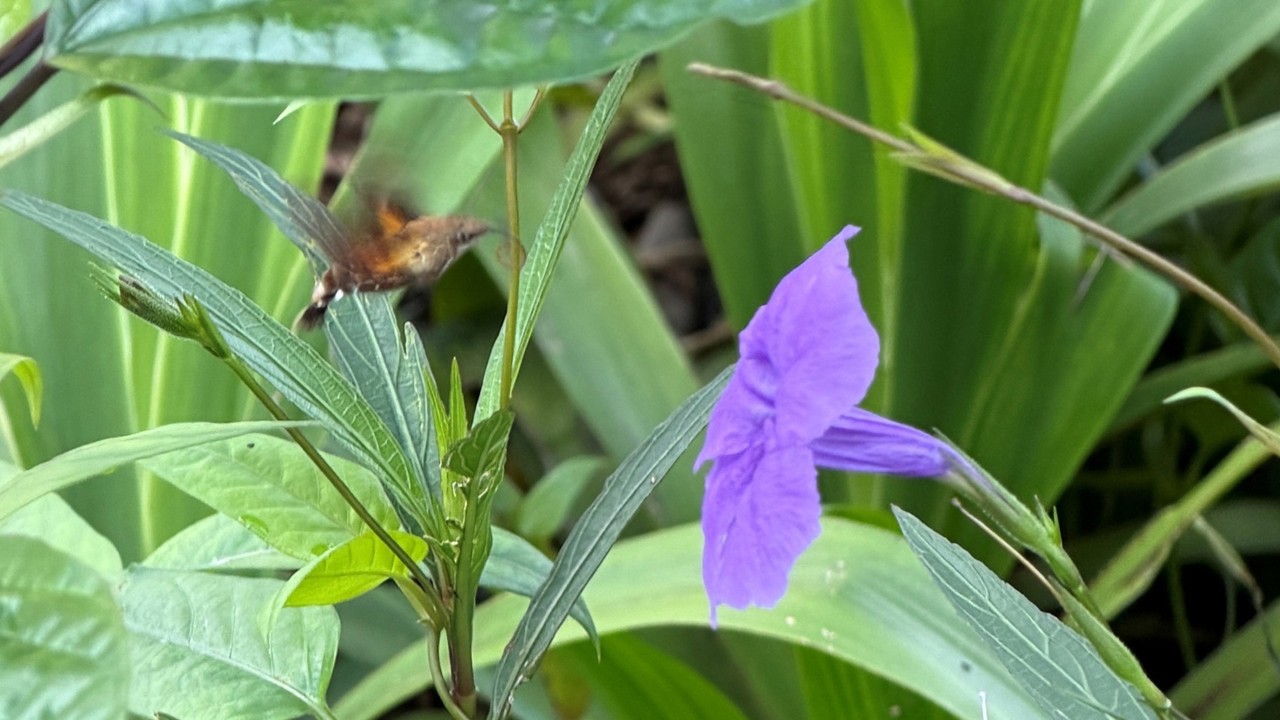 Moths like this hummingbird hawk moth use their long, straw-like mouthpart called a proboscis to sip the nectar at the base of the Mexican petunia’s long, tubular flowers. Can you spot the coiled proboscis on this hawkmoth in flight?
After the flowers fade and start to develop into fruit, the real fun begins. The whole sea holly family is known for a seed dispersal mechanism called explosive dehiscence! The Mexican petunia is no exception. Instead of fleshy, sweet fruits whose seeds are eaten and spread by animals, it has slender, green capsules that dry and ripen to a dark brown, gradually turning upwards to point at the sky. The two halves of each dry fruit capsule are held together by a water-soluble glue of pectin at the tip.
When a rainstorm comes and water dissolves the glue, the capsule springs open with an audible pop, flinging the small brown seeds up to 3m away, at the perfect time to start sprouting. Look closely at the wet seeds and you’ll see a jelly-like outer coat start to form, not unlike the wetted seeds of basil or chia that we like to eat. This helps the seed stick to either passing animals or the ground and take up water in preparation for growing.
Now that you know what to look for, you’ll see these plants all over Singapore! Some of the new deep purple-flowered cultivars are a landscaper’s dream: masses of eye-catching flowers on short, sturdy stems with slender, graceful leaves, easily pruned to a manageable height. If you’re searching for some capsules to play with look carefully. You’ll find many of these plants have no fruit or seeds: they were bred to be sterile to avoid the wildly explosive seed distributing nature of their wild relatives. But that doesn’t stop these vigorous plants from spreading belowground through rhizomes, underground stems that send out leafy new shoots!
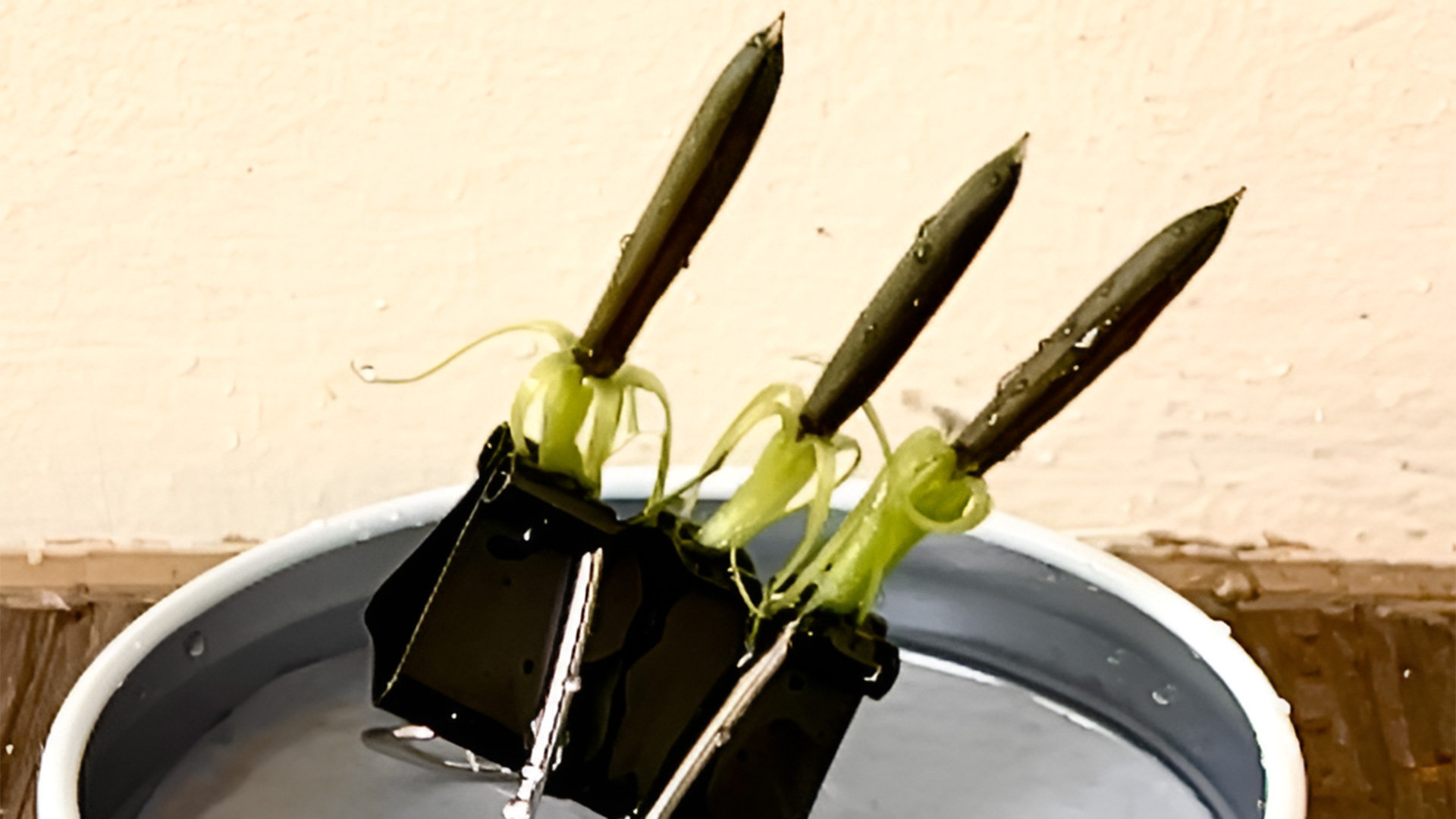
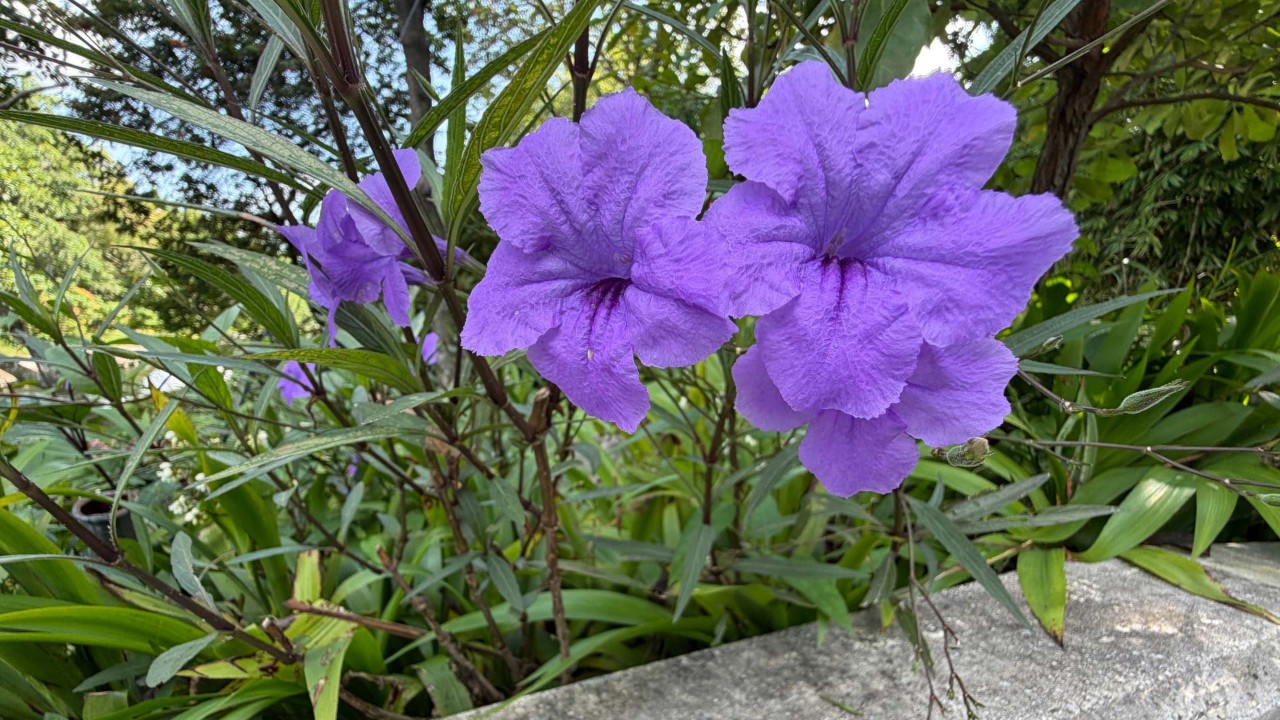 Sterile cultivars of Mexican petunia are popular in streetscaping because of their free-flowering but seed-free habit! Look on the concrete curb and see if you can spot the some of the undeveloped fruits shed from this sterile plant.
Find the Mexican Petunia at several locations in the Garden, such as along parts of Dragonfly Lake, or by the Active Garden, but most prominently at the Fruits and Flowers Garden in World of Plants, where you’ll find plants of all three flower colours, plus its broader-leafed purple flowered cousin, the Minnie root (Ruellia tuberosa).
Experience the explosive seed-flinging power of these plants in the palm of your hand on our FREE, A Sensory Stroll – Touch Me If You Dare! guided walking tours, every Saturday and Sunday!
Written by: Janelle Jung, Senior Researcher (Research and Horticulture)
A transplanted pake (Hawai'i-born Chinese), she's finding her own Singaporean roots. Every plant has a story, and Janelle helps discover and share these with colleagues and guests, hoping to spark a mutual plant passion! Ask her what plant she named her cat after!
This article is part of our What's Blooming series.
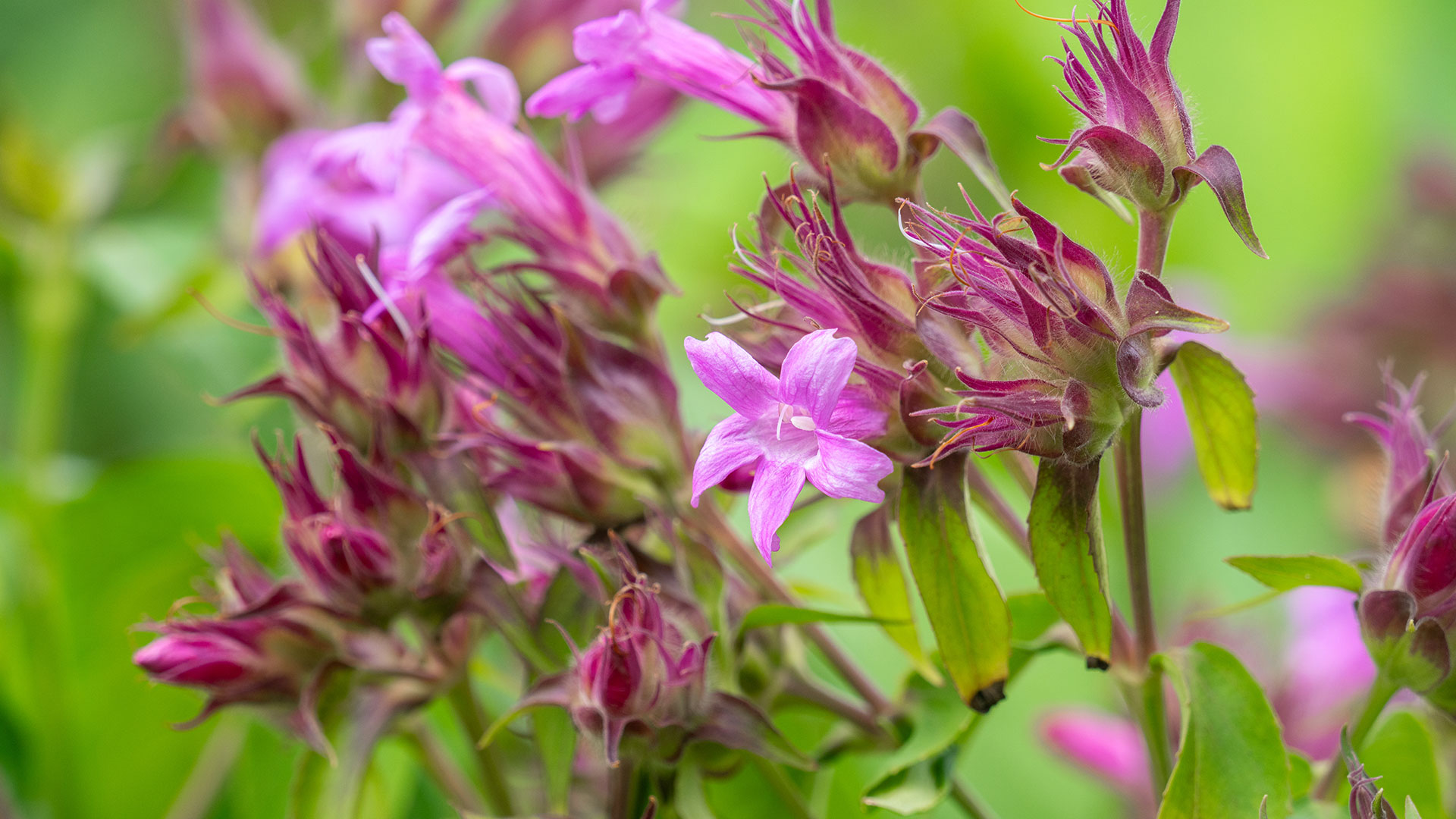
Read Next: Columbian Petunia (Suessenguthia multisetosa)
Love petunias? Step outside the conservatories and meet this pinkish-purple petunia lookalike blooming right here in our Outdoor Gardens!
You may also be
interested in


 Back To Top