 Closure of Floral Fantasy on 13 Oct 2026
Floral Fantasy will be closed on 13 Oct 2026 for Maintenance.
Closure of OCBC Skyway on 14 Oct 2026
OCBC Skyway will be closed on 14 Oct 2026 for maintenance.
Advisory for use of tripods at Disney Garden of Wonder at Floral Fantasy
For a better visiting experience and facilitate crowd movement, we seek your kind understanding that usage of tripods and camera stands will not be permitted in Floral Fantasy.
Bay South–Bay East Bridge Construction from 4 May 2026
To facilitate the construction of the bridge linking Bay South Garden and Bay East Garden, there will be no access for cyclists along the Waterfront Promenade from 4 May 2026. During the construction of the bridge, cyclists heading towards Marina Barrage are advised to take an alternative route around the perimeter of Bay South Garden. Pedestrians may still access the Waterfront Promenade, with a slight diversion to their route.
Click here to download the diversion map.

{{ suggestion.item }}
{{ noOfResults }} results found for "{{ submittedQuery }}"
Filter by
({{ currentFilters.length }})

Showing {{ searchResults.length }} out of {{ noOfResults }}
{{ result.category.label }}
We’re sorry. 0 results found for "{{ submittedQuery }}"
Try doing these:
- Check your spelling
- Try more general words
- Try different keywords
Year 2026
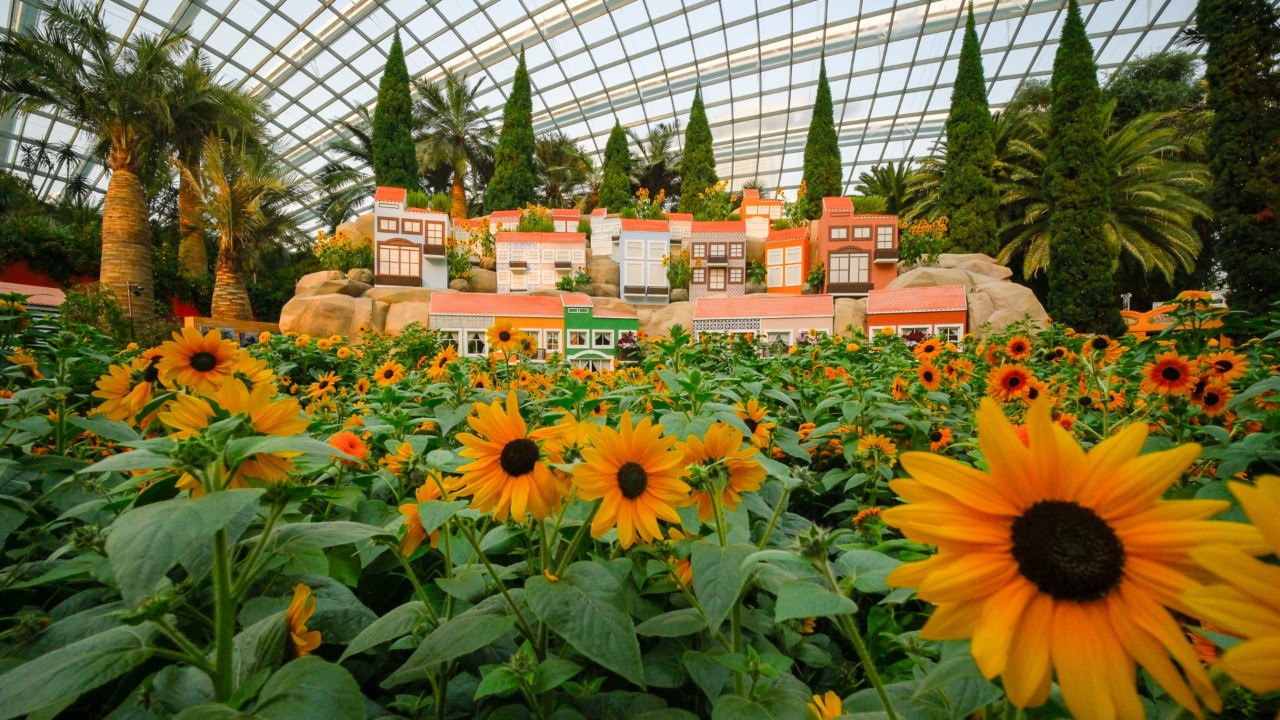 A 12m-long, multi-tiered recreation of Lisbon’s colourful Alfama hillside rises amid sunflowers in Sunflower Surprise: Garden by the Ocean.
In a first for Gardens by the Bay, Portugal takes centrestage in Sunflower Surprise: Garden by the Ocean (恋恋向日葵), anchored by a dramatic 12m-long recreation of Lisbon’s colourful Alfama hillside. Surrounded by more than 5,000 sunflowers of 20 varieties, the landscape brings visitors through the multifaceted story of the nation, connecting historic streetscapes, maritime exploration, and rich agricultural traditions.
Sunflower Surprise: Garden by the Ocean also commemorates 45 years of diplomatic relations between Singapore and Portugal, and is presented in partnership with the Embassy of Portugal in Singapore, with support from Turismo de Portugal and AICEP (Portuguese Trade & Investment Agency). It was launched today by Singapore’s Minister of State for Foreign Affairs and National Development Mr Alvin Tan, alongside Portugal’s Minister of State for Tourism, Commerce and Services Mr Pedro Machado.
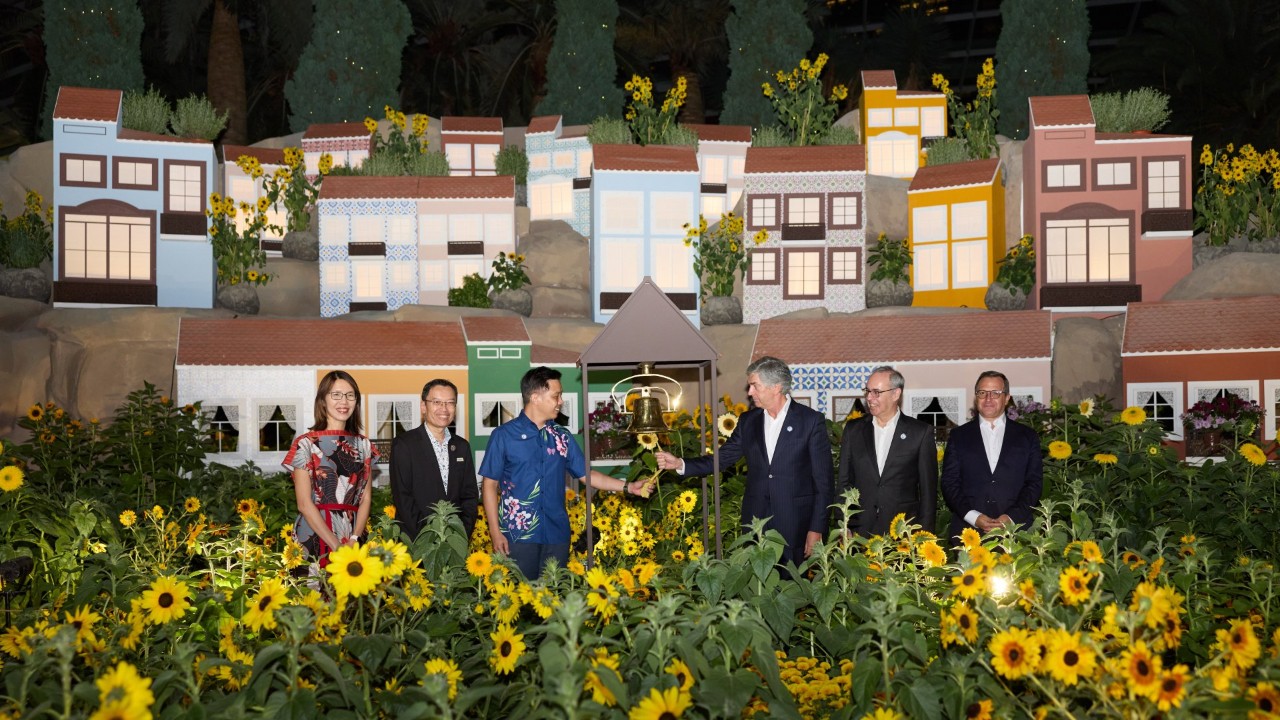 From left: Gardens by the Bay Board Director Ms Loh Woon Yen, Gardens by the Bay CEO Mr Felix Loh, Singapore’s Minister of State for Foreign Affairs and National Development Mr Alvin Tan, Portugal’s Minister of State for Tourism, Commerce and Services Mr Pedro Machado, President of Turismo de Portugal Mr Carlos Abade, and Ambassador of Portugal to Singapore His Excellency Carlos Pires, at the launch of Sunflower Surprise: Garden by the Ocean.
Gardens by the Bay CEO Mr Felix Loh said: “Sunflowers are a familiar sight across Portugal during the warmer months with their bright, cheerful blooms that evoke happiness, and a fitting symbol of 45 years of warm diplomatic ties between Singapore and Portugal. Working closely with the Embassy of Portugal in Singapore, we have brought some of the most iconic and authentic elements of the country’s rich culture to Flower Dome, including a Portuguese fair with cuisine and performances that visitors will not be able to experience anywhere else.”
From historic streets to coastal and countryside traditions
The floral display unfolds across three distinct settings that reflect different sides of Portugal — the historic streets of Lisbon, its coastal and maritime heritage, and the agricultural landscapes of the countryside. Highlights for each area include:
A 12m-long, multi-tiered recreation of the colourful hillside homes of Alfama, one of Lisbon’s oldest neighbourhoods, that anchors the floral display. Visitors can walk through the structure to discover Portuguese textiles, crafts and azulejo-inspired details, while taking in views of the sunflower field through its windows.
Traditional Lisbon kiosks and historic shopfronts that evoke everyday city life, including a recreation of a late-19th-century-style refreshment kiosk and a Porto shop dating back to 1917, with its Art Nouveau façade and colourful tilework.
A 6m-tall recreation of the Belém Lighthouse and the almost 4m-long bow of a traditional caravela, the sailing vessel closely associated with the country’s age of maritime exploration, reflect Portugal’s centuries-old relationship with the sea.
The colourful striped wooden houses of Costa Nova, originally used by fishermen to store nets and equipment, recall the seaside town’s fishing roots.
Wine barrels, a traditional olive oil press, cork oak trees, and examples of harvested and finished cork product that represent Portugal’s agricultural heritage and some of its best-known exports.
To mark this inaugural partnership with Gardens by the Bay, the Embassy of Portugal in Singapore has gifted two young sobreiro, or cork oak trees, to Flower Dome. The trees symbolise the friendship between Singapore and Portugal taking root at Gardens by the Bay, while also commemorating 45 years of friendship between the two countries.
Sunflowers grown in-house and unusual varieties
Of the 5,000 sunflowers, about 1,500 across eight varieties were grown in-house from seed by Gardens by the Bay’s research horticulturists. One example is Helianthus ‘Gold Lite’, a tall-growing variety with golden-yellow petals and a light green-gold centre, which can reach up to 1.8m in height.
Other highlights are varieties that break away from the conventional appearance of sunflowers. These include Helianthus ‘White Nite’, with very pale yellow to creamy petals; Helianthus ‘Sunfinity Red’, with golden-yellow blooms marked by a reddish-burgundy ring around a dark centre; and the Helianthus ‘Smiley’ series, with bright yellow petals and dark centres.
Complementary blooms including chrysanthemums, blanket flowers, hydrangeas, mandevillas, dianthus, marigolds and petunias add further colour and texture throughout the floral display.
More Portuguese culture at a fair and photo exhibition
Visitors can also look forward to Experience Portugal on Saturday, October 10 at the Flower Field Hall adjoining Flower Dome, offering a fuller taste of the country through Portuguese products such as pastéis de nata (custard tarts), canned goods, cheeses, cured ham and a selection of Portuguese wines. The free programme will also feature folk dance performances, poetry sessions, Portuguese film screenings, family-friendly workshops and a marine conservation workshop in partnership with WWF Singapore.
A photo exhibition titled Portugal–Singapore: 45 Years of Diplomatic Relations, Five Centuries of Shared History, previously displayed at the National Library Board, will be held at the Mediterranean Garden throughout the duration of the floral display. The exhibition traces five centuries of encounters and exchange between Portugal and Singapore, from early maritime connections to the cultural and community ties that continue today.
Visitors to Flower Dome can also stand a chance to win a pair of tickets to Portugal, courtesy of official airline partner Turkish Airlines, by taking part in a contest held in conjunction with the event.
Please refer to the Annexes for more information:
- The Experience Portugal fair
- Additional Workshop and Cultural Programmes
- Win a pair of tickets to Portugal
Sunflower Surprise: Garden by the Ocean
Date: Until Monday, 9 November 2026
Time: 9.00am to 9.00pm
Venue: Flower Dome at Gardens by the Bay
Admission charges apply.
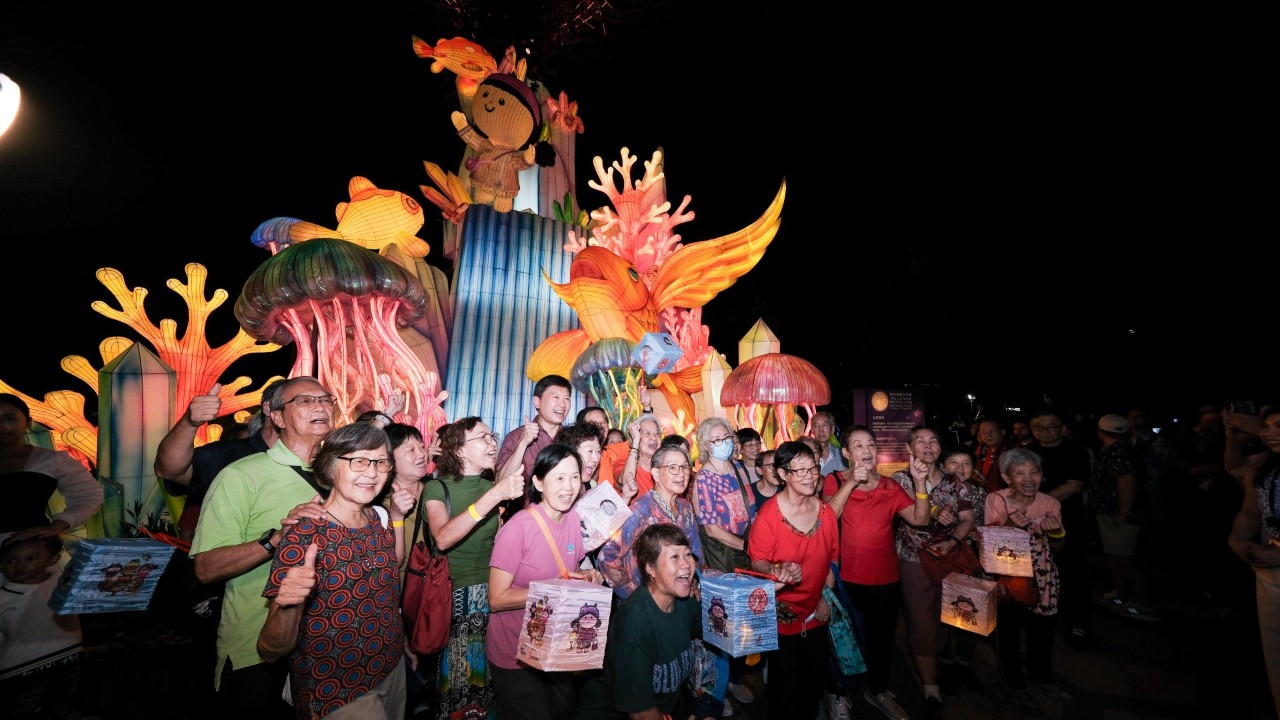 Minister for National Development Mr Chee Hong Tat with the community at the Waterfall Fantasy lantern set at the launch of Mid-Autumm Festival.
At the 14th edition of year’s Mid-Autumn Festival at Gardens by the Bay (滨海花园庆中秋) – the Gardens’ longest running community event – eight large-scale lantern sets transform the outdoors into a dreamlike realm of glowing blooms, shimmering waterfalls and mystical forests.
The festival was officially launched this evening with Minister for National Development Mr Chee Hong Tat lighting up the Moonlit Garden (月光花园) lantern set at Golden Garden. This lantern depicts original homegrown character Fenbao – an eternal five-year-old filled with the joy and wonder of childhood – discovering a magical garden where a pathway of glowing flowers reach towards the moon.
Mid-Autumn Festival at Gardens by the Bay runs until Sep 27, and admission is free.
Fenbao is created by acclaimed Singaporean advertising creative Ms Lim Sau Hoong, a President’s Design Award recipient. Fenbao is joined by her faithful canine companion Ah Ken, friends Chiu Chiu and Pineapple Boy, and Bee Nini, a computer bee from the future.
The festival theme this year is A Mid-Autumn Fantasy (奇幻之秋). Alongside Fenbao and friends, this edition puts a fresh spin on familiar Mid-Autumn traditions, inviting visitors to rediscover the festival and broadening its appeal to more people.
Gardens by the Bay CEO Mr Felix Loh said, “Mid-Autumn Festival at Gardens by the Bay has grown over the past 14 years to become our longest-running and most enduring community event. Each year, we seek to reimagine the festival in new and engaging ways while staying true to the traditions and spirit of the celebration. This year, we are excited to collaborate with the acclaimed Lim Sau Hoong, whose homegrown character Fenbao brings a whimsical world of fantasy and imagination to the celebration. Fenbao’s bond with her friends captures the spirit of togetherness at the heart of Mid-Autumn, while her love of nature resonates naturally with the Gardens. As the People’s Garden, we are proud to provide a platform for homegrown creativity to reach a wider audience, while bringing a distinctly local flavour to our Mid-Autumn festivities.”
Ms Lim, who is also an artist, is the creative force behind some of the most iconic commercials of the 1990s. Her portfolio of 30 years spans Hong Kong singer George Lam’s Are You Afraid of the Dark? series for Guinness Stout and those for Scott’s Emulsion cod liver oil featuring the memorable Growing Up jingle.
The collaboration with her follows other creative collaborations with Singaporean artists for Mid-Autumn Festival, beginning with illustrator Mr Lee Kow Fong, known as Ah Guo, in 2024 and Ms Wang Shijia, creator of Ang Ku Kueh Girl and Friends, in 2025.
Large-scale lanterns depict vibrant and imaginative scenes
The festival’s largest lantern set, The Voyage (星月之旅) measures 20m across and 6m in height, and floats on Dragonfly Lake. It features an underwater scene with Fenbao riding a celestial whale, whose colours and details were spray painted by hand on site by an artisan who flew in from China.
At Supertree Grove, the 11m-tall Waterfall Fantasy (幻彩瀑布) – the tallest lantern set – rises up against an iconic Supertree.
Also at Supertree Grove, Fenbao and friends gather beneath the moonlit sky amid colourful flowers and floating jellyfish in The Garden Celebration (欢庆花园). Visitors can step onto an elevated platform and become part of the scene as they pose for photos.
Details of all eight lantern sets can be found in the Annex.
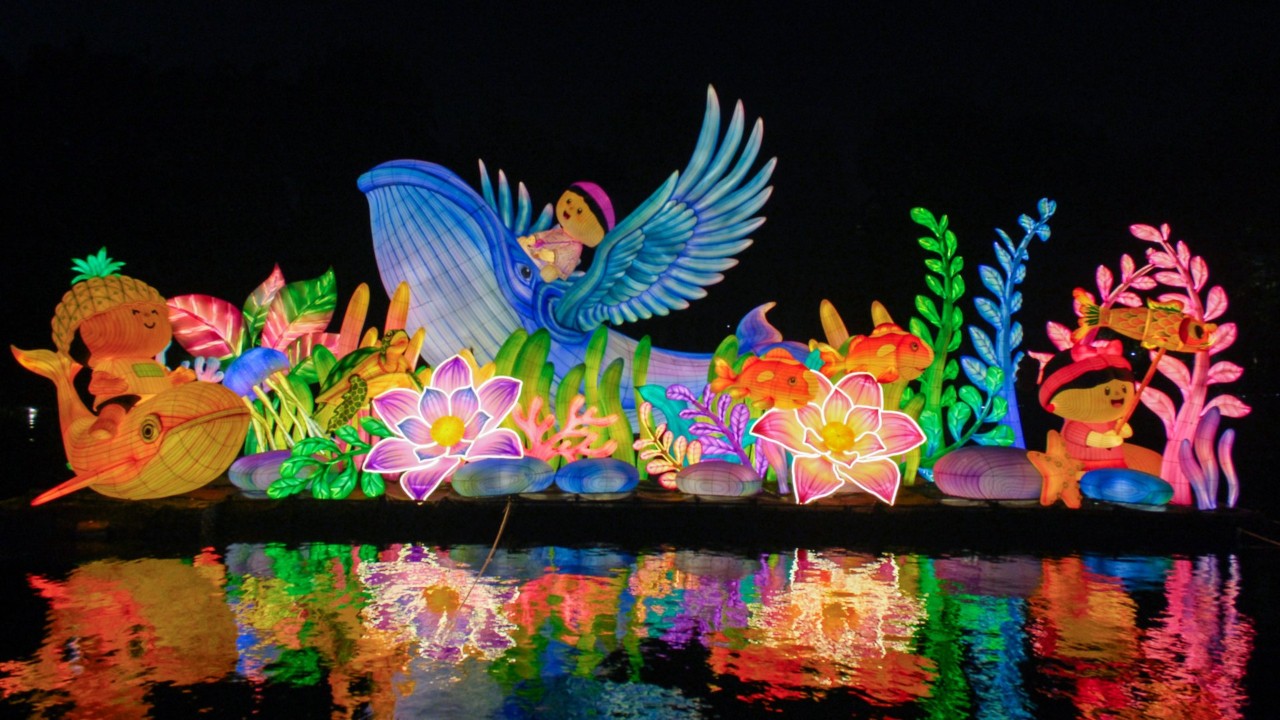 The Voyage on Dragonfly Lake is the largest lantern set measuring 20m across and 6m in height.
The first Big Flag Championship at the Gardens and other activities
This year’s Mid-Autumn Festival is also a showcase of traditional culture. A key highlight is the first Singapore Big Flag Championship to be held at Gardens by the Bay, which will be rounded off with a lively dragon dance. Both events are taking place at Supertree Grove on Sep 27 – the last day of Mid-Autumn Festival at Gardens by the Bay – with no admission charge.
When in competition, Big Flag teams put their strength, skill and coordination to the test by tossing massive 8.5m-tall flags into the air before balancing them on different parts of their bodies.
Ongoing throughout Mid-Autumn Festival at Gardens by the Bay is Garden Rhapsody – Tales of the Moon, a special edition of the Supertree music and light show, at 7.45pm and 8.45pm nightly.
Hands-on craft activities, a street food marketplace, carnival games and family-friendly rides round out the range of activities.
Free entry for kids and lantern giveaways in Flower Dome
From now until Sep 27, Singapore residents aged 12 and below enjoy free admission to Flower Dome, where they can explore the ongoing Lilytopia floral display.
There will also be free, limited-edition Fenbao lantern giveaways and lantern panting activities in Flower Dome, while stocks last.
Mid-Autumn Festival at Gardens by the Bay is supported by community partner Tote Board and sponsor Kwan Im Thong Hood Cho Temple. SPH Media's Chinese Media Group is the media partner, and UFM100.3 and 96.3 Hao FM are the official radio stations.
Please refer to the Annex for more information.
Mid-Autumn Festival at Gardens by the Bay 2026
Date: Until Sunday, 27 September 2026
Time: 6pm to 10pm
Details: Admission is free. Charges apply for selected activities and carnival games.
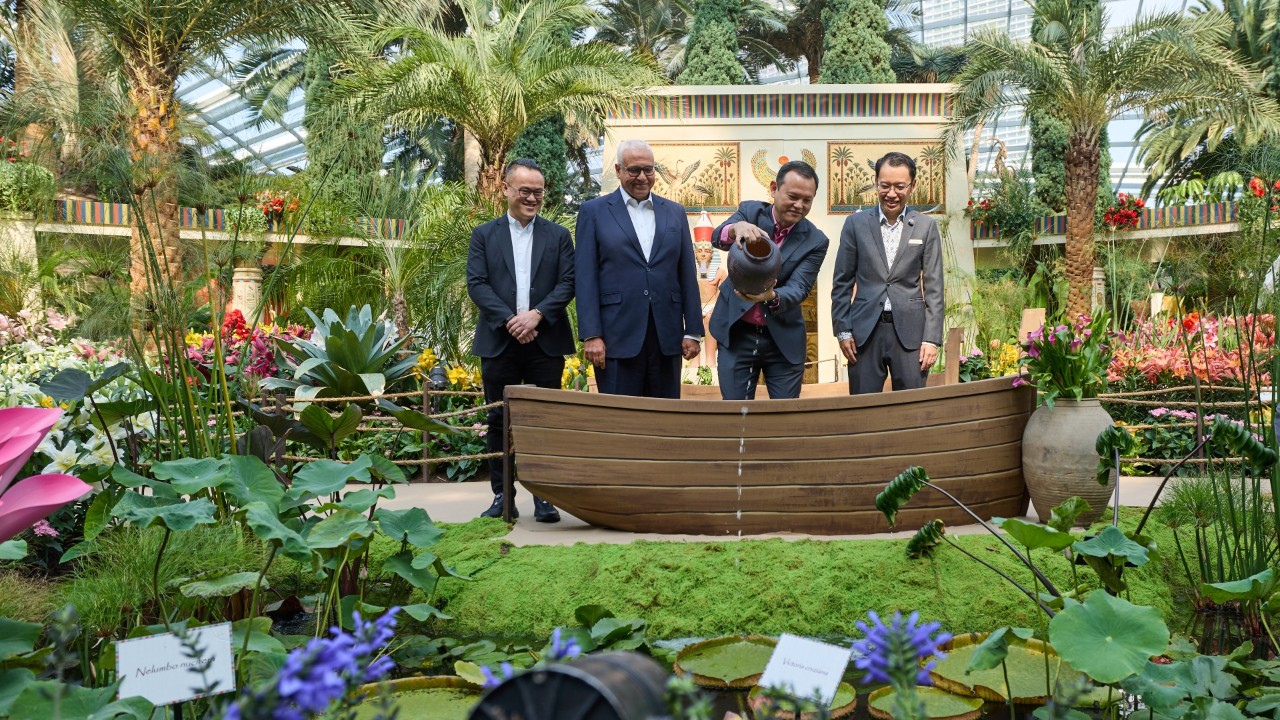 Acting Minister-in-charge of Muslim Affairs and Senior Minister of State for Defence Mr Zaqy Mohamad launches Lilytopia with a symbolic pour of water into the recreation of a Nile-fed pond. He is joined by (from left) Gardens by the Bay Board Director Mr Sam Liew, Ambassador of the Arab Republic of Egypt Mr Ahmed Mostafa, and Gardens by the Bay CEO Mr Felix Loh.
The image of Egypt that comes to mind for many is one of vast sandy dunes and massive stone monuments. Yet thousands of years ago, colour was everywhere. Temple walls were adorned with hieroglyphs painted in vivid mineral and botanical pigments, while lush gardens flourished along the Nile. Lilytopia (百合乌托邦), Gardens by the Bay’s first floral display inspired by Ancient Egypt, brings this vibrant world to life, inviting visitors to step into a landscape where colour, nature and mythology intertwine.
Amidst a recreated landscape now lost to time, there are more than 7,000 lilies representing 46 species and varieties, from fragrant garden lilies in a spectrum of colours, to the sacred Egyptian blue waterlily, to giant Victoria waterlilies.
Presented in collaboration with the Embassy of the Arab Republic of Egypt in Singapore, Lilytopia marks 60 years of diplomatic relations between Singapore and Egypt. Acting Minister-in-charge of Muslim Affairs and Senior Minister of State for Defence Mr Zaqy Mohamad launched the floral display today. Lilytopia runs until September 27.
Gardens by the Bay CEO Mr Felix Loh said, “Ancient Egyptian civilisation was rich with verdant gardens and vividly painted art, and Lilytopia recreates this lesser-known world through a breathtaking landscape of lilies, inviting visitors to discover how closely the Nile and nature were woven into daily life. As we commemorate 60 years of diplomatic relations between Singapore and Egypt, we are excited to revive the intriguing beauty of an enchanting era of Egyptian history through horticulture, right here in Singapore.”
Walk through a formal Egyptian garden of before
At the heart of Lilytopia is Gardens by the Bay’s interpretation of a formal ancient Egyptian garden. Such gardens were often walled and rectangular, with a central pool containing fish and aquatic plants. Lilytopia’s pond also pays tribute to the Nile, whose waters nourished fertile land and sustained agriculture, communities and gardens amid Egypt’s arid landscape.
The pond brings together plants that share the “lily” name. The Egyptian blue waterlily (Nymphaea caerulea) was closely associated with ancient Egyptian garden pools. Its flowers close at night and reopen with the morning sun, a daily cycle that made it a symbol of creation and rebirth. One of the most common plant motifs in ancient Egyptian art, it also appeared on temple offerings and tomb furnishings.
Giant waterlilies Victoria amazonica and Victoria cruziana make their debut in a Flower Dome floral display. These South American plants are among the largest members of the waterlily family and were grown in-house by Gardens by the Bay’s research team from seed over the past year and a half.
More than 40 varieties of garden lilies add colour and fragrance. Highlights include these cultivars which are making their debut:
- Lilium ‘Tiny Massive’, a compact Asiatic lily with striking yellow petals and dark centres.
- Lilium ‘Tropical Dragon’, an unusual lily with narrow, curled lime-green petals edged and streaked in vivid pink, giving its blooms a spiky, sculptural form resembling a dragon fruit.
- Lilium ‘White Triumph’, an Asiatic lily prized for its striking flowers and elegant fragrance. Its large, showy, pure-white blooms are complemented by lush, dark green, sword-like foliage.
Plants closely associated with the landscapes and daily life of Egypt, including ginger, pomegranate, and papyrus, complete the Egyptian garden. During ancient times, the soft inner pith of papyrus stems were cut into strips, arranged in perpendicular layers, then pressed and dried to form a writing surface that carried records, literature and letters across the ancient Mediterranean. The plant’s name “papyrus” also gave rise to the word “paper”.
Monuments interpreted in full colour
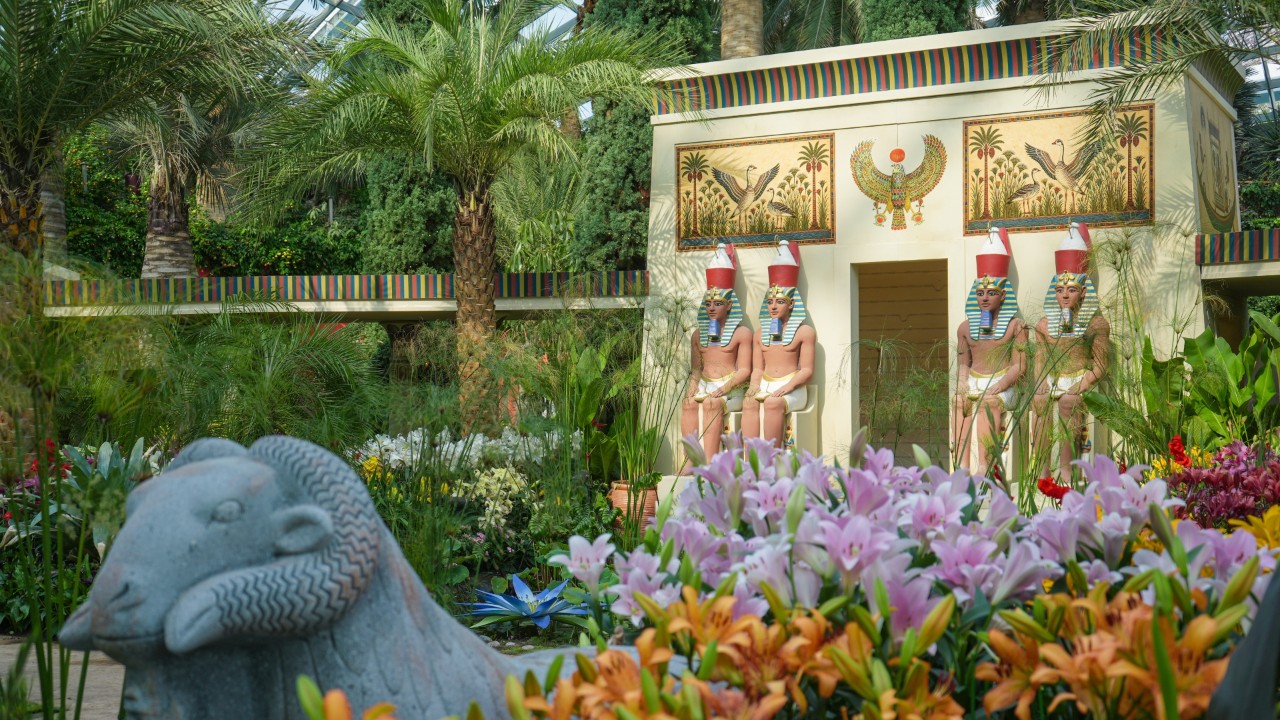
A 4.5m-tall façade inspired by the Great Temple of Abu Simbel in southern Egypt anchors the display. It recreates the four colossal, seated statues of King Ramesses II that dominate the original rock-cut temple, which he commissioned around 1264 BC.
Colourful hieroglyphs on the walls and columns draw inspiration from the Temple of Hathor at Dendera, one of Egypt’s best-preserved temple complexes. Its surviving painted carvings and plant motifs offer a glimpse of the vivid palette that once adorned Egypt.
Towering statues throughout the floral display introduce visitors to some of Egypt’s many deities, including Hathor, goddess of music, joy and motherhood; Ra, the sun god; and Thoth, god of the moon, wisdom and writing.
Other highlights include architecture inspired by the Temple of Edfu; a solar barque, which Egyptians believed carried the sun god Ra across the sky; and traditional irrigation tools used to lift water, including the shaduf and Archimedes screw.
Free plant giveaway
To mark the opening of Lilytopia, visitors to Flower Dome can take home a complimentary air plant from today until August 25. Limited to one plant per visitor and while stocks last.
Lilytopia
Date: Until Sunday, 27 September 2026
Venue: Flower Dome
Time: 9.00am to 9.00pm
Details: Admission to Flower Dome applies.
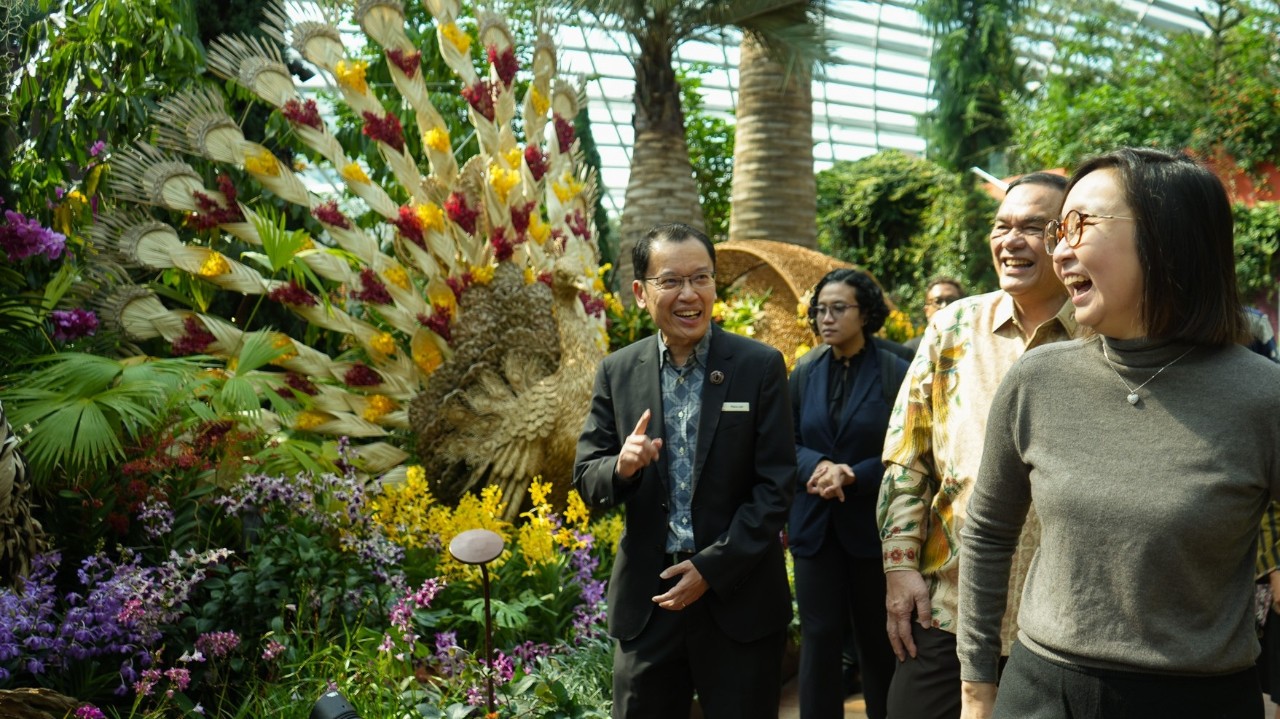 (From left) Gardens by the Bay CEO Mr Felix Loh, Ambassador of the Republic of Indonesia to Singapore Dr. Hotmangaradja Pandjaitan, and Deputy Minister of Creative Economy of the Republic of Indonesia Ms Irene Umar viewing the peacock anyaman sculpture.
Four of the large-scale anyaman sculptures that were among the highlights of this year's Indonesian-themed Orchid Extravaganza: Rhythm of the Rainforest in Flower Dome – the Sumatran tiger, Rafflesia, peacock and pair of hornbills – will be on long-term display at Gardens by the Bay after the orchid showcase concludes on August 10.
Indonesia's Ministry of Creative Economy is gifting the four sculptures to Gardens by the Bay as a gesture of friendship between their country and Singapore. The four are among the nine specially commissioned anyaman sculptures depicting Indonesian cultural elements and wildlife at Orchid Extravaganza: Rhythm of the Rainforest.
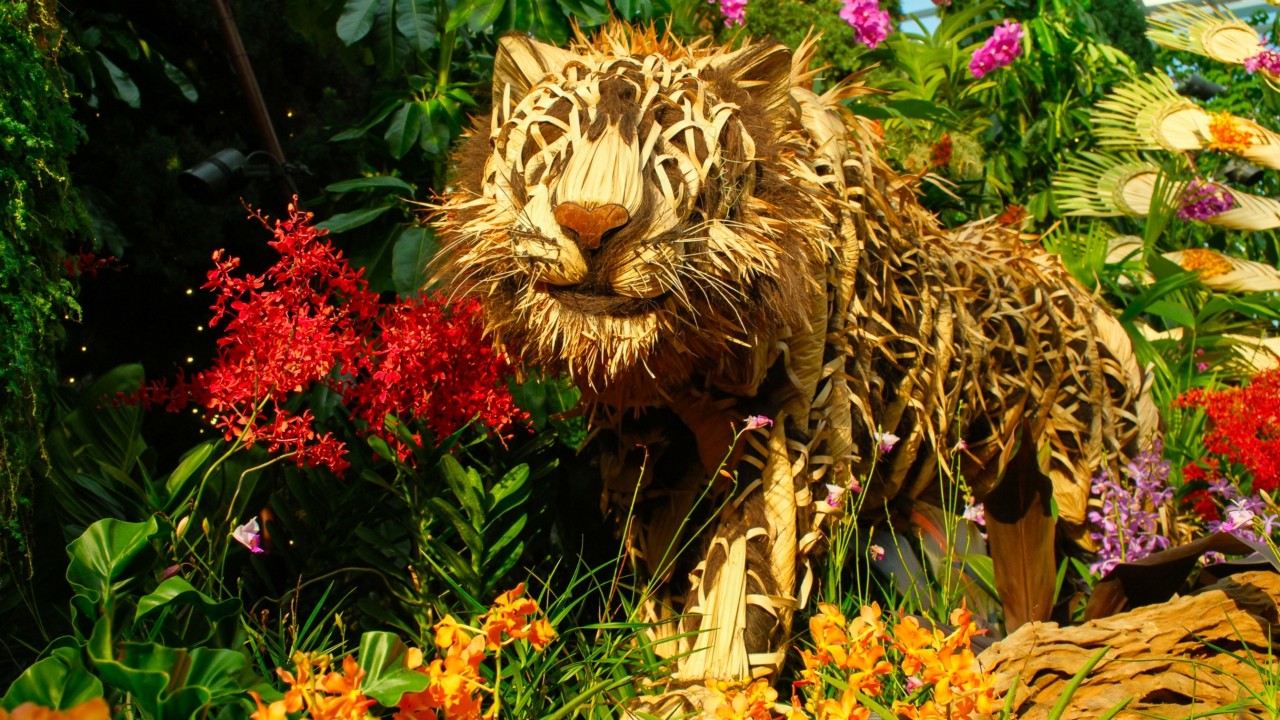
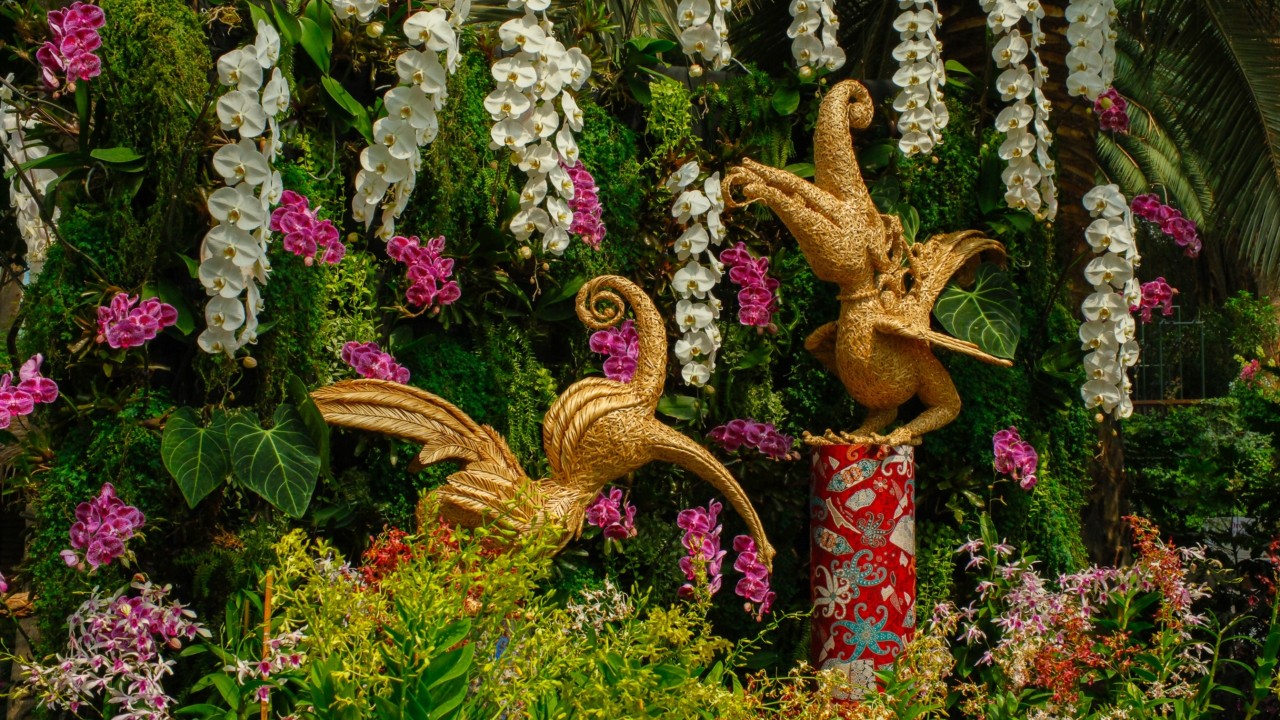
The Sumatran tiger will remain in Flower Dome, while the pair of hornbills will be at Cloud Forest. The peacock and Rafflesia will return for next year's edition of Orchid Extravaganza, which will commemorate ASEAN's 60th anniversary and celebrate the culture of all 11 ASEAN member states, including Indonesia.
Gardens by the Bay CEO Mr Felix Loh said, "Orchid Extravaganza: Rhythm of the Rainforest has been a wonderful testament to the warm ties between two ASEAN neighbours, and an example of the rich cultural exchange that continues to bring our countries ever closer together. We are deeply grateful to Indonesia's Ministry of Creative Economy for the meaningful gift of the anyaman sculptures. Not only will our visitors from all over the world get to experience these beautiful works of Indonesian craftsmanship, they also symbolise the close friendship between Singapore and Indonesia.”
Deputy Minister of the Ministry of Creative Economy of the Republic of Indonesia Ms Irene Umar said, “We are deeply grateful for this collaboration, which has given us the opportunity to showcase Indonesia's rich cultural diversity, biodiversity and craftsmanship. While anyaman is the art of weaving, I see it as a metaphor for weaving people together, building heart-to-heart connections and fostering collaborations where everyone benefits. We hope this collaboration will spark meaningful conversations and be the first of many more partnerships that continue to bring Indonesia and Singapore closer together.”
Handcrafted by a team of 27 Balinese artisans over more than 900 man-hours using traditional weaving techniques that utilise natural plant materials, anyaman is a centuries-old craft that is rarely seen outside Indonesia.
Orchid Extravaganza: Rhythm of the Rainforest is presented in collaboration with Indonesia's Ministry of Creative Economy and the Embassy of the Republic of Indonesia in Singapore. The orchid showcase features more than 7,000 orchids in a landscape that draws inspiration from the diverse regions of the archipelago and pays tribute to some of its most iconic architecture, cultural traditions, and folklore.

What does it take to grow a nation? At this year’s Gardens by the Bay and Mediacorp National Day Concert (NDC), audiences will be invited to reflect on that journey through the story of a single seed – planted with hope, nurtured by generations and blossoming into the dreams of tomorrow. Taking place on Sunday, 2 August at The Meadow at Gardens by the Bay, NDC 2026 will bring Singaporeans together for an evening of performances by some of the nation’s most beloved and emerging talents, with family-friendly pre-concert activities from 4.30pm ahead of the concert at 7.45pm.
The First Seed: A Shared Story of Growth
Hosted by Mediacorp RIA 897’s Fadli Kamsani, Mediacorp 987’s Germaine Tan and multi-hyphenate artiste Saravanan Ayyavoo, this eighth edition of NDC will open with eight-year-old performer Muhammad Khalif Khair Abdullah narrating the story of a single illuminated seed taking root – the symbolic beginning of a journey that unfolds throughout the concert. Accompanied by the Tampines Primary School Choir, songstress Olivia Ong will then perform a stirring a cappella rendition of Home, honouring the generations whose enduring values continue to shape Singapore’s future.
Building on this spirit of nation-building, arts percussion group Urban Drum Crew will take the stage with a dynamic percussion showcase celebrating unity and national pride , before singer Hady Mirza joins opera singer Cherie Tse and the Dunman High String Ensemble and Symphonic Band for “Bridge Over Troubled Water”. Hady will also perform his new Malay single, “Tempuh”, a heartfelt tribute to loyalty, commitment and resilience.
Growing Together: Finding Identity and Belonging
As the seed grows, the concert is set to transition into themes of identity, friendship and belonging. Music icon Rahimah Rahim will join emerging performer Shak for “I Still Haven’t Found What I’m Looking For”, while singers Rahila Rashun and Sarah Mae remind audiences that every generation continues to shape its own future through the performance of the song “Unwritten.”
In a celebration of Singapore’s multicultural identity, performers Sherman Zhuo and Sharon Shobana will come together in a cross-cultural performance featuring the Chinese song “我只在乎你 ” and Tamil track “Stylish Thamizhachi”. In the spirit of unity, audiences will be invited to be part of the “We Are Singapore” performance through a synchronised handphone light choreography led by Sharon, Sherman and Mediacorp Tamil drama Must Date the Playboy! star and singer Mazhai Megan, transforming The Meadow into a sea of lights.
Looking towards the future and the next generation, singer-songwriter Benjamin Kheng will join young musician Shayne Ko for a reimagined performance of “Not Alone”, reflecting the importance of mentorship, connection and passing hope from one generation to the next. He will then perform his original song, “Really In Love”, before pop-rock band 53A closes the chapter with “Shine Your Light” and “Tomorrow’s Here Today”, inspiring Singaporeans to continue planting the seeds for those who will follow.
From Seed to Tree: A Full Circle
Bringing the evening’s story full circle, the illuminated seed returns to the stage, its roots deepening and branches stretching skyward until it blossoms into a flourishing tree – a symbol of a nation nurtured across generations.
Joined by the full lineup of performers, singer Olivia will belt a moving reprise of “Home”, before President Tharman Shanmugaratnam and Ms Jane Ittogi lead the audience in reciting the National Pledge and singing the National Anthem. The evening will conclude with a mass singalong of beloved National Day favourites and a spectacular fireworks display over The Meadow.
Please refer to Annex A for the bios of the hosts and performers.
Guest-of-Honour President Tharman Shanmugaratnam said: “This year’s National Day Concert reminds us of a simple truth. Just as we now enjoy the shade from the trees planted by previous generations, Singapore’s future is created by what each of us chooses to plant today – for our families, the community, and our nation.”
Mr Niam Chiang Meng, Chairman of Gardens by the Bay and Mediacorp, said: “Just as our forefathers sowed the seeds that laid the foundation for Singapore today, we have the opportunity to nurture those values and help them flourish for generations to come. This year's National Day Concert celebrates that enduring spirit — the resilience, the community, and the sense of belonging that have taken root across our 61 years. We warmly invite everyone to join us at The Meadow, as we come together in song and in solidarity to mark this birthday and look ahead with hope and confidence.”
Pre-concert Festivities: Planting Moments of Play, Creativity and Togetherness
Ahead of the concert, the celebrations will kick off from 4.30pm with family-friendly entertainment, interactive experiences and carnival fun for all ages. Visitors can also enjoy an exclusive preview of Mediacorp’s upcoming kids shows, Lil Wild – In The Big City and Stuffed Warriors, before their official launch.
Adding to the festivities are lively pre-show performances by homegrown talents Rahila, Shak, Sharon, Sherman and Urban Drum Crew. Visitors can enjoy a variety of local-inspired carnival games, get creative with hands-on craft activities such as acrylic painting and charm keychain customisation, and strike a pose at a photo booth featuring a miniature NDC stage.
Supported by community partners NTUC Club, People’s Association (PA) and SAFRA, visitors can also participate in face painting and balloon sculpting and stop by the Chingay Education Truck by PA — “My Little Chingay Float” to discover Chingay’s cultural heritage through augmented reality booth where public will get to “try on” four iconic multicultural costumes featured in parades of yesteryear, ethnic drums, and digital Chingay float creations.
And no celebration is complete without local treats. Guests can also enjoy complimentary candy floss, popcorn and ice cream, alongside a variety of food offerings from Old Chang Kee, Uncle Otah, Kwazy Korndog, Jojubang, SHOTTSG and more.
Join the celebrations on 2 August at The Meadow, Gardens by the Bay. Admission is free, with gates opening at 4.30pm and the concert commencing at 7.45pm. For those unable to attend in person, the concert will be available on Channel 5 and mewatch on Monday, 10 August at 7.30pm, with a repeat telecast on Sunday, 16 August at 4.30pm. Audiences can also catch highlights on Mediacorp Entertainment on YouTube, TikTok, Instagram and Facebook. For more information, please visit mediacorp.sg/ndc.
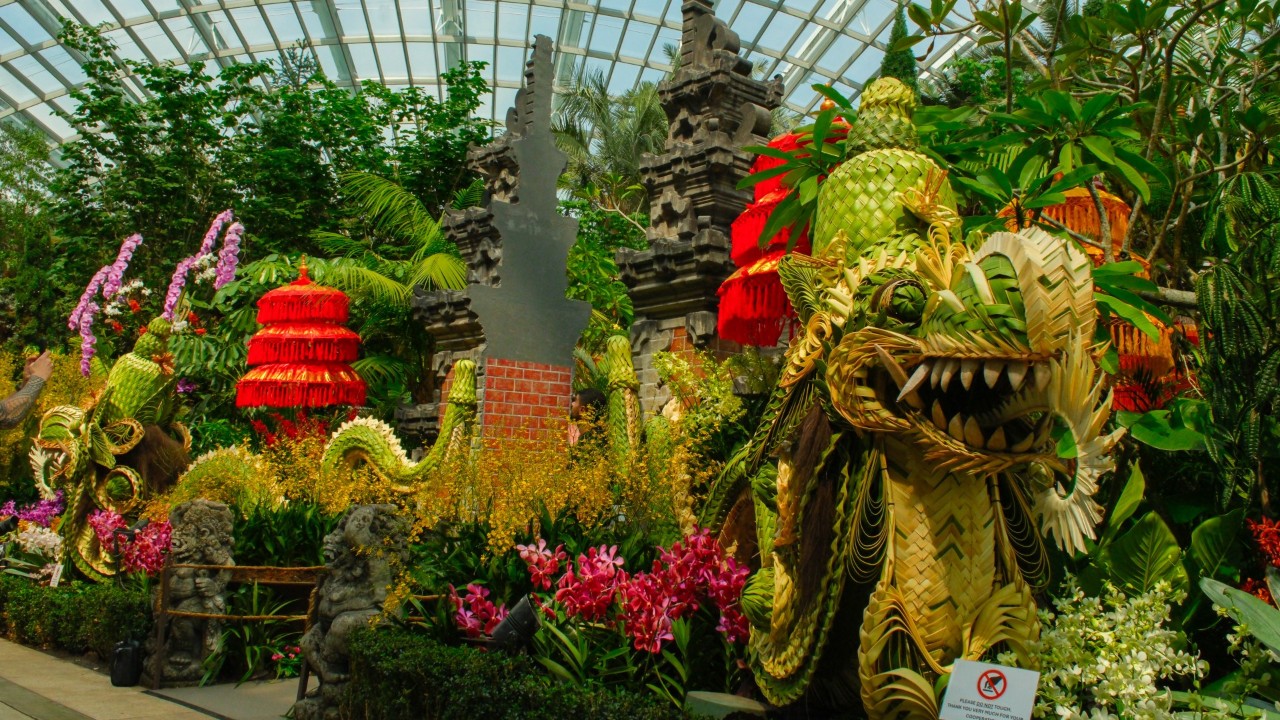 Highlights include sculptures handwoven using the centuries-old Indonesian technique of anyaman, like the pair of nagas flanking a recreation of the candi bentar, or split gate, of Bali.
More than 7,000 orchids bloom in Flower Dome for Orchid Extravaganza: Rhythm of the Rainforest (兰花盛事), where vibrant floral displays are complemented by striking artistic and cultural elements. The annual orchid display celebrates the rich diversity of ASEAN, having previously featured Thailand, the Philippines, Cambodia and Malaysia. This year's edition draws inspiration from Indonesia's biodiversity and cultural heritage, with highlights including intricate large-scale anyaman sculptures – handwoven creations crafted from natural plant materials using a centuries-old tradition that is rarely seen outside the country.
Presented in collaboration with Indonesia's Ministry of Creative Economy and the Embassy of the Republic of Indonesia in Singapore, the orchid display was officially launched today by Minister of State for National Development and Trade and Industry Mr Alvin Tan. Mr Tan also presented awards at the Singapore Orchid Show Prize Presentation Ceremony following the launch.
Both Orchid Extravaganza: Rhythm of the Rainforest and the Singapore Orchid Show are part of this year's Singapore Garden Festival, returning to Gardens by the Bay for the first time since 2018. This 10th edition also marks the start of three consecutive editions to be held at Gardens by the Bay.
Orchid Extravaganza: Rhythm of the Rainforest will run till 10 August 2026.
Gardens by the Bay CEO Mr Felix Loh said, “Singapore and its ASEAN neighbours are not only bonded by proximity, but share a rich tropical flora shaped by our common Southeast Asian roots. After featuring several ASEAN countries in our orchid displays, we now turn the spotlight to Indonesia; pairing its extraordinary orchid diversity with the country’s breathtaking cultural traditions and craftsmanship. The orchid display is also a prelude to a major orchid showcase next year – the 60th anniversary of ASEAN – which will celebrate the orchid heritage and cultural diversity of all 11 ASEAN countries. With Orchid Extravaganza nestled under the wider umbrella of the Singapore Garden Festival this year, it is not just an orchid extravaganza, but an all-out horticultural extravaganza for visitors to Gardens by the Bay.”
Native Indonesian Orchids
Home to an estimated 5,000 orchid species, Indonesia is one of the most orchid-diverse countries in the world, a richness owed to its vast tropical rainforests, varied landscapes and year-round warm, humid climate. Orchid Extravaganza: Rhythm of the Rainforest has on display some of Indonesia's most storied native orchids.
Among the highlights:
- Antelope orchids (Dendrobium sect. Spatulata hybrids) are known for their striking flowers with twisted, antler-like petals.
- Ground orchid (Spathoglottis plicata), which produces vibrant magenta blooms and was among the first plants to naturally recolonise Krakatau following its 1883 eruption.
- Moon orchid (Phalaenopsis amabilis), one of Indonesia's three national flowers, whose elegant sprays of broad white blooms with soft yellow centres have made it one of the most important parent species behind modern Phalaenopsis hybrids.
- Tiger orchid (Grammatophyllum speciosum), the world's largest orchid species, whose flower spikes can exceed 2m in height and bear hundreds of tawny yellow blooms richly marked with maroon blotches.
A Journey Through Centuries of Indonesian Heritage
Drawing inspiration from regions across Indonesia, the display also pays tribute to some of the country's most iconic architecture, cultural traditions, and folklore.
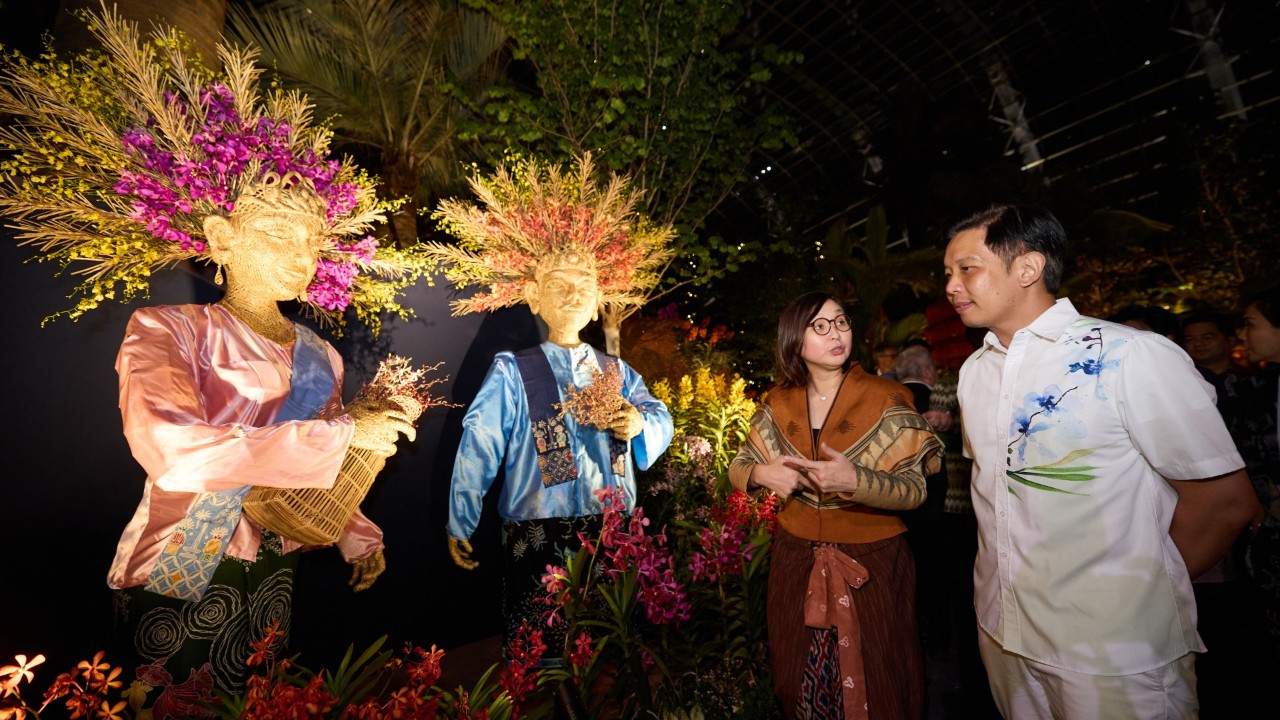 Deputy Minister of the Ministry of Creative Economy of the Republic of Indonesia Ms Irene Umar and Minister of State for National Development and Trade and Industry Singapore Mr Alvin Tan view handwoven anyaman sculptures of Jakarta's ondel-ondel puppets.
Nine larger-than-life handwoven sculptures showcase anyaman, the centuries-old Indonesian art of weaving plant materials. The sculptures were handcrafted by a team of 27 Balinese artisans over more than 900 man-hours, and depict Indonesia's wildlife, cultural icons and folklore, including the mythical naga, Komodo dragon, critically endangered Sumatran tiger, hornbills, peacock, Rafflesia and ondel-ondel, the towering ceremonial puppets of Jakarta's indigenous Betawi community.
Other highlights include:
- The candi bentar split gateway traditionally used to mark the transition into a sacred space, and recreations of Meru towers, the tiered shrines central to Balinese temple architecture
- Traditional Batak communal houses distinguished by their sweeping saddle-shaped roofs, traditionally built without nails to withstand the region's seismic activity.
- A recreation of the uma mbatangu, or peaked house, known for its dramatic central tower, with taller peaks traditionally signifying more prominent ancestral lineages.
- References to wayang kulit, Indonesia's centuries-old shadow puppet tradition, which uses intricately carved leather puppets to retell ancient Hindu epics and moral tales, and recognised by UNESCO as an Intangible Cultural Heritage.
- Guardian poles inspired by the indigenous Dayak people of Borneo, an island shared between Indonesia, Malaysia and Brunei. The Dayak people comprise many distinct ethnic groups, each with their own traditions of carving protective spirits believed to guard against evil.
Singapore Orchid Show
The Singapore Orchid Show, presented by Gardens by the Bay and the Orchid Society of Southeast Asia (OSSEA), brings together 360 orchid entries from hobbyists and industry growers across the region. All entries, including this year's award-winning specimens, will be showcased at the Mediterranean Garden and South American Garden in Flower Dome from July 4 to 12.
Forty-eight orchids grown in-house by Gardens by the Bay won awards, reflecting the expertise and dedication of the Gardens' horticulturists. Gardens by the Bay clinched the coveted Best Species Plant and Best Specimen Plant awards – two out of four of the highest honours in the Singapore Orchid Show – as well as accolades across several categories.
Orchid Extravaganza: Rhythm of the Rainforest
Date: Until Monday, 10 August 2026
Venue: Flower Dome
Time: 9.00am to 9.00pm
Details: Admission to Flower Dome applies.
Please refer to the Annex for more details on:
- Indonesian orchid highlights of Orchid Extravaganza: Rhythm of the Rainforest
- Gardens by the Bay's award-winning orchids at this year's Singapore Orchid Show
- Visit Orchid Extravaganza and win a trip to Bali
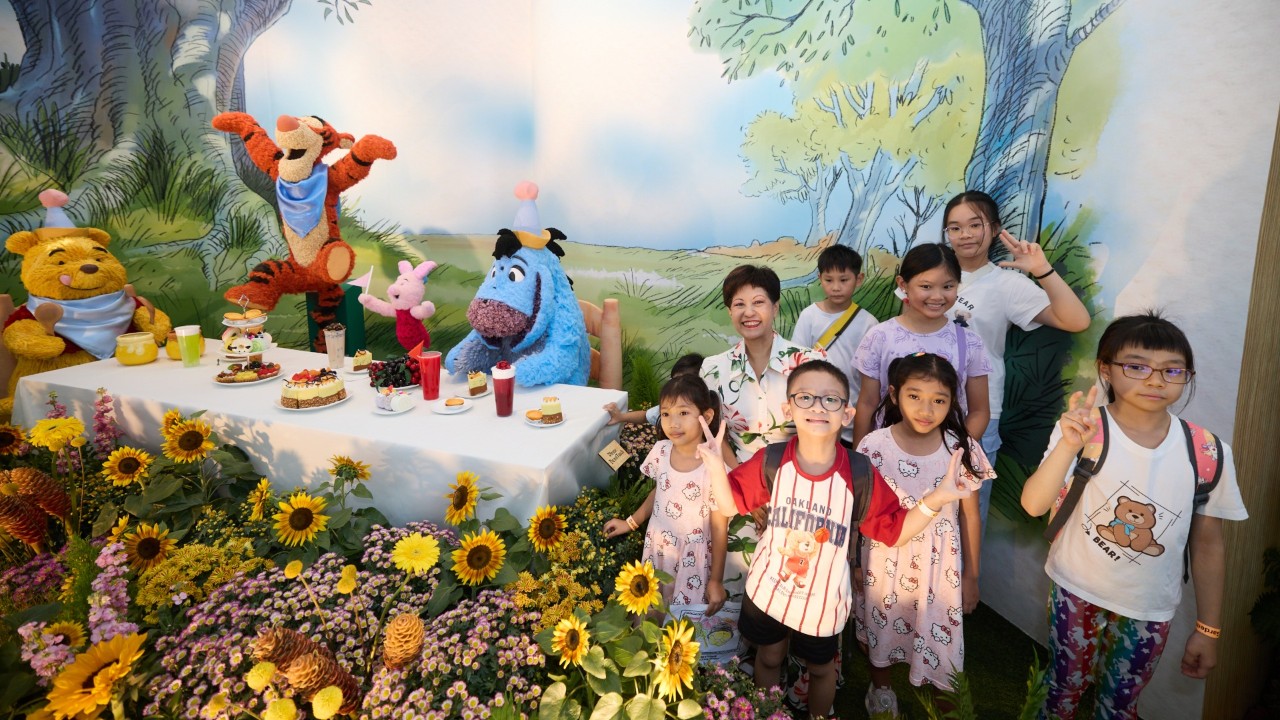 Minister in the Prime Minister’s Office and Second Minister for Finance and National Development Ms Indranee Rajah with children from Fei Yue Family Service Centre at the Disney Garden of Wonder topiary showcase.
Gardens by the Bay launched two new initiatives to welcome and celebrate more families, as Singapore embarks on its Marriage and Parenthood (M&P) Reset.
Working with Families for Life (FFL) and People’s Association (PA), up to 10,000 complimentary tickets to selected IMBA Theatre exhibitions will be made available to Singaporean families who attend FFL’s National Family Festival and PA’s Family PLAYGround parenting workshops. In addition, Gardens by the Bay is also working with eligible Social Service Agencies under its Gift of Gardens community outreach programme to organise visits to the new Disney Garden of Wonder at Floral Fantasy, from now till end September.
Today, Minister in the Prime Minister’s Office and Second Minister for Finance and National Development Ms Indranee Rajah and 20 families from Fei Yue Family Service Centre were at IMBA Theatre to enjoy the David Hockney: Bigger & Closer (not smaller & further away) immersive experience – one of the exhibitions that families can enjoy under the new initiative. The families also joined Minister Indranee when she officially launched Disney Garden of Wonder.
Gardens by the Bay CEO Mr Felix Loh said: “As a People’s Garden, Gardens by the Bay has grown with Singaporeans through every stage of life — from couples marking new beginnings, to young children discovering nature and play, to multi-generational families spending quality time together. These initiatives reinforce that commitment. We are glad that Gardens by the Bay can play a meaningful role and be part of this whole-of-society effort to celebrate families and make family experiences more accessible to our fellow Singaporeans.”
The new initiatives build on Gardens by the Bay's longstanding reputation as a welcoming space for Singaporeans at various stages of family life. Ficus Room at Active Garden has been a scenic setting for marriage solemnisations since 2022, while family-friendly outdoor spaces like the Far East Organization Children's Garden and PropNex Family Zone allow families and children to bond amid nature. Gardens by the Bay also organises a year-round calendar of family-friendly community events such as its signature Children’s Festival and Mid-Autumn Festival.
From bonding over different mediums, to reaching out to a broad spectrum of families
Exposure to storytelling, creativity and the arts is what children can experience at IMBA Theatre under the new initiative. Families can sign up for FFL’s National Family Festival events happening this month and in July, to enjoy the exhibitions at IMBA Theatre.
At the venue of these events, there will be an event-specific QR code for families to scan and access Gardens by the Bay’s Gardens Rewards website, where they can register for an e-voucher redeemable for IMBA Theatre tickets.
The e-voucher can be used to redeem tickets for up to five family members per exhibition, including the registered account holder. Families can choose to experience up to two selected exhibitions on the same day under this initiative. Redemption is on a first-come, first-served basis, while stocks last.
IMBA Theatre, Singapore’s first large-scale immersive arts venue, is currently showing the immersive exhibitions Botero: A Life in Fullness and David Hockney: Bigger & Closer (not smaller & further away).
Details of participating National Family Festival events are at https://go.gov.sg/gbtb-nff-imba.
Come July, families can sign up for selected PA’s Family PLAYGround parenting workshops, where they can also enjoy IMBA Theatre tickets.
Details of the PA’s Family PLAYGround parenting workshops that are part of this initiative will be available in July at www.pa.gov.sg/our-programmes/family-life/pa-family-playground.
In addition, through working with eligible Social Service Agencies under Gift of Gardens, more families and children from different backgrounds can enjoy meaningful bonding time and rediscover their favourite stories of courage, kindness, friendship and love at Disney Garden of Wonder.
Back for its second edition at Floral Fantasy, the popular topiary showcase features 23 characters across five themed areas. These include fan favourites such as Sorcerer’s Apprentice Mickey; Disney princesses Rapunzel, Belle and Jasmine; Anna, Elsa and Olaf from Frozen; Woody, Jessie and Buzz Lightyear from Disney and Pixar’s Toy Story 5; and Hundred Acre Wood pals Winnie the Pooh, Eeyore, Piglet and Tigger.
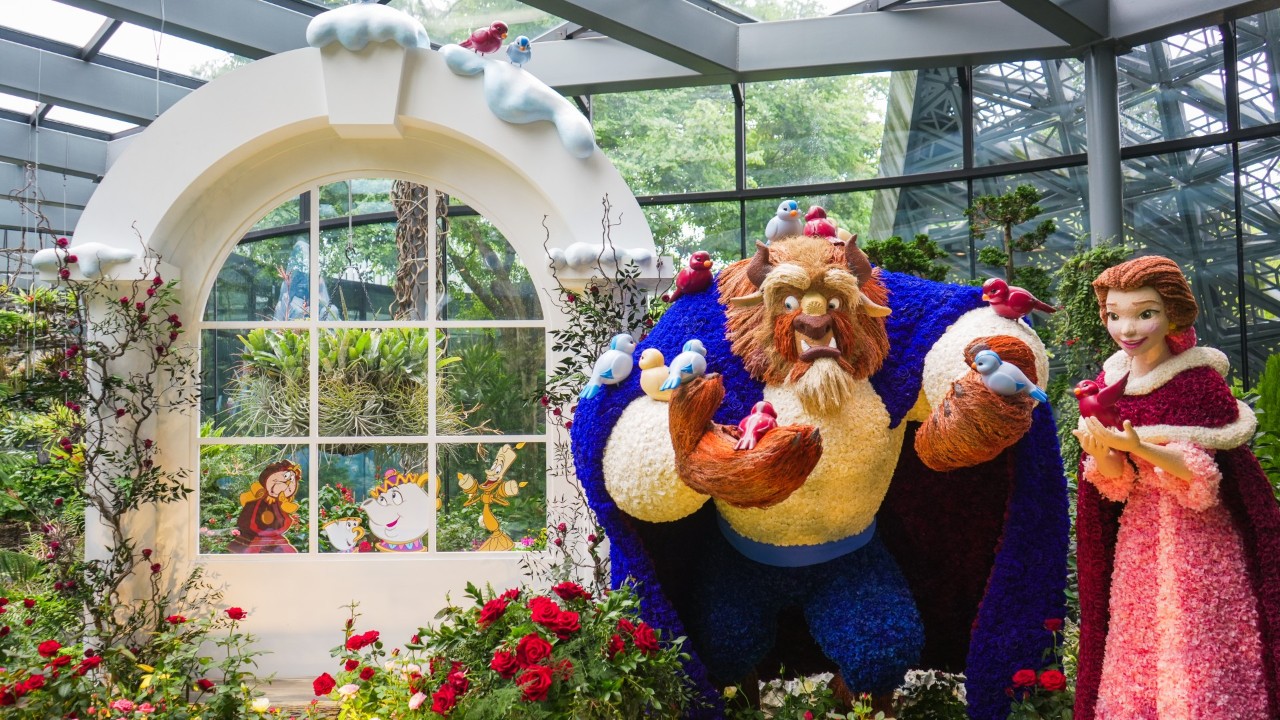 Beauty and the Beast.
Disney magic blooms anew at Gardens by the Bay as the second edition of Disney Garden of Wonder (迪士尼奇妙花园), opens today. Featuring 23 vibrant topiaries inspired by beloved Disney and Pixar characters, the enchanting showcase transforms Floral Fantasy into a world of floral artistry and imagination through 14 March 2027.
Organised in collaboration with Disney and supported by the Singapore Tourism Board, Disney Garden of Wonder is inspired by Disney and Pixar stories that have charmed generations of fans around the world, inviting people of all ages to re-discover their favourite stories of courage, kindness, friendship and love through the beauty of plants. Following the success of its debut at Gardens by the Bay in 2024, the enthralling floral showcase returns in an even more special second edition.
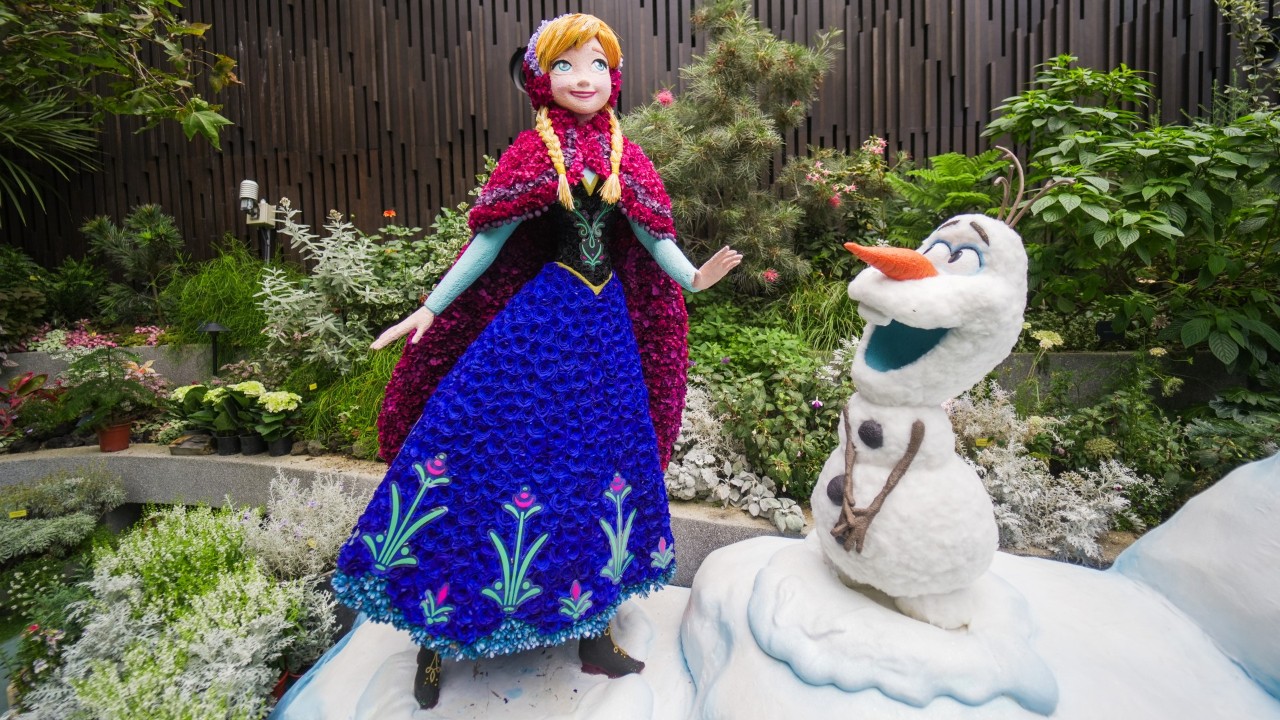 Anna and Olaf from Frozen.
Visitors can look forward to five themed areas:
- Frozen, in which topiary versions of Anna, Elsa and Olaf preside over an enchanting snowy landscape, brought to life through themed lighting that imagines a frost-kissed world of wonder. Inspired by Elsa’s Ice Palace, visitors can step on a floor where magical snowflakes dance and respond to movement.
- Disney princesses, where Rapunzel appears alongside her best friend Pascal the chameleon; Belle is with the Beast and their enchanted companions; and Jasmine is accompanied by her loyal tiger Rajah.
- Hundred Acre Wood, where Winnie the Pooh, Eeyore, Piglet and Tigger gather in a cheerful party scene. Tigger bounces up and down while Piglet twirls, and visitors can picture themselves joining everyone at the table!
- Toy Story 5, where Woody, Jessie and Buzz Lightyear appear as topiaries in a playful setting inspired by Bonnie’s Room, alongside displays of new characters Lilypad and Smarty Pants.
- Go Local, a Singaporean-themed zone where Disney characters are reimagined in familiar local settings. Chip ’n Dale perch atop a giant ice cream sandwich; Minnie Mouse and Daisy Duck share the spicy rice noodle dish laksa; and Mickey Mouse makes the traditional beverage teh tarik with Donald Duck.
Outside Floral Fantasy, a 4m-tall Sorcerer’s Apprentice Mickey marks the entrance and welcomes visitors to Gardens by the Bay.
Gardens by the Bay CEO Mr Felix Loh said, "Disney Garden of Wonder is where Disney's timeless storytelling meets the floral artistry that Gardens by the Bay is celebrated for. Building on the overwhelming response from its first edition, this showcase returns to Floral Fantasy with Disney and Pixar characters blooming to life through vibrant topiaries, immersive landscapes and magical storytelling. Exclusive to Singapore, we invite families and fans to step into a world where imagination knows no bounds — and where the extraordinary blooms."
Ms Guo Teyi, Director, Leisure Events, Singapore Tourism Board, said, “We are delighted to welcome back Disney Garden of Wonder for its second edition. Featuring beautifully crafted topiaries inspired by some of Disney's most beloved characters and franchises, the display showcases the kind of imaginative, family-friendly experiences that make Singapore a fun and vibrant destination. We invite families to come together, explore, and take home memories that will last well beyond this June.”
The hand-assembled topiaries are crafted from more than 40 species of preserved and dried floral materials, which took more than 16,000 man hours.
Each material was selected for its colour, texture and form, helping to reflect each character’s features. Plenty of flowers are used for the Disney princesses for example, while Rapunzel’s hair is crafted from Stipa, a perennial grass that has fluffy or oat-like flowerheads.
The surrounding landscapes also use plant palettes that reflect the mood of each zone — sunflowers and marigolds reflect the honey-toned meadow setting of Winnie the Pooh, while lilies and roses bring out the romantic and jewel-toned settings of Disney Princess stories. Hydrangeas and dusty miller evoke the icy blues, whites and silvers of Frozen.
Throughout the duration of Garden of Wonder, visitors can enjoy select weekend Meet and Greet sessions with Mickey Mouse and Minnie Mouse in outfits inspired by Singapore’s national flower, the Vanda Miss Joaquim. Donald Duck and Daisy Duck will also join the experience on select weekends, dressed for a sunny getaway on our tropical island.
Visitors can round off their experience with shopping at the gift shop, which carries items launching exclusively at Disney Garden of Wonder.
Disney Garden of Wonder
Date: 8 June 2026 to 14 March 2027
Time: 10am to 9pm
Venue: Floral Fantasy at Gardens by the Bay
Details: Tickets are priced at $12 for adults and $8 for children
Please refer to the Annex for more information on the plants used for the topiaries at Disney Garden of Wonder.
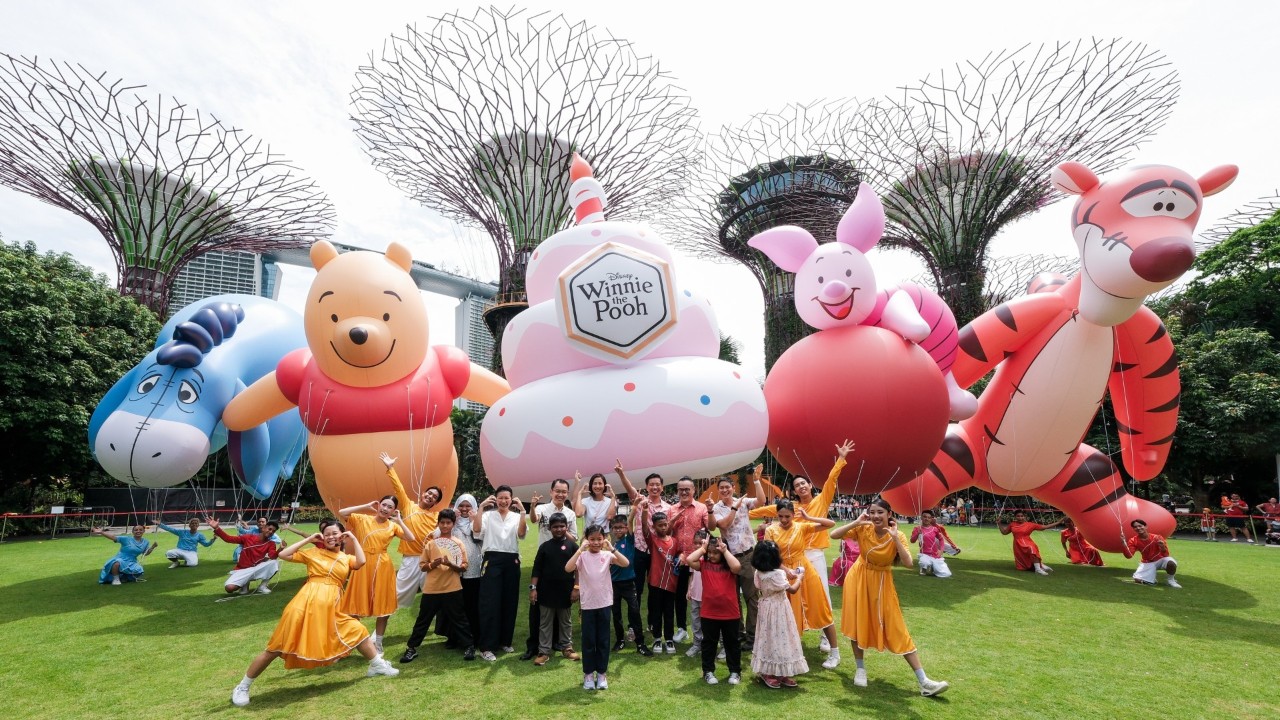 From left to right: Ms Geraldine Naidu, Director of Brand Commercialisation and Market Lead, Singapore, Disney Consumer Products, The Walt Disney Company, Mr Felix Loh, Chief Executive Officer, Gardens by the Bay, Mr Alvin Tan, Minister of State, Ministry of National Development and Ministry of Trade and Industry, Ms Jean Ng, Assistant Chief Executive, Experience Development Group, Singapore Tourism Board, and Mr Sam Liew, Board Director, Gardens by the Bay celebrating the launch of Children’s Festival 2026 with performers from Pooh’s Grand Friendship Party.
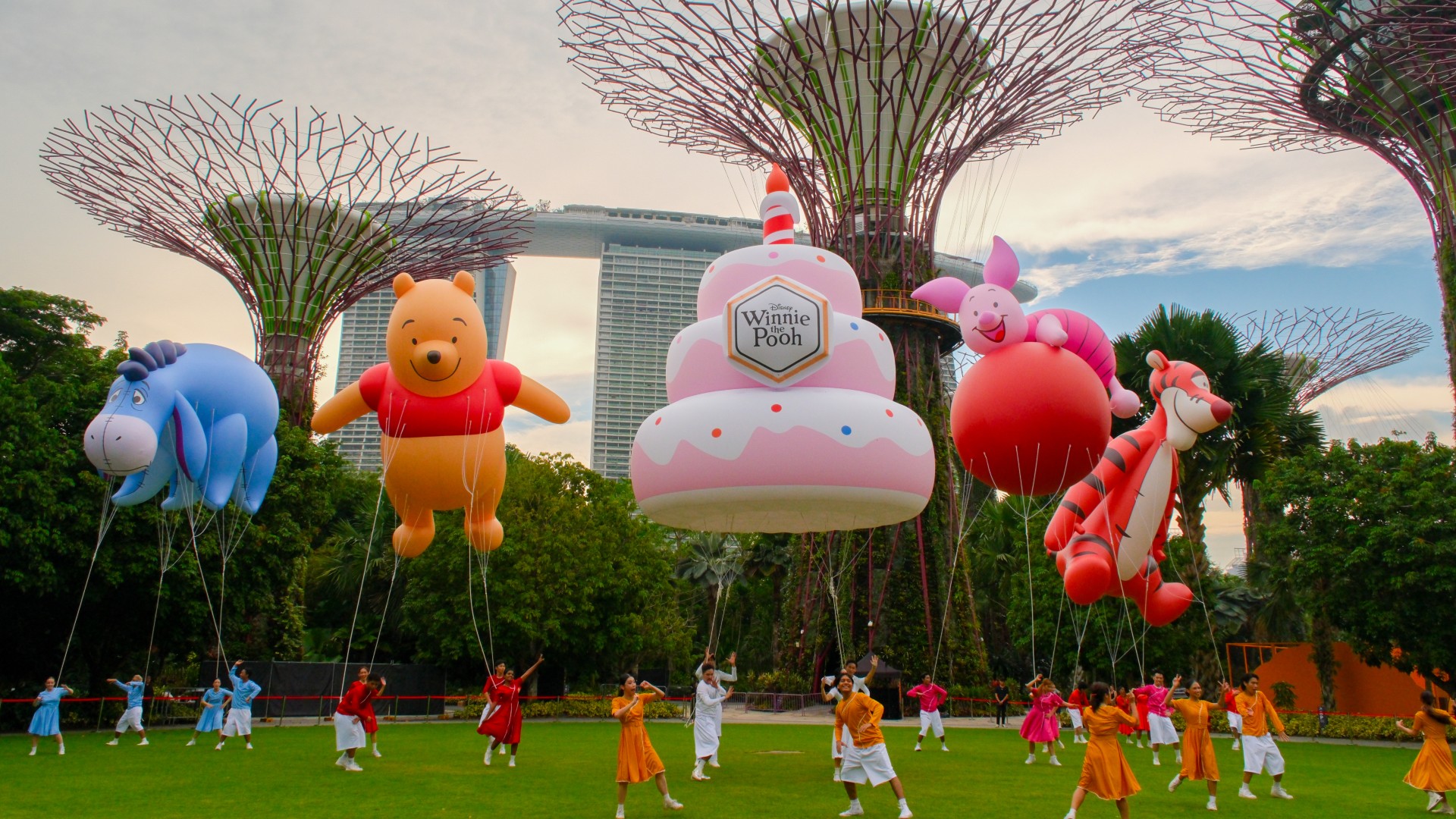
Gardens by the Bay’s signature school holiday programme Children’s Festival (滨海湾花园儿童节) returns this June with a grand celebration marking 100 years of Disney’s Winnie the Pooh. Children’s Festival will feature Singapore’s first zipline themed after Disney’s Winnie the Pooh and, for the first time in Southeast Asia, a musical march with supersized inflatables of the characters towering up to seven metres tall, titled Pooh’s Grand Friendship Party.
Inspired by the Hundred Acre Wood, the free festival transforms Supertree Grove into a playful world of immersive installations and outdoor adventures inspired by Pooh and friends. The festival was officially launched today by Mr Alvin Tan, Minister of State, Ministry of Trade and Industry & Ministry of National Development, and will run until June 21.
Felix Loh, CEO, Gardens by the Bay said, "We are deeply grateful to our local visitors and supporters — it is your loyalty over the years that has made our No. 3 TripAdvisor world attraction ranking possible. This honour truly belongs to you. To celebrate, we have lined up an exciting June school holidays programme for families. The Children’s Festival is back with free admission, alongside free entry for children to the Blue Beauties floral display in Flower Dome and exclusive dining perks across the Gardens. We are also honoured to collaborate with Disney to mark the 100th anniversary of Winnie the Pooh — a character who has warmed hearts across generations. Visitors can look forward to the return of Disney Garden of Wonder on 8 June, featuring enchanting topiaries inspired by beloved Disney and Pixar characters. As a People's Garden, we look forward to welcoming families to bond, reconnect and create cherished memories together this holiday season."
Guo Teyi, Director, Leisure Events, Singapore Tourism Board, said, “This centennial celebration of one of the world's most beloved storybook characters is a remarkable milestone, and we're delighted to celebrate it right here at Gardens by the Bay. The festival brings together a vibrant line-up of family experiences, with highlights like the first-ever Pooh's Grand Friendship Party in Southeast Asia. This Children's Festival speaks to Singapore's appeal as a premier destination for families seeking truly one-of-a-kind experiences, and we hope it gives families a great reason to visit this June.”
Gardens by the Bay’s Children’s Festival is supported by the Singapore Tourism Board and Tote Board, and held in support of National Family Festival 2026. National Family Festival is an annual month-long nationwide celebration of family by the Families for Life Council, featuring events and activities across Singapore where families can spend quality time together and create moments that strengthen family bonds. As part of National Family Festival 2026, family-friendly activities and game booths will be available every weekend at Gardens by the Bay at the Children's Festival.
Extend the Fun Across the Gardens
Families looking to make the most of their June school holidays can continue the adventure across Gardens by the Bay with special admission perks, exclusive dining promotions and family-friendly experiences available from 30 May to 21 June.
Children aged 12 and under enjoy free admission to the Blue Beauties floral display at Flower Dome. Valid for Singapore residents only. Standard admission charges apply for accompanying adults.
Visitors with tickets to any attraction at Gardens by the Bay can enjoy access to a reserved viewing area for the inflatables party, available on a first-come, first-served basis. They can also enjoy 10 per cent off purchases at the festival’s retail pop-up shop, carnival game booths and craft activities.
Families can also enjoy a meal at TungLok Seafood, Hopscotch, Jurassic Nest and Finnwood, where exclusive dining promotions and school holiday specials will be available.
Experiences themed after beloved Hundred Acre Wood friends
Inspired by the timeless stories of Winnie the Pooh and his pals, Children’s Festival 2026 encourages visitors to discover the values of friendship and kindness through interactive play and shared experiences. The highlights include:
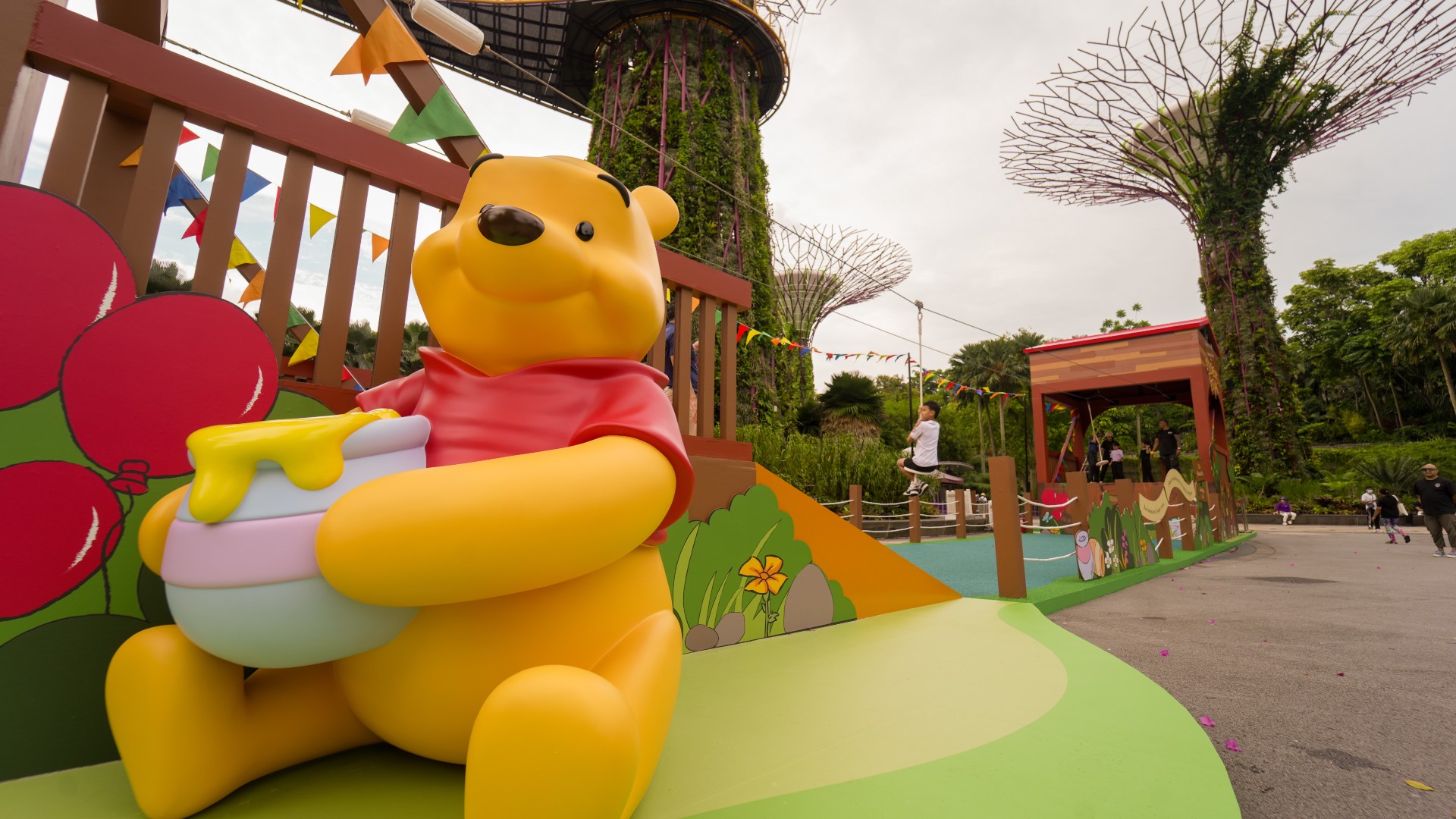
The Hundred Acre Glide
Inspired by the Hundred Acre Wood, this installation is Singapore’s first zipline themed around Disney’s Winnie the Pooh.
Featuring a whimsical treehouse-style setting, children can soar 16 metres across the festival grounds against the backdrop of the Supertrees, as they embark on a playful outdoor adventure inspired by the world of Pooh and friends.
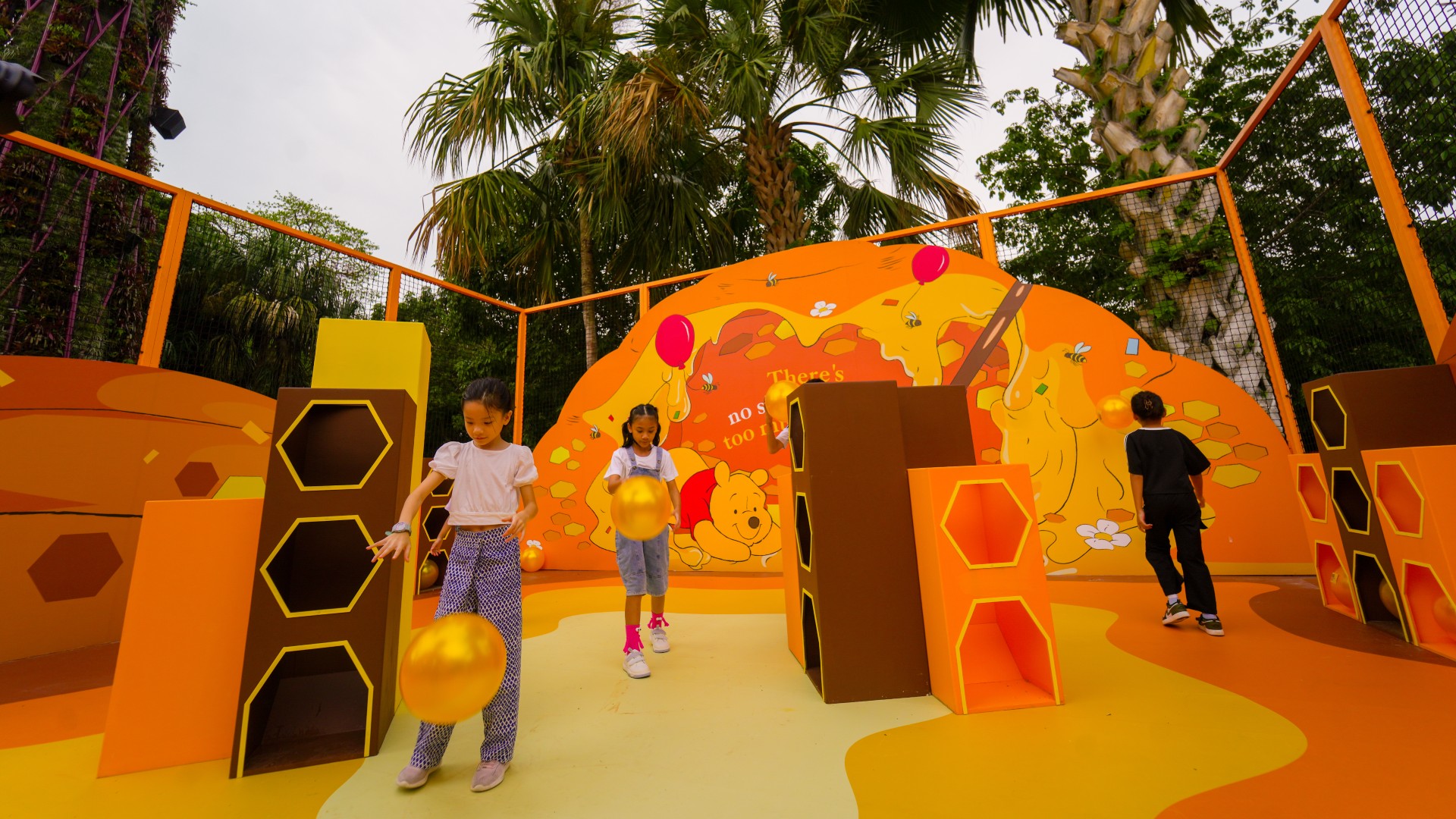
The Sweetest Drops
This honeycomb-themed ball pit draws on Winnie the Pooh’s search for his favourite snack, honey, which often turns into an adventure!
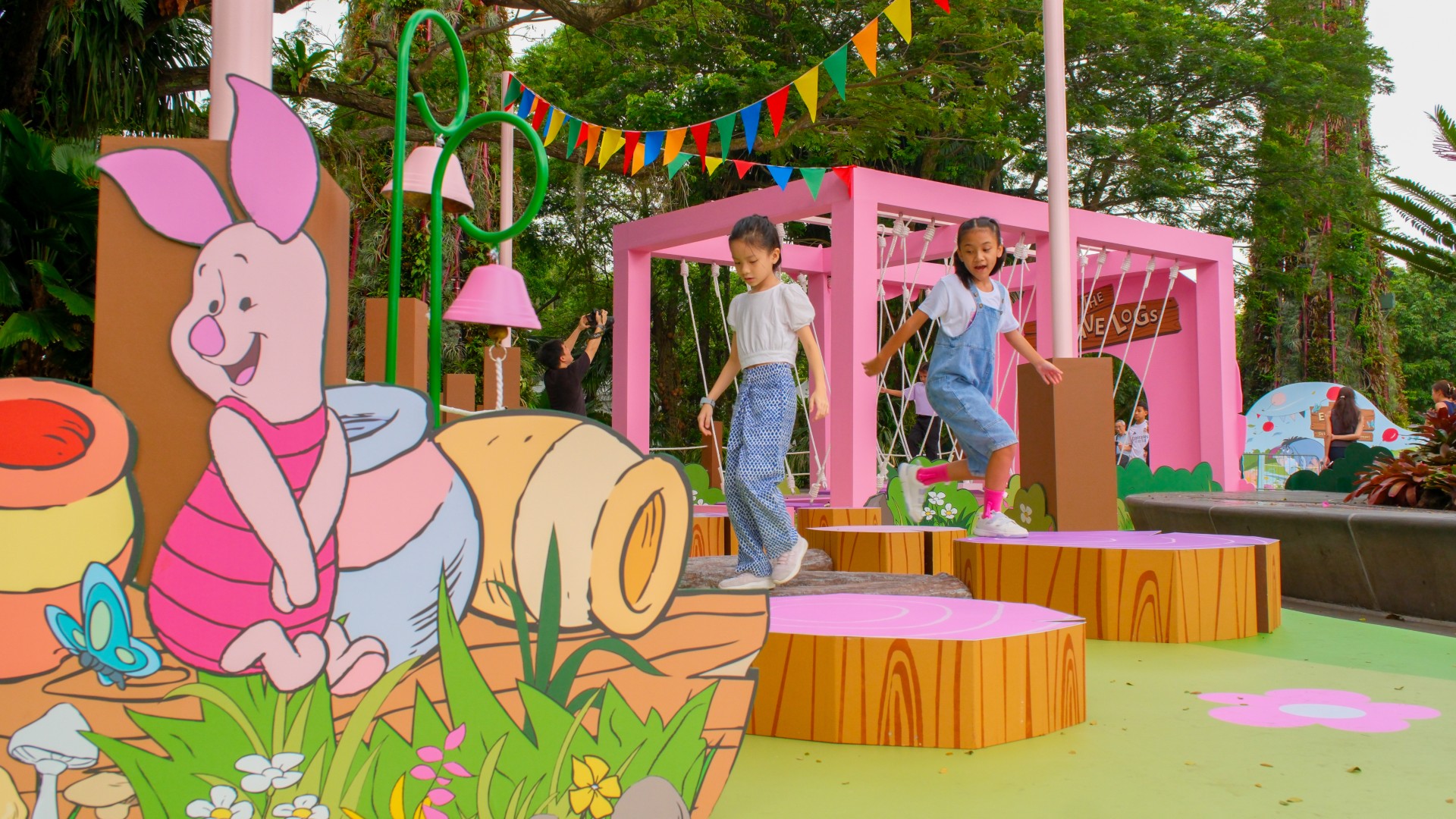
The Brave Logs
This installation tests your balance across planks and “tree stumps” in this quick-footed adventure that encourages children to summon their courage just like Piglet, and take things one step at a time.
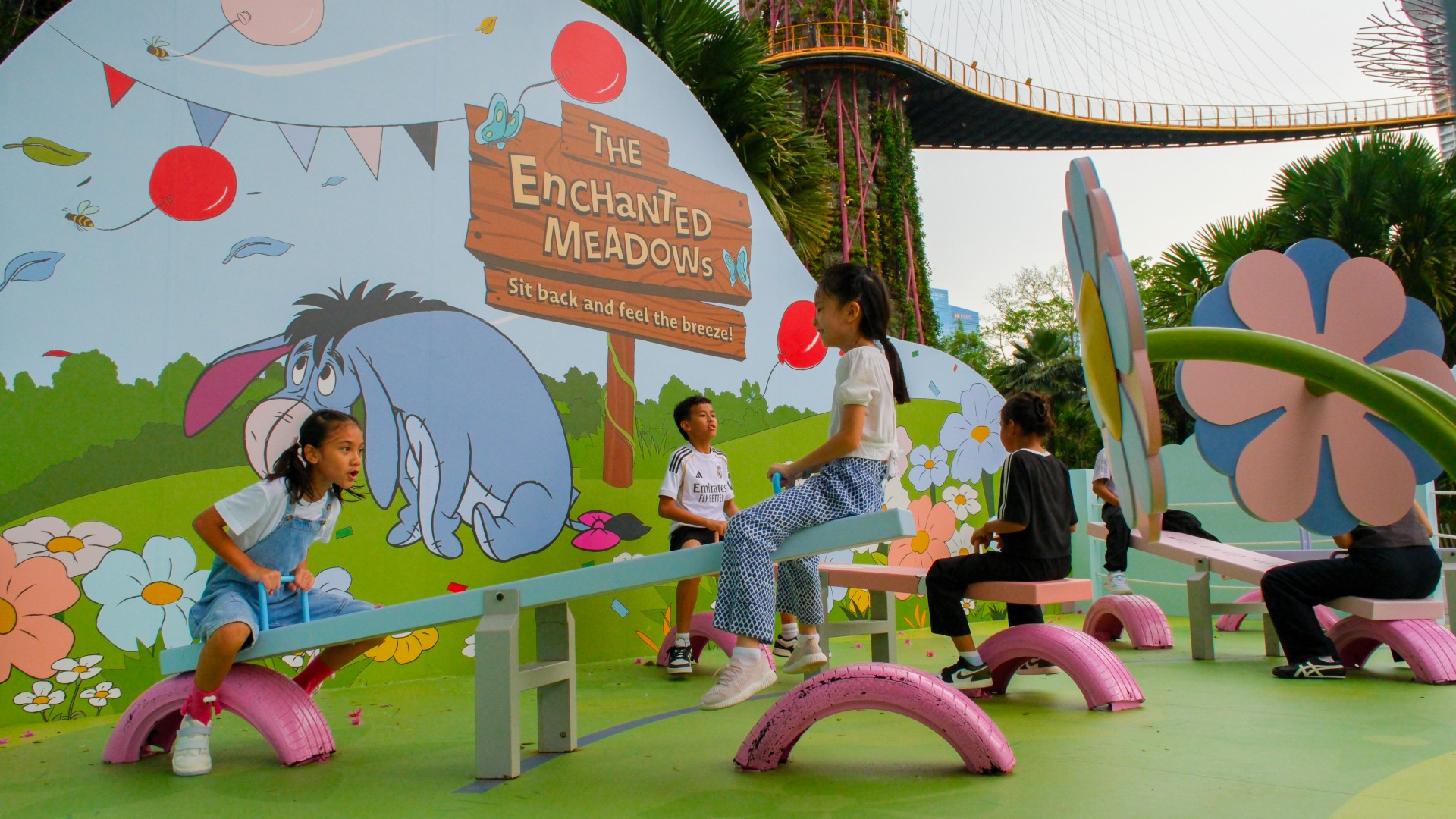
The Enchanted Meadows
Inspired by Eeyore, slow down and enjoy gentle see-saws in this play area themed after a breezy field of flowers.
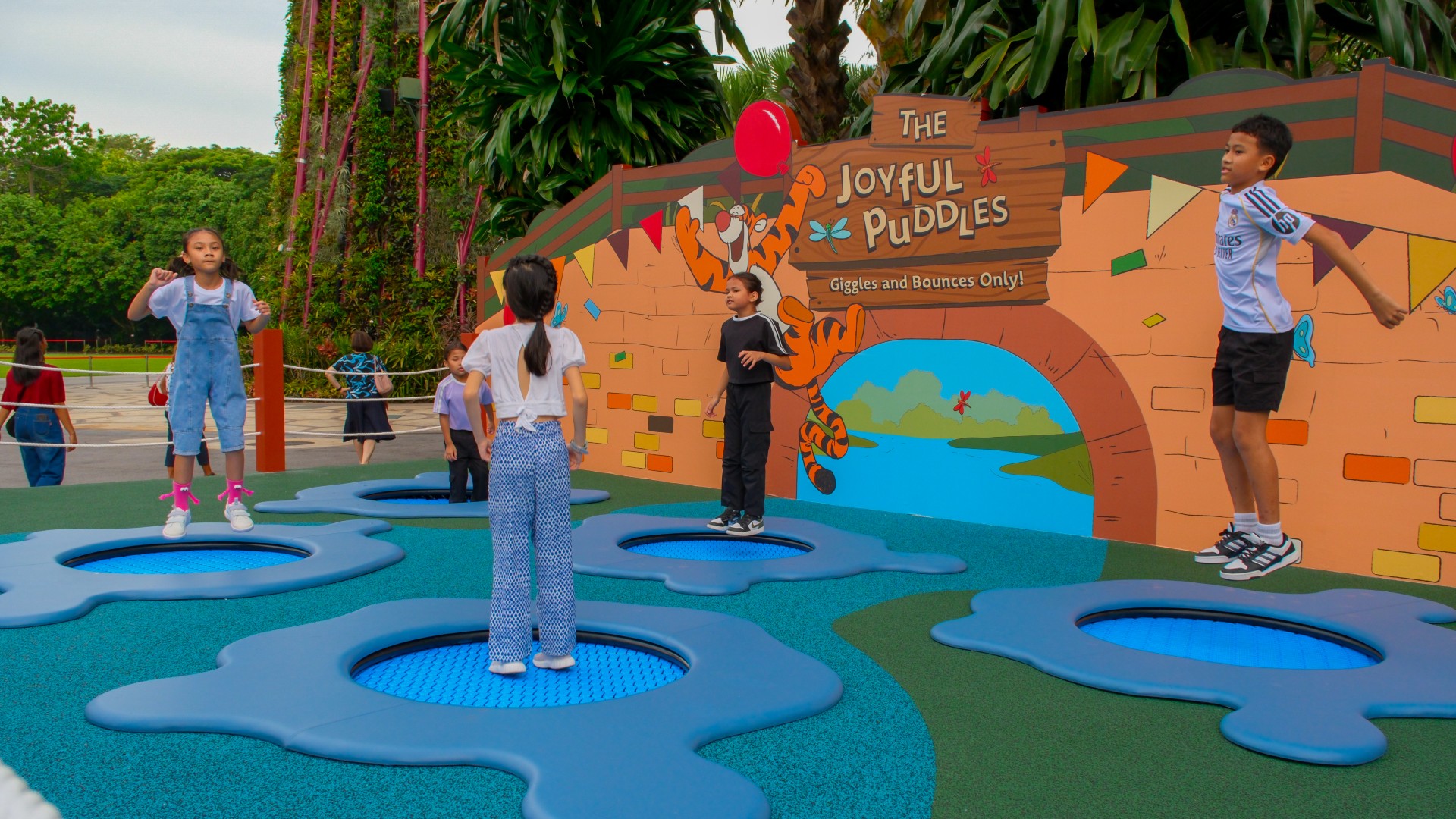
The Joyful Puddles
Drawing from Tigger’s energetic personality, these “puddle” trampolines are perfect for a day of bouncing fun in the sun!
Pooh’s Grand Friendship Party
Held twice on Saturdays, Pooh’s Grand Friendship Party is a lively celebration commemorating 100 years of Winnie the Pooh, and marks the first inflatable march of its kind in Southeast Asia.
Featuring super-sized inflatables of Winnie the Pooh and friends up to seven metres tall, the march comes alive with performers, music and dance as it makes its way around Supertree Grove.
Visitors can also look forward to song-and-dance segments and plenty of photo opportunities with the larger-than-life inflatables.

Hunny Collection activity trail
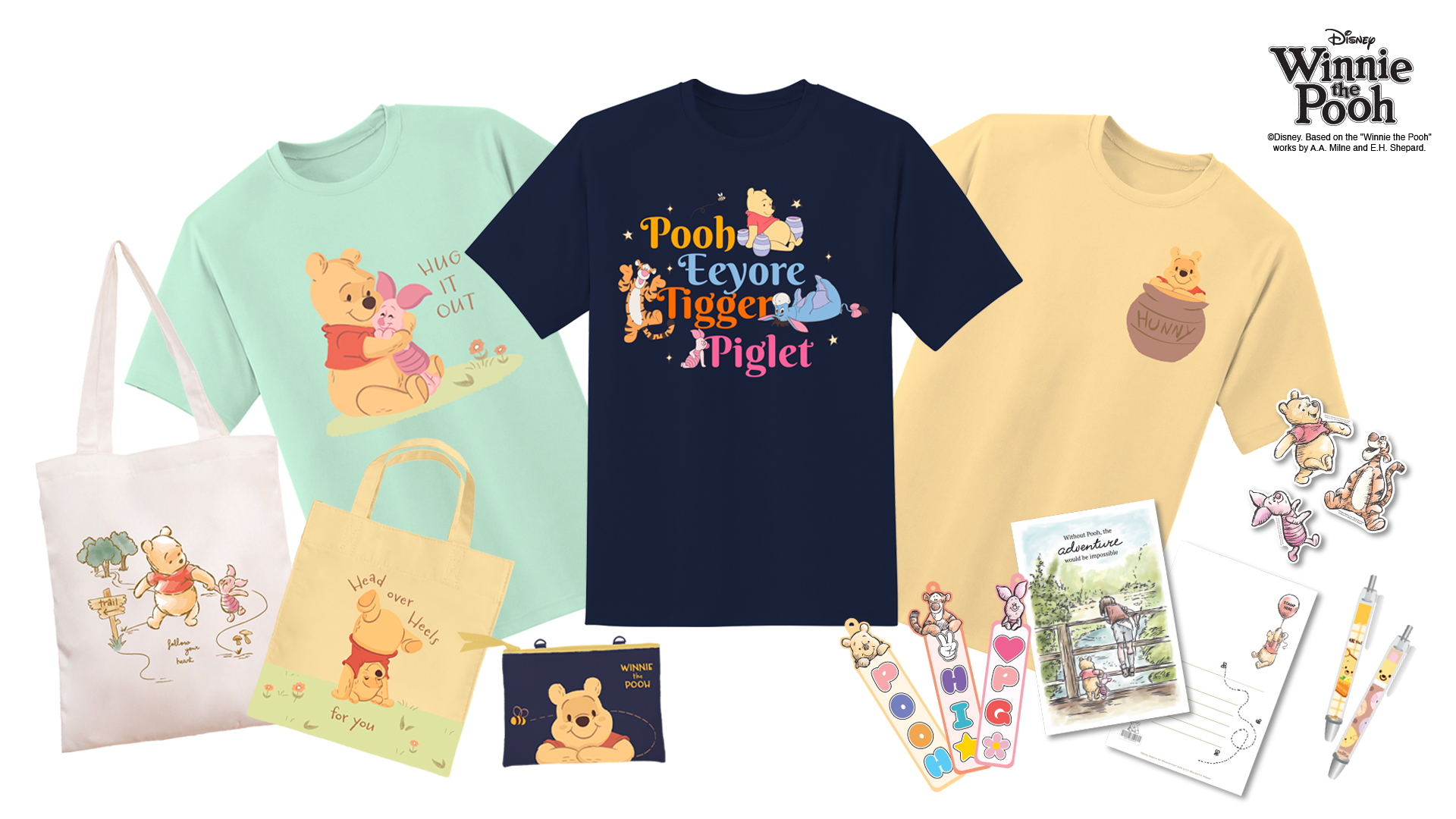
Complimentary activity trail booklets are available for visitors to collect ‘Hunny’ around the festival grounds by completing activities at all five character stations inspired by Winnie the Pooh and friends. Visitors can then redeem an adorable Winnie the Pooh and friends-themed sticker sheet exclusive to Gardens by the Bay’s Children’s Festival.
While stocks last.
Pooh-themed retail pop up and carnival games
Gardens by the Bay’s Children’s Festival will also feature a Pooh-themed retail pop-up where visitors can shop a delightful range of Winnie the Pooh-inspired merchandise and collectibles. There are also themed carnival games for families and little ones to enjoy throughout the festival grounds. Separate charges apply for carnival games.

Hunny Café Plush Pop-Up
On weekends, the Hunny Café Plush Pop-Up reimagines Winnie the Pooh and friends as adorable treats and collectible plushies. Visitors can select from a playful “menu” featuring Hunny toast, bubble tea, Hunny lemon tea and fishball plushies, watch their order being “served up”, before bringing their new besties home.
*Separate charges apply for the Hunny Café Plush Preparation experience.
*All outdoor activities and installations are subject to weather conditions. Programmes may be adjusted, delayed or cancelled, with updates communicated on-site.
Children’s Festival 2026 featuring Disney’s Winnie the Pooh
Date: Saturday 30 May to Sunday, 21 June 2026
Time: 10.00am to 9.00pm
Venue: Supertree Grove at Gardens by the Bay
Details: Admission is free
Pooh’s Grand Friendship Party inflatable march
Date |
Time |
30 May 2026 |
3.30PM |
6 June 2026 13 June 2026 20 June 2026 |
3.30PM and 5.30PM |
Venue: Supertree Grove, Gardens by the Bay
Details: Admission is free
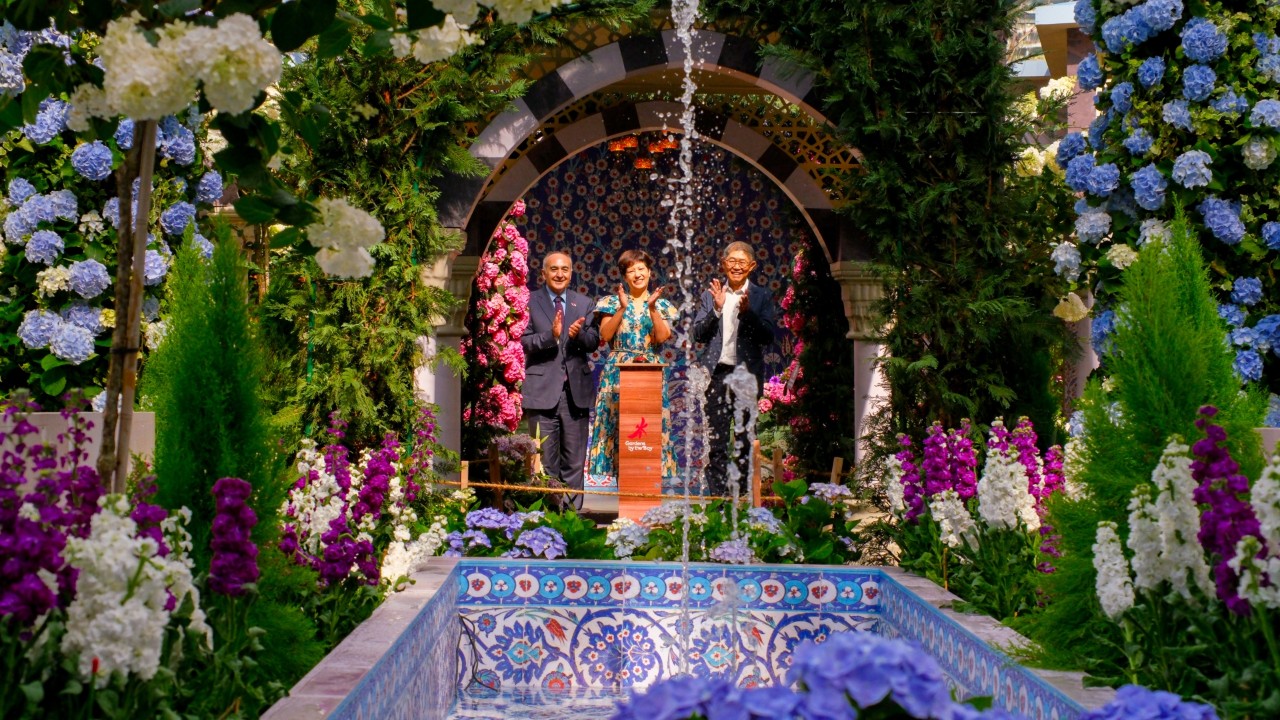 (From left) Ambassador of the Republic of Türkiye to Singapore His Excellency Sadik Arslan, Minister in the Prime Minister’s Office and Second Minister for Finance and National Development Ms Indranee Rajah and Gardens by the Bay Chairman Mr Niam Chiang Meng launch Blue Beauties.
Blue is the colour that runs through the Ottoman world – it represents the heavens as well as royalty, and reflected in the blue hues of Topkapi Palace as well as the famous ceramics of the town of Iznik. At Gardens by the Bay's Blue Beauties (蓝色俏佳人), the colour flourishes amidst more than 30 hydrangea varieties and nearly 3,000 blooms in an immersive floral journey through the Ottoman world.
Blue Beauties is presented in collaboration with the Embassy of the Republic of Türkiye in Singapore and was launched by Minister in the Prime Minister’s Office and Second Minister for Finance and National Development Ms Indranee Rajah today. It runs until June 21.
Gardens by the Bay CEO Mr Felix Loh said, “Blue Beauties invites families on an enriching journey through the Ottoman Empire, framed by clouds of lush hydrangeas. Among the highlights is the Maiden’s Tower, inspired by the enduring legends of a sultan who built an island tower to protect his beloved daughter from a prophesied snakebite. At the heart of this tale is something every parent can relate to – the instinct to protect and cherish their children. This June school holidays, we welcome Singaporean families to cherish family bonding and create meaningful memories together at Gardens by the Bay. In addition to Blue Beauties, families can also look forward to a line-up of exciting experiences, including the Children’s Festival and the return of Disney Garden of Wonder, offering something for everyone in the family to enjoy.”
Hydrangeas that are lush, tall and even cone-shaped
This edition of Blue Beauties marks the first time Gardens by the Bay has brought together such a diverse collection of hydrangea varieties in different forms, scales and colours. Featured varieties include:
- Hydrangea macrophylla 'Avant Garde', a mophead variety that matures through multiple colour shifts – white to pink to green and red – over an unusually long flowering period.
- Hydrangea macrophylla 'Blue Ocean', debuting for the first time and bred for intense blue colouration. The deep cobalt colour directly echoes the Iznik palette at the heart of Blue Beauties.
- Hydrangea macrophylla 'Magical Revolution', a neat, rounded shrub with rich dark green foliage, with cupped flower heads that open pink or blue depending on soil pH, then gradually ageing through green, purple and antique tones.
- Hydrangea paniculata 'Sundae Fraise', a compact panicle hydrangea that can grow up to 3-metres tall, this variety bears conical clusters opening cream and passing to soft pink and strawberry tones from the base upwards as nights cool.
Complementing the hydrangeas are hollyhocks, dianthus, and lisianthus – plants that echo the layered botanical richness of traditional Ottoman palace gardens.
A journey through the Ottoman world
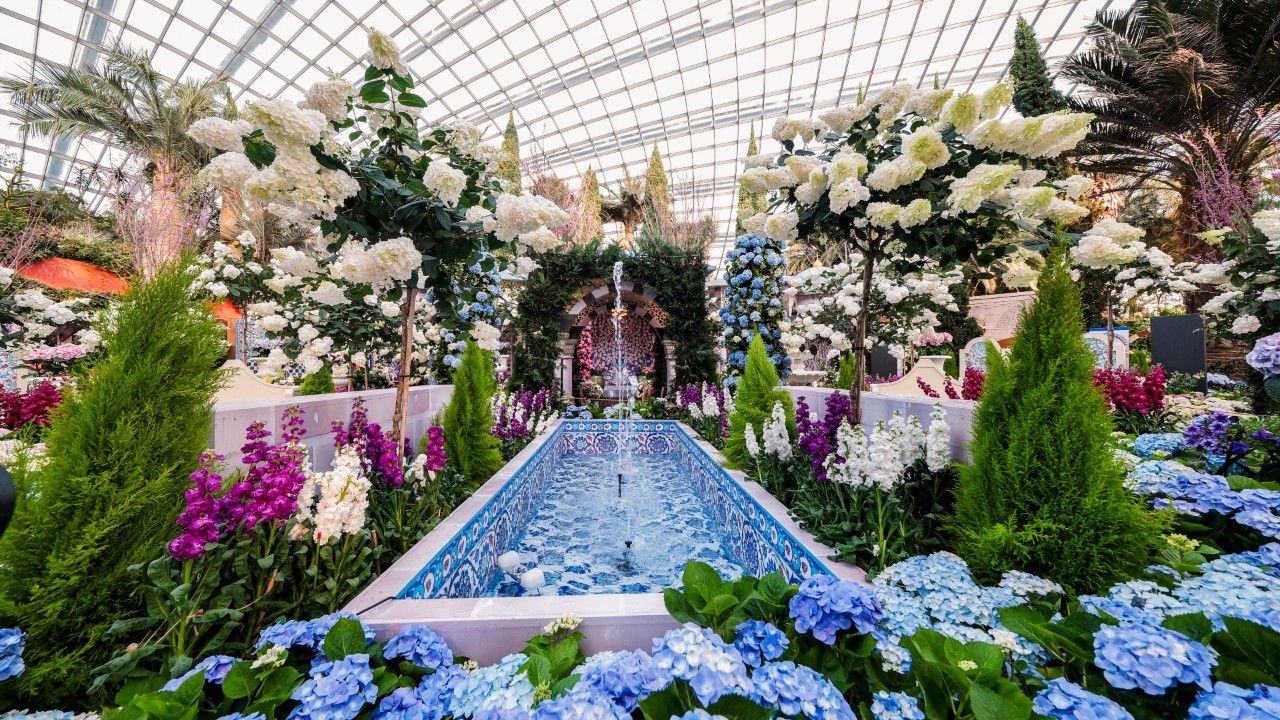
At the heart of Blue Beauties stands a recreation of the iconic Topkapi Palace – home to Ottoman royalty for nearly four centuries and a UNESCO World Heritage Site since 1985. Its walls are richly adorned with motifs inspired by Iznik tiles, the empire's most celebrated ceramic art, whose signature blue-and-white palette resonates throughout the entire display.
Surrounding the palace, shaded walkways, gently flowing fountains, and pergola-covered pavilions recreate the principles of imperial garden design, where water and symmetry were used to create cool, tranquil retreats from the outside world.
Further along, the bustling Grand Bazaar comes into view – a covered world of trade and commerce that once sat at the crossroads of East and West. Rising from the waters at the edge of the display is the Maiden's Tower, which carries with it one of the Ottoman world's most enduring legends – a sultan who built an island tower to protect his daughter from a prophesied snakebite, only for fate to deliver the snake in a basket of fruit on her eighteenth birthday.
The journey continues beyond the palace walls – to the iconic hot air balloon of Cappadocia, and into the quieter pleasures of Ottoman daily life: the warm glow of traditional lamp art, and the rituals of tea and coffee culture that have defined hospitality across the region for centuries.
Please refer to the Annex for more information on:
- Hydrangea highlights
- Echoes of Istanbul concert and Turkish Airlines social media contest
- Programme and workshops
Blue Beauties
Date: Until Sunday, 21 June 2026
Time: 9.00am to 9.00pm
Details: Admission charge to Flower Dome applies
This June school holidays, Gardens by the Bay brings back an exciting line-up for the whole family, from the timeless magic of Disney to the robust beauty of fluffy hydrangeas in full bloom.
At Flower Dome, the Blue Beauties floral display opens on May 26, transporting visitors to the Ottoman Empire with a recreation of the iconic Topkapi Palace set amidst stunning hydrangeas. At Supertree Grove, the annual free Children’s Festival starts on May 30, celebrating 100 years of Winnie the Pooh with outdoor installations inspired by Pooh and his friends.
Rounding out the school holiday line-up, Disney Garden of Wonder returns to Floral Fantasy from June 8, inviting visitors into a whimsical world where brand-new Disney characters are brought to life through elaborate floral topiaries. Both Children's Festival and Disney Garden of Wonder are supported by the Singapore Tourism Board.
Gardens by the Bay CEO Mr Felix Loh said, “This June, Gardens by the Bay transforms into a world where nature, culture and magic collide. Children will journey through the Ottoman Empire amid dreamy clouds of hydrangeas, and discover the timeless wonder of Disney-themed experiences, right here in the heart of our own city. School holidays may be brief, but the memories families make here last a lifetime. We are grateful to be recognised as the world's third top attraction in Tripadvisor Travellers' Choice 2026, and even more grateful to every family who chooses to spend their holidays with us.”
June special promotions
Promotional deals abound this June school holidays, so that families get more bang for their buck when they spend time at Gardens by the Bay:
Children aged 12 and under enjoy free admission to Blue Beauties from May 30 to June 21.*
From June 8 to June 21, tickets to Disney Garden of Wonder and Blue Beauties are priced at just $20 for adults and $15 for children, translating into 20 per cent savings. This bundle deal comes with complimentary shuttle service between Floral Fantasy and Flower Dome.* Available exclusively when you purchase your tickets at Gardens by the Bay’s ticketing counters.
Special dining promotions at TungLok Seafood, Hopscotch, Jurassic Nest and the Finnwood in Gardens by the Bay. Refer to the Annex for more details.
*Valid for Singapore residents only. Standard admission charges apply for accompanying adults.
Blue Beauties
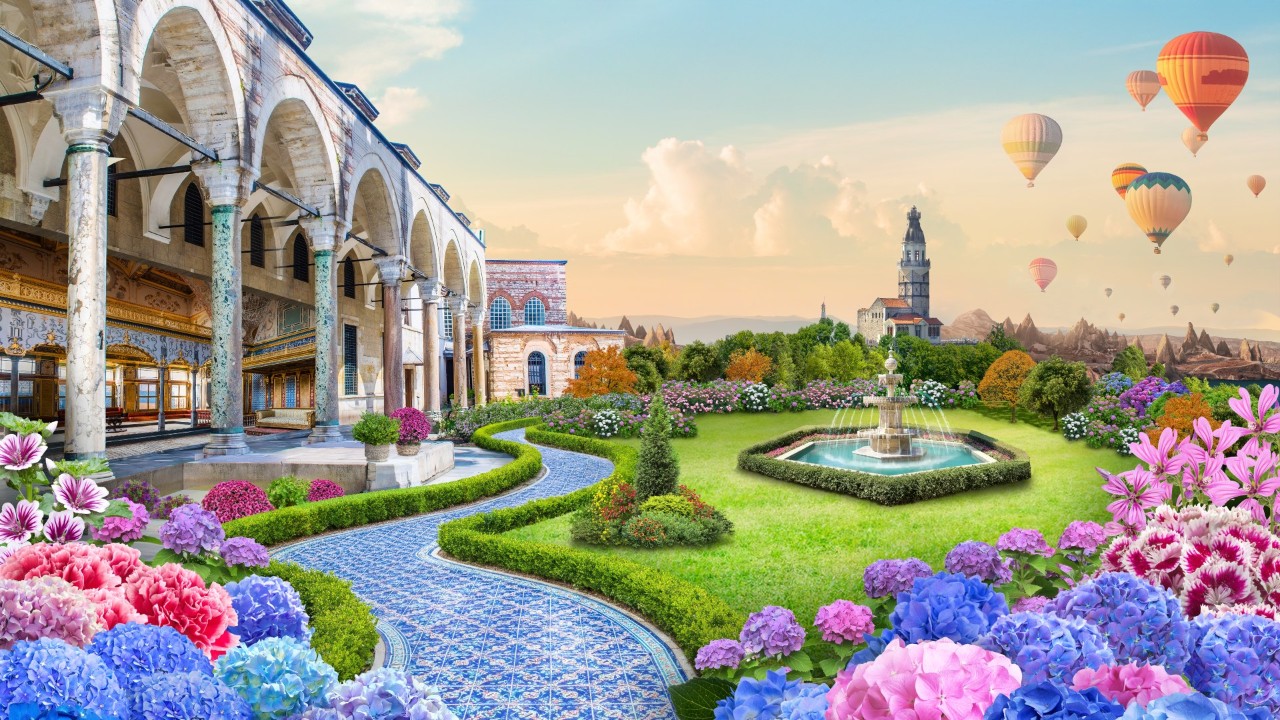
Travel back over six centuries to the golden age of the Ottoman Empire at Gardens by the Bay’s Blue Beauties (蓝色俏佳人) floral display, where over 30 varieties of hydrangeas in hues of blue and purple set the stage for a journey through one of Türkiye’s most magnificent civilisations.
Marvel at a recreation of the iconic Topkapı Palace, once home to Ottoman royalty for nearly four centuries and now a UNESCO World Heritage Site. The walls are richly adorned with motifs inspired by blue-and-white Iznik tiles – the empire’s most celebrated ceramic art, whose signature palette is echoed throughout the display.
Surrounding the palace is a lush garden layered with greenery, shaded walkways and gently flowing fountains, reflecting Ottoman design principles where water and symmetry are used to create cool, tranquil retreats that offer respite from the outside world.
The journey continues through the enduring symbols of Ottoman life, from the bustling Grand Bazaar to the Maiden’s Tower, said to have been built by a sultan to protect his daughter from a fatal snakebite, but a snake hidden in a basket of fruit ultimately caused her death.
Date: Tuesday, 26 May to Sunday, 21 June 2026
Time: 9.00am to 9.00pm
Venue: Flower Dome
Details:
Admission charge to Flower Dome applies.
Complete your visit with a range of hydrangea-themed craft workshops in the Flower Dome. Refer to the Annex for more details.
Children’s Festival 2026 featuring Disney’s Winnie the Pooh
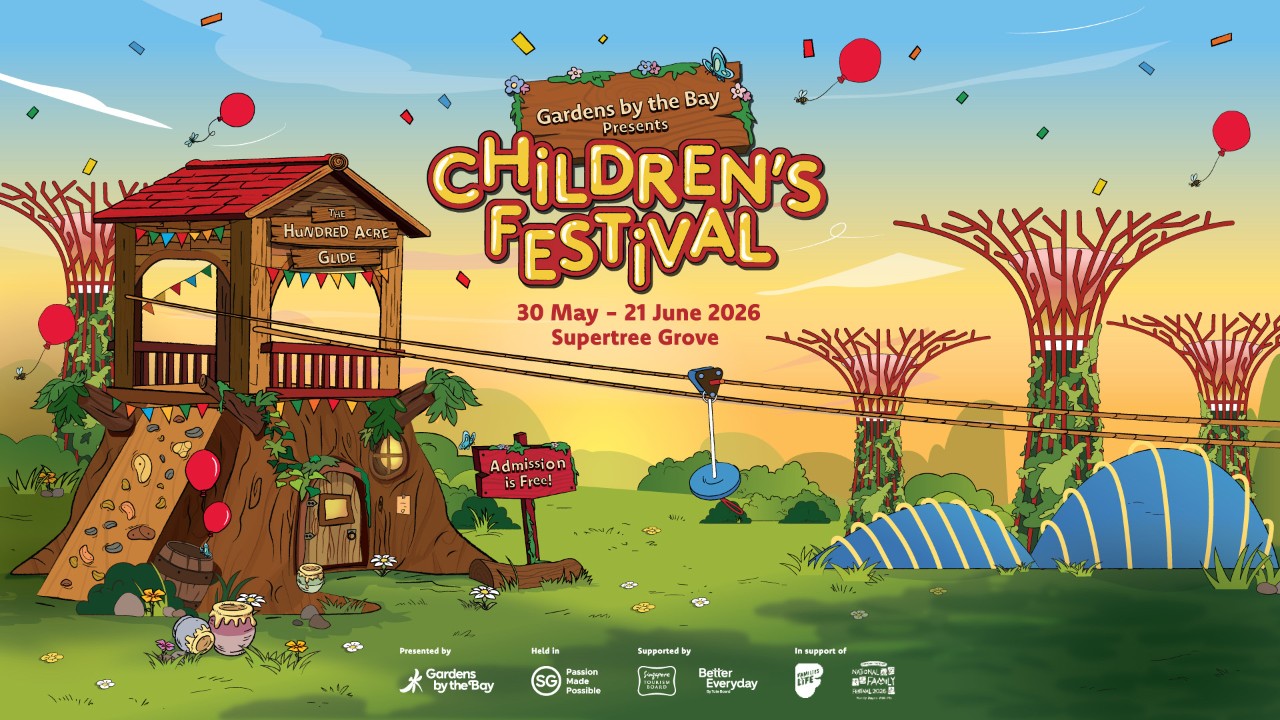
Children’s Festival is back at Gardens by the Bay’s Supertree Grove this June holidays, celebrating 100 years of Winnie the Pooh with highlights including a Winnie the Pooh-themed zipline and lively performances featuring giant inflatables of Pooh and friends.
This year’s edition celebrates the beloved bear’s enduring message to be kind, stay curious, and keep a little honey in your heart. Playful challenges inspired by Hundred Acre Wood friends include:
The Hundred Acre Glide, inspired by the Hundred Acre Wood: The first zipline in Singapore themed after Disney’s Winnie the Pooh. Featuring a treehouse-style installation, children can glide 16m across the festival grounds against the backdrop of the Supertrees.
The Sweetest Drops, inspired by Winnie the Pooh: This honeycomb-themed ball pit is inspired by Pooh’s search for his favourite snack, honey, which often turns into an adventure!
The Brave Logs, inspired by Piglet: Balance across planks and “tree stumps” in this quick-footed adventure that encourages children to summon their courage and take things one step at a time.
The Enchanted Meadows, inspired by Eeyore: Slow down and enjoy gentle see-saws in this play area themed after a breezy field of flowers.
The Joyful Puddles, inspired by Tigger: Drawing from Tigger’s energetic personality, these “puddle” trampolines are perfect for a day of bouncing fun in the sun!
Hunny Collection activity trail: Children can collect character stamps in a booklet to redeem a sheet of adorable Winnie the Pooh and friends stickers.
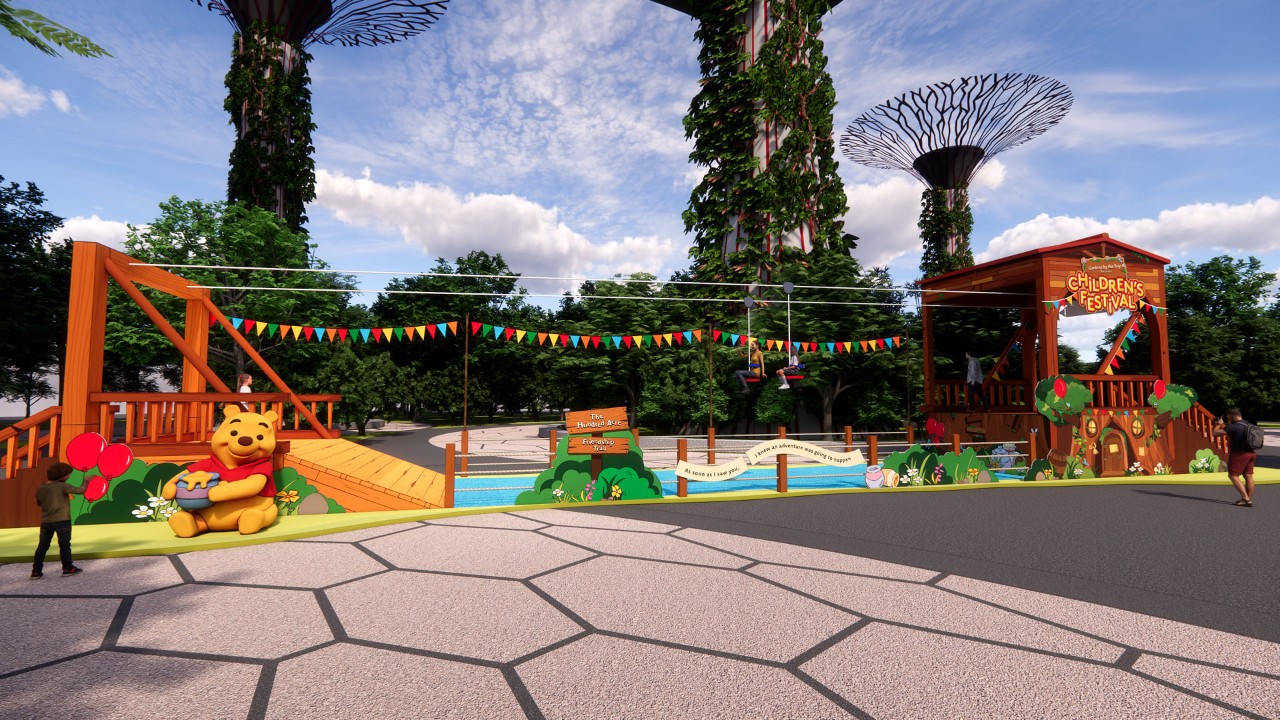 Hundred Acre Glide (Concept arts above are for illustrative purposes only)
Pooh’s Grand Friendship Party inflatable march
For the first time in Southeast Asia, Gardens by the Bay presents Pooh’s Grand Friendship Party, a twice-daily, music-filled march every Saturday into Supertree Grove featuring super-sized inflatables of Winnie the Pooh and friends up to 7m in height.
On weekends, visit the Hunny Café, which reimagines Winnie the Pooh and friends as adorably delicious treats. Visitors can select from a “menu” of Hunny toast, bubble tea, Hunny lemon tea and fishball plushies exclusive to Children's Festival. Select a café set, watch it being “served up” and bring your new besties home!
Children’s Festival 2026
Date: Saturday, 30 May to Sunday, 21 June 2026
Time: 10.00am to 9.00pm (queues for play zones may close at 6.30pm or earlier, subject to crowd conditions)
Venue: Supertree Grove at Gardens by the Bay
Details: Admission is free
Pooh’s Grand Friendship Party inflatable march
Date |
Time |
30 May 2026 |
3.30PM |
6 June 2026 13 June 2026 20 June 2026 |
3.30PM and 5.30PM |
Venue: Supertree Grove at Gardens by the Bay
Details: Admission is free
*All outdoor activities and installations are subject to weather conditions. Programmes may be adjusted, delayed or cancelled, with updates communicated on-site.
For more details, please visit www.gardensbythebay.com.sg/childrensfestival
Disney Garden of Wonder
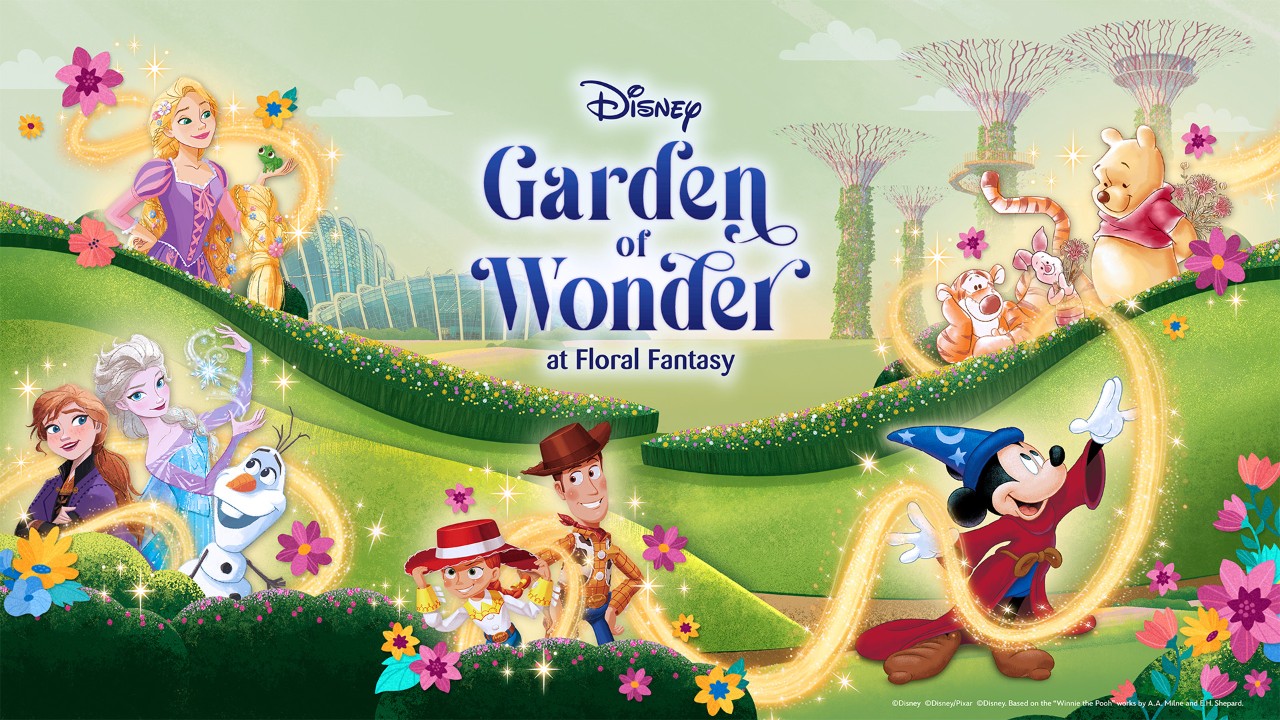
Following its successful debut in 2024, Disney Garden of Wonder (迪士尼奇妙花园) is back at Floral Fantasy with new topiary displays and dioramas of beloved Disney and Pixar characters.
For the first time, the 2026 edition of Disney Garden of Wonder will introduce displays of Disney Princess heroines Rapunzel, Belle and Jasmine. In another first, topiary versions of Frozen’s Anna and Elsa will also preside over an enchanting snowy landscape, brought to life through floral artistry and themed lighting that imagines a frost-kissed world of wonder.
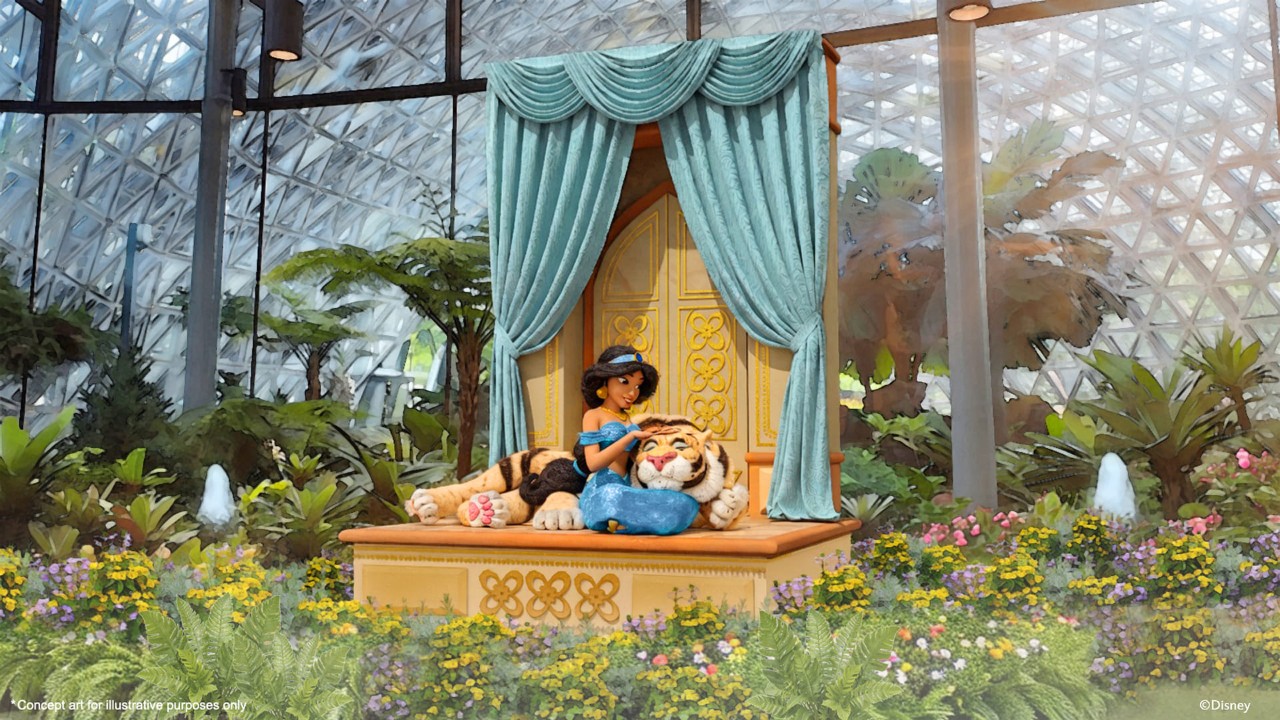 Jasmine and Rajah from Aladdin (Concept arts above are for illustrative purposes only)
Visitors can look forward to 23 topiary characters across six themed zones, including fan favourites such as: Sorcerer’s Apprentice Mickey; Woody, Jessie and Buzz Lightyear from Disney and Pixar’s Toy Story 5; as well as Hundred Acre Wood pals like Winnie the Pooh, Eeyore, Piglet and Tigger. Rounding out the journey is a uniquely Singaporean finale, where visitors can snap playful photos with displays of Disney characters reimagined in local settings, alongside famed hawker fare such as laksa and teh tarik.
With its blend of floral artistry, familiar characters and magical storytelling, Disney Garden of Wonder offers families a visually rich journey that appeals across generations during the upcoming school holidays.
Disney Garden of Wonder
Date: Monday, 8 June 2026 to Sunday, 14 March 2027
Time: 10am to 9pm
Venue: Floral Fantasy at Gardens by the Bay
Details: Tickets are priced at $12 for adults and $8 for children. Tickets are available at https://ticket.gardensbythebay.com.sg/.
For more details, please visit www.gardensbythebay.com.sg/disneygardenofwonder
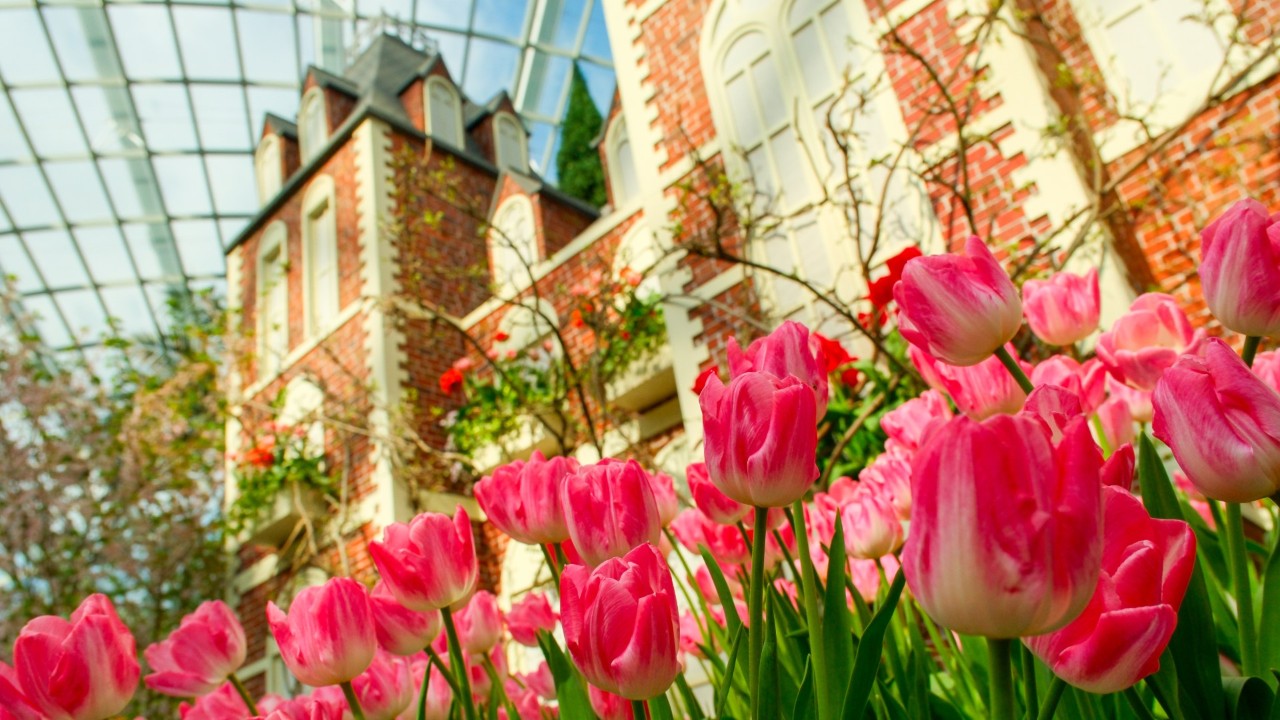 Tulipa 'Kaki', a new tulip variety gifted by the Netherlands to Singapore was officially named at the launch of Gardens by the Bay's 12th edition of Tulipmania, symbolising the warm friendship between the two nations.
Piet Mondrian’s bold grids and Vincent Van Gogh’s powerful swirling lines have long captivated audiences in museums. This April, these artworks break out of their frames at Gardens by the Bay’s Tulipmania (梦幻郁金香). The geometric vision of Mondrian’s masterpiece, Composition with Red, Blue and Yellow, blooms in a vivid tapestry of tulips and hyacinths, while three of Van Gogh's iconic paintings are brought to life in flowers – such as the beloved The Starry Night recreated with calibrachoas, alyssums, pansies and lobelias.
All of this unfolds amidst a breathtaking sea of 65,000 tulips of over 30 varieties, in a floral display where the richness of Dutch art and culture takes centrestage. Presented in collaboration with the Embassy of the Kingdom of the Netherlands in Singapore, Tulipmania was officially launched today by Minister of State for Ministry of Foreign Affairs and Ministry of Trade and Industry Ms Gan Siow Huang, Gardens by the Bay CEO Mr Felix Loh, and Ambassador of the Kingdom of the Netherlands in Singapore Her Excellency Anneke Adema. It will run until May 17.
A new tulip variety, Tulipa ‘Kaki’ was also formally named by MOS Gan in a traditional Dutch naming ceremony where champagne is poured over the bloom. A gift from the Netherlands to the people of Singapore, the name was chosen to symbolise friendship between the two nations as “kaki” means close friend in a Singapore context.
Gardens by the Bay CEO Mr Felix Loh said, “Gardens by the Bay offers a horticultural window to the world, and the 12th edition of Tulipmania – our longest-running floral display – celebrates the Netherlands' extraordinary artistic heritage through the timeless beauty of the tulip. The world may be navigating uncertain times, but Gardens by the Bay's promise to our visitors remains: we will always be a place where the world comes together, where cultures bloom, and where every guest – whether traveling from afar or near – finds something worth remembering."
Operational resilience in an uncertain climate
In view of evolving global conditions, Gardens by the Bay continues to take a prudent and forward-looking approach to operations, in alignment with Singapore's broader commitment to resilience and sustainability.
Building on existing practices, the Gardens is strengthening regional and local sourcing where feasible to enhance supply chain resilience. At the same time, ongoing energy optimisation efforts – including calibrated lighting schedules and fine-tuning of conservatory conditions within horticultural requirements – further reflect commitment to responsible resource management, without compromising on high-quality visitor experience.
New tulip varieties in the 12th edition of Tulipmania
Tulipa ‘Kaki’ is a highlight of this year’s Tulipmania and can be enjoyed for a limited time when the flower is in bloom. It is a Triumph-class tulip – one of the most widely cultivated tulip varieties in the world, with stable, cup-shaped blooms. The flower is white with a delicate pink hue along the petals’ fringe, chosen for its colours to symbolise harmony, clarity, and friendship. A cross of Tulipa 'First Class' and Tulipa 'Strong Gold', developing a new tulip cultivar typically takes about a decade.
Other new tulip varieties at this year’s Tulipmania include:
- Tulipa ‘Pretty Princess’, featuring rose-pink tepals with darker pink to purplish flamed accents and cream-margined leaves
- Tulipa ‘Spryng Surprise’, creamy white at first, splashed with red flames that soften into pink as the flower matures
- Tulipa ‘Virichic’, which opens pale rose, deepening with age, with a central green flame
The tulip palette is complemented by a variety of spring blooms, including fritillaria, hyacinths, and narcissus.
Dutch art and culture in bloom
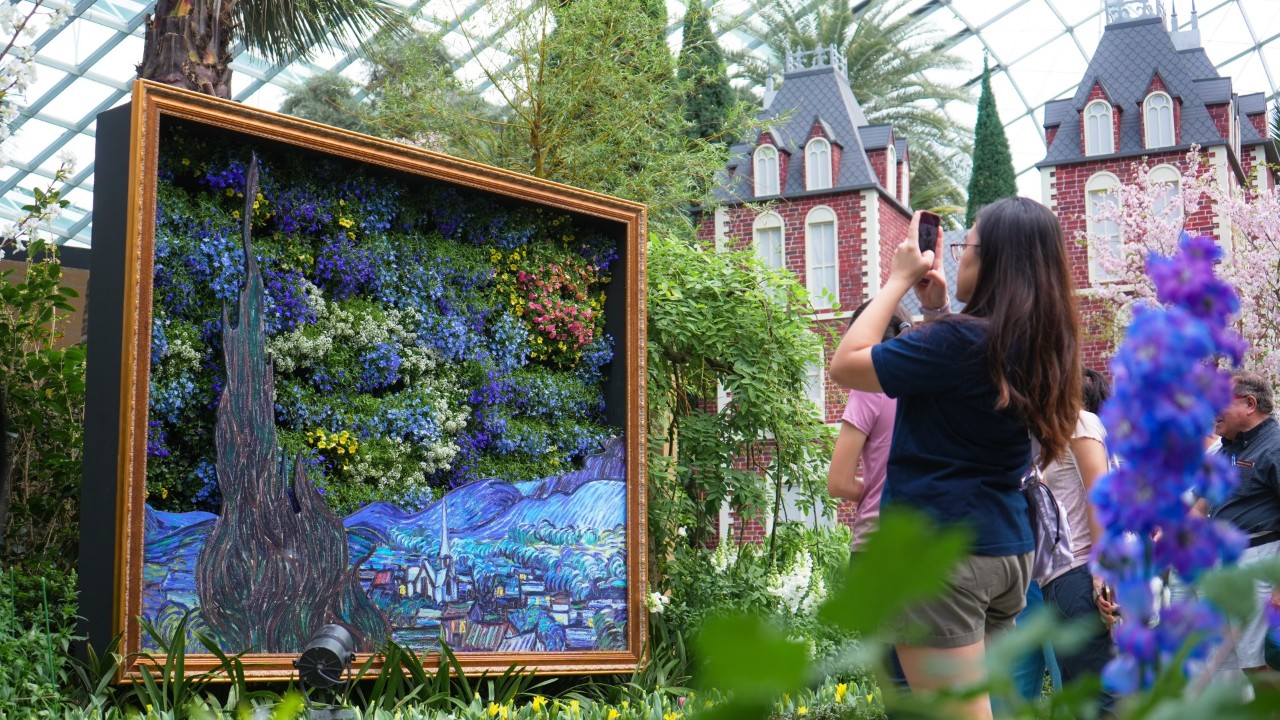 Van Gogh's iconic The Starry Night is interpreted with flowers at Gardens by the Bay's Tulipmania.
Beyond The Starry Night, Van Gogh’s Vase with Irises as well as Imperial Fritillaries in a Copper Vase are also recreated with fritillaries and irises – a fitting tribute to an artist who drew profound inspiration from nature.
In addition, visitors can experience recreations of iconic elements from the artistic milieu of the Netherlands:
- Rijksmuseum: The recreation of Amsterdam’s renowned museum houses reproductions of celebrated works from the Dutch Golden Age, including Rembrandt’s The Night Watch and Vermeer’s Girl with a Pearl Earring.
- De Kat Windmill: The De Kat windmill is the world’s last remaining working windmill that still produces natural pigments and dyes from raw materials, which are used in making art.
Complementing these are cultural icons that showcase Dutch heritage:
- Tulipiere: A larger-than-life version of this distinctive multi-spouted vase unique to the Netherlands welcomes visitors at the entrance of Flower Dome. Historically used to display individual tulips rather than massed arrangements, the tulipiere reflects the extraordinary esteem for the flower during the height of the tulip trade.
- Delftware Showcase: In the early 17th century, potters in Delft sought to replicate the Chinese porcelain prized by Dutch merchants. From here, Delftware, a distinctly Dutch style that incorporates local motifs including the tulip, was born.
- Tulip Cruise: Visitors can step aboard this picturesque, tulip-bedecked boat for photos surrounded by vibrant tulips, evoking the charm of the Netherlands’ famous waterways.
Win air tickets to Europe with KLM Royal Dutch Airlines
Also on display at Tulipmania is the complete set of 106 Delft Blue miniature houses from KLM Royal Dutch Airlines, the official airline partner for the display. Modelled after real Dutch buildings of historical and architectural interest, these miniature houses have been presented to Business Class passengers on intercontinental KLM flights since the 1950s as a gesture of Dutch culture and hospitality. KLM Royal Dutch Airlines also flew in a replica of Van Gogh’s Sunflowers from the Van Gogh Museum.
Visitors can play the KLM Delft Blue Houses Game or participate in the Snap and Win social media contest to win a pair of economy-class return air tickets sponsored by KLM Royal Dutch Airlines to a KLM destination of their choice within Europe via Amsterdam.
Please refer to the Annex for more information on:
- New tulip varieties at Tulipmania 2026
- Win air tickets to Europe with KLM Royal Dutch Airlines
- Programme and workshops
Tulipmania
Date: Until Sunday, 17 May 2026
Time: 9.00am to 9.00pm
Details: Admission charge to Flower Dome applies
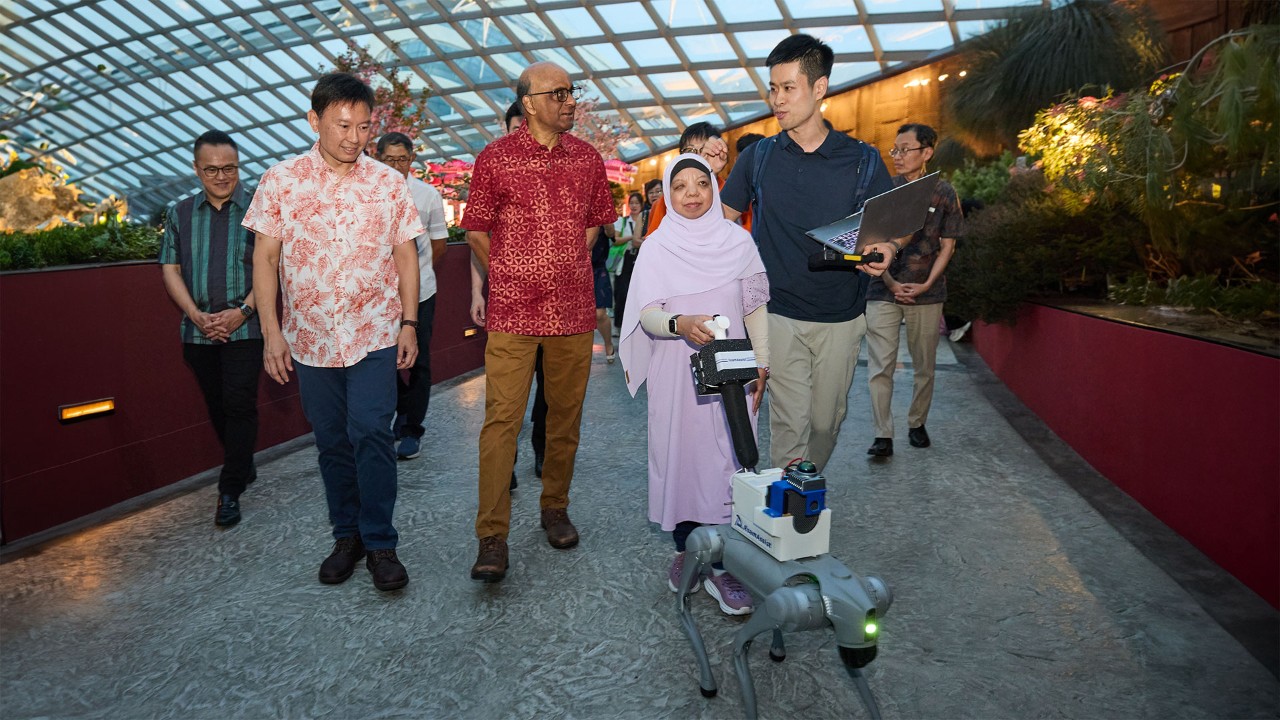 (From left) Minister for National Development Mr Chee Hong Tat, President of the Republic of Singapore Mr Tharman Shanmugaratnam, visually impaired docent Ms Liza Rosli, and CEO of RoamAssist Mr Cai Shaojun, who developed the robotic guide dog, at a demonstration of how it works in Flower Dome.
By the third quarter of 2026, visitors with visual impairment going to Flower Dome can have their very own guide dog to help them navigate the space – a robotic version that will also “talk” them through a curated walking route and interesting sights along the way. This is part of Gardens by the Bay’s next phase of efforts to leverage technology such as AI to promote greater inclusivity, so that more persons with disabilities can experience its spaces with greater autonomy.
To encourage more visitors to experience the space, the Gardens is also strengthening youth volunteerism through its partnership with the National Youth Council’s volunteering division, Youth Corps Singapore. The Gardens aims to increase the number of youth volunteers engaged in its programmes to 3,000 by 2028.
The new initiatives were announced by Minister for National Development Mr Chee Hong Tat at the Garden of Reunion (团园) event this evening, which brought together more than 300 beneficiaries, volunteers, donors and partners of Gardens by the Bay’s Gift of Gardens community outreach initiative for an appreciation dinner. The event was graced by President of the Republic of Singapore Mr Tharman Shanmugaratnam, who is Patron of Gift of Gardens.
Gift of Gardens was launched in 2012 to facilitate complimentary access to Gardens by the Bay for local residents with disabilities or who may not otherwise have the means to visit. Gift of Gardens has since expanded its scope to offer a range of community programmes, such as Quiet Mornings for individuals with autism to enjoy Flower Dome during pre-opening hours and sensory tours for persons with visual impairment. To date, Gift of Gardens has served close to 300,000 beneficiaries.
Gardens by the Bay CEO Mr Felix Loh said, “As a People’s Garden, we believe nature should be accessible to all. By leveraging technologies such as AI to support greater independence for persons with disabilities, we hope to create a more inclusive society where everyone feels welcomed and empowered.”
Leveraging technology for greater independence
Gardens by the Bay’s latest technology initiatives build on ongoing efforts to be a more inclusive garden. In 2024, the Gardens launched its sensory tours for persons with visual impairment that feature specially developed tactile guidebooks and real plant samples to help participants form mental images of its landscapes and plants. To date, more than 800 have experienced the tours. In addition, eight former participants with visual impairment have gone on to receive training to become paid docents for the tours.
Soon, these sensory tours will be further enhanced with not only the robotic guide dog, but also a wearable AI-powered device called AiSee. The objective is to eventually allow persons with visual impairment to enjoy Flower Dome independently at their own pace – the robotic guide dog will help them navigate safely, while AiSee can answer their questions the way a docent would.
The robotic guide dog, developed by local company RoamAssist, is pre-programmed with the layout of Flower Dome and will guide visitors with visual impairment to key plant highlights. It provides audio instructions and descriptions of these plants, while prompting visitors on how to use the tactile guidebook to enhance their understanding of the specific plant. The robotic guide dog can also sense obstructions in the path ahead and pause or lead the visitor on alternative paths. When operational in the third quarter of 2026, it will be available for rent at no charge.
AiSee, developed by a local start-up, is an AI-powered wearable headset that helps visitors with visual impairment understand the plants around them. When prompted by voice cue, it captures an image of a plant, uses cloud-based AI to analyse and match it against a database for identification, then relays the information back to the visitor through audio. It also allows for follow-up questions, which it will attempt to answer leveraging on the same cloud-based AI.
Development of the AiSee prototype for Flower Dome will begin in the first quarter of 2027, with plant highlights and information about the conservatory mapped into its database, followed by trials with persons with visual impairment.
The development of the robotic guide dog and AiSee is supported by the Enabling Lives Initiative (ELI) Grant which is funded by Tote Board and managed by SG Enable.
Deputy CEO of SG Enable Mr Eng Soon Khai said, “Technology can help remove everyday barriers for persons with disabilities, enabling more independent navigation of public spaces and access to information. Through the ELI Grant, we are proud to support innovations like AiSee and the RoamAssist robotic guide dog that leverage AI to provide tangible support for persons with visual impairment. We are grateful for partners like Gardens by the Bay that share our commitment to advancing inclusion and accessibility, and shaping a more inclusive Singapore for all.”
For visitors with autism, an online sensory map co-developed with St. Andrew’s Autism Centre will go live in June this year. The map uses past data to identify the levels of sensory stress—environmental triggers such as noise, light, and smell—in various areas of the Gardens at different timings of the day, so that such visitors and their caregivers can plan their visits in advance.
These efforts support Singapore’s Enabling Masterplan 2030, a national roadmap that sets out the vision for Singapore to be an inclusive society where persons with disabilities are enabled to participate in and contribute fully to the community.
Fostering volunteerism among youth
Gardens by the Bay’s partnership with Youth Corps is part of the larger SG Youth Plan, a five-year action plan that supports young Singaporeans to be confident, as well as to connect and contribute. The SG Youth Plan also creates opportunities for people from different segments and generations of society to interact and foster mutual understanding.
More than 1,000 youths have volunteered for the Gardens’ programmes such as sensory tours for persons with visual impairment and befriending activities.
Youth volunteers assist beneficiaries during visits, facilitating tours and community programmes while building social and intergenerational connections. Through these volunteer experiences, these youths also develop empathy, resilience, and a shared sense of responsibility, enriching both themselves and the communities they serve.
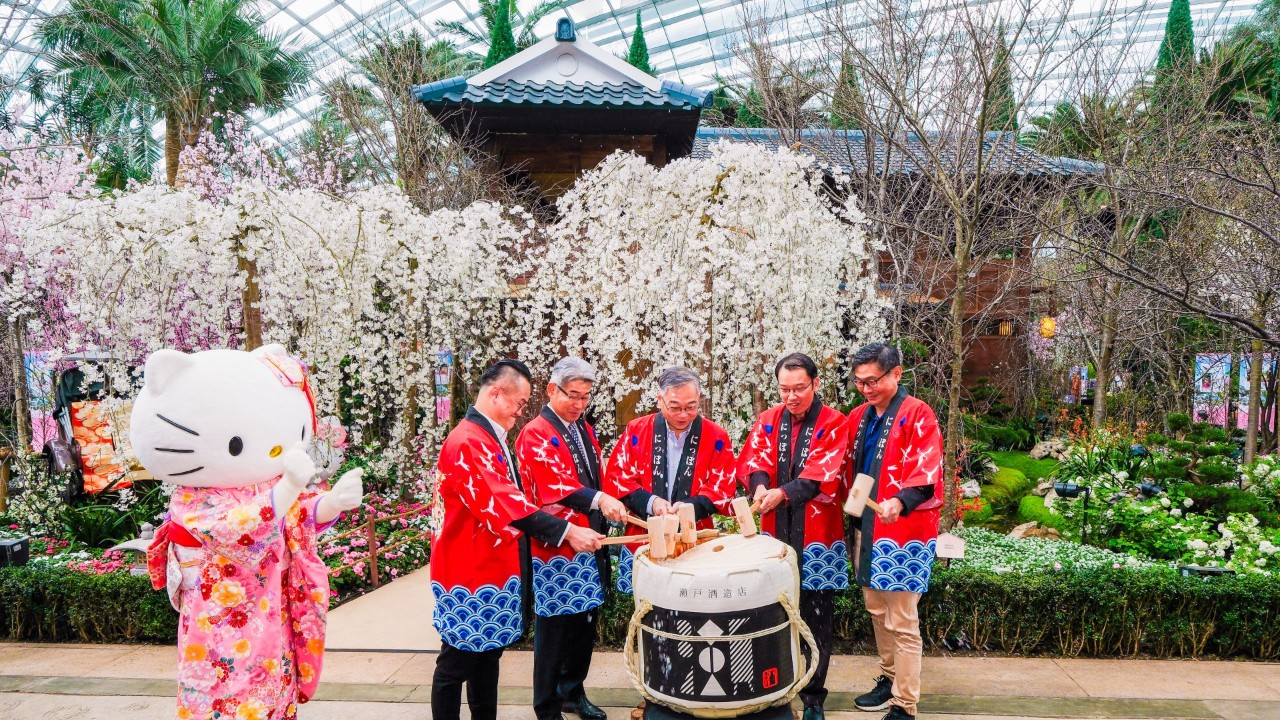 (From left) Gardens by the Bay Board Director Mr Sam Liew, Ambassador of Japan to Singapore His Excellency Hiroshi Ishikawa, Deputy Prime Minister and Minister for Trade and Industry Mr Gan Kim Yong, Gardens by the Bay CEO Mr Felix Loh, and Gardens by the Bay Board Director Mr Jimmy Toh breaking the sake barrel to launch the Sakura floral display, with a special appearance by Sanrio character Hello Kitty.
From today, visitors to Flower Dome can stroll through a recreation of old Japanese streets once walked by samurai and visit teahouses where geisha once gathered, as part of the 11th edition of Gardens by the Bay’s iconic Sakura (樱花展). Set against a breathtaking backdrop of cherry blossoms in delicate shades of soft pink and white, the floral display recreates the nostalgic landscapes of Japan’s Ishikawa Prefecture, inviting visitors to experience the beauty and traditions of sakura season.
Presented in partnership with the Embassy of Japan to Singapore, Sakura 2026 coincides with 60 years of diplomatic relations between Singapore and Japan. It was officially launched today by Deputy Prime Minister and Minister for Trade and Industry Mr Gan Kim Yong, alongside Gardens by the Bay CEO Mr Felix Loh and the Ambassador of Japan in Singapore His Excellency Hiroshi Ishikawa. Sakura will run until April 15.
Gardens by the Bay CEO Mr Felix Loh said, “Sakura remains a much-loved tradition that our visitors look forward to each spring, and we continually strive to make each edition a special experience. Coaxing cherry blossoms to bloom in the tropics remains no small feat, and beyond crowd favourite cultivars, we introduce new varieties each year so our visitors have new blooms to enjoy. Each edition of Sakura also spotlights a region of Japan, celebrating its landscapes, traditions and cultural heritage. This year, as Singapore and Japan mark 60 years of diplomatic relations, we are honoured to spotlight Ishikawa Prefecture, bringing the nostalgic charms of its samurai and geisha legacy to Flower Dome for the first time.”
Cherry blossom highlights
Visitors can admire close to 40 varieties of cherry blossoms throughout the display, showcasing a range of silhouettes from elegant upright forms to cascading weeping branches, in soft shades of pink and white.
Among the highlights is the return of popular cultivars Prunus ‘Pink Perfection’, admired for its dense clusters of soft pink double-petalled blooms, and an 8m-tall Prunus ‘Somei Yoshino’, well-loved in Japan for its delicate blossoms that soften from pale pink to near white at full bloom. Also featured are Prunus ‘Kiku Shidare’, known for its richly layered blossoms resembling delicate pink pom-poms, and Prunus pendula, recognised for its graceful weeping form.
A new addition this year is Prunus ‘Jugatsu’, known in Japan as the “October cherry”, specially chosen for its rare habit of flowering in both autumn and spring. It bears small, semi-double blossoms in soft pale pink that often fade to near white.
Adding to the seasonal spectacle is Prunus persica ‘Hanamomo’, an ornamental flowering peach commonly seen in Japanese spring landscapes, bringing vibrant bursts of colour to the display.
Experiencing Ishikawa in Bloom
Ishikawa Prefecture is home to the historic city of Kanazawa, known for its preserved samurai districts, geisha quarters and traditional crafts.
During the Edo period, the Maeda family ruled the Kaga domain centred in Kanazawa and championed the development of arts and crafts in the region. Against the backdrop of the pink and white blossoms, the centrepiece of the floral display is a recreation of the two-storey Nomura residence, modelled after the former home of a samurai of the Maeda clan, now maintained as a historic house. The house features an engawa, or veranda, overlooking a serene courtyard garden — a space traditionally used to enjoy the outdoors from within the home.
Traditional arts associated with Ishikawa are also showcased within the residence, including gold leaf craftsmanship, lacquerware, silk dyeing and Kutani porcelain, which have been flown in specially from the region for this display. Visitors can also walk through a colourful walkway of columns adorned with different kimono patterns, showcasing the variety and craftsmanship of this traditional Japanese attire.
Sakura also introduces a rain feature inspired by Kanazawa’s famously wet climate, allowing visitors to experience cherry blossoms framed by a gentle curtain of rain. From there, visitors move along a pathway lined with lattice-covered façades inspired by Higashi Chaya, Kanazawa’s traditional teahouse district.
A tribute to Kenrokuen, regarded as one of Japan’s Three Great Landscape Gardens, comes in the form of a bridge overlooking a tranquil body of water and framed by cascading blossoms and stone lanterns, reflecting the serene balance characteristic of traditional Japanese garden design. The display also features a façade inspired by the main hall of the 1,300-year-old Natadera Temple, which is backed by the jagged rock formations of Mount Haku, where meditation caves are carved into the cliffs.
Visitors can also get a glimpse of the traditional sake brewing process that Ishikawa is known for, which uses pure mountain water and craftsmanship honed over generations to produce sake known for its smooth and well-balanced flavour.
Adding a touch of whimsy to the display, familiar Sanrio characters such as Hello Kitty, My Melody, Pompompurin, Cinnamoroll and Kuromi can be spotted among the blossoms in the display.
Cosplay and anisong concerts at Anime Garden next weekend
Anime fans can look forward to the return of Anime Garden at the Supertree Grove and Flower Dome on March 21 and 22. The event brings together anime, music and cosplay in a dynamic two-day celebration.
Visitors will have a chance to meet celebrity cosplayers Thames Malerose and Munoko and catch high-energy performances by outstanding homegrown and regional talents. As night falls, the excitement continues with two electrifying concerts featuring acclaimed Japanese artists yanaginagi, Eir Aoi, KIHOW from MYTH & ROID, and ZAQ performing crowd-favourite anisongs and J-pop hits beneath the Supertrees.
There will also be a bustling marketplace filled with exclusive merchandise, collectibles and a variety of food offerings.
Please refer to the Annex for
- Highlights of Anime Garden
- All Nippon Airways (ANA) social media contest to win tickets to Japan
Sakura is also supported by All Nippon Airways (ANA), Japanese Chamber of Commerce & Industry, Singapore Foundation (JCCI), the Japan External Trade Organization Singapore (JETRO), Popular Mi Pte Ltd, Kaga Yuzen Maida and HULS Gallery.
Sakura
Date: Until 15 April 2026
Time: 9am to 9pm
Venue: Flower Dome (Admission charge applies)
Anime Garden
Date: 21 March and 22 March 2026
Time: 3pm to 9pm
Venue: Supertree Grove and Flower Dome (Admission charge applies to Flower Dome)
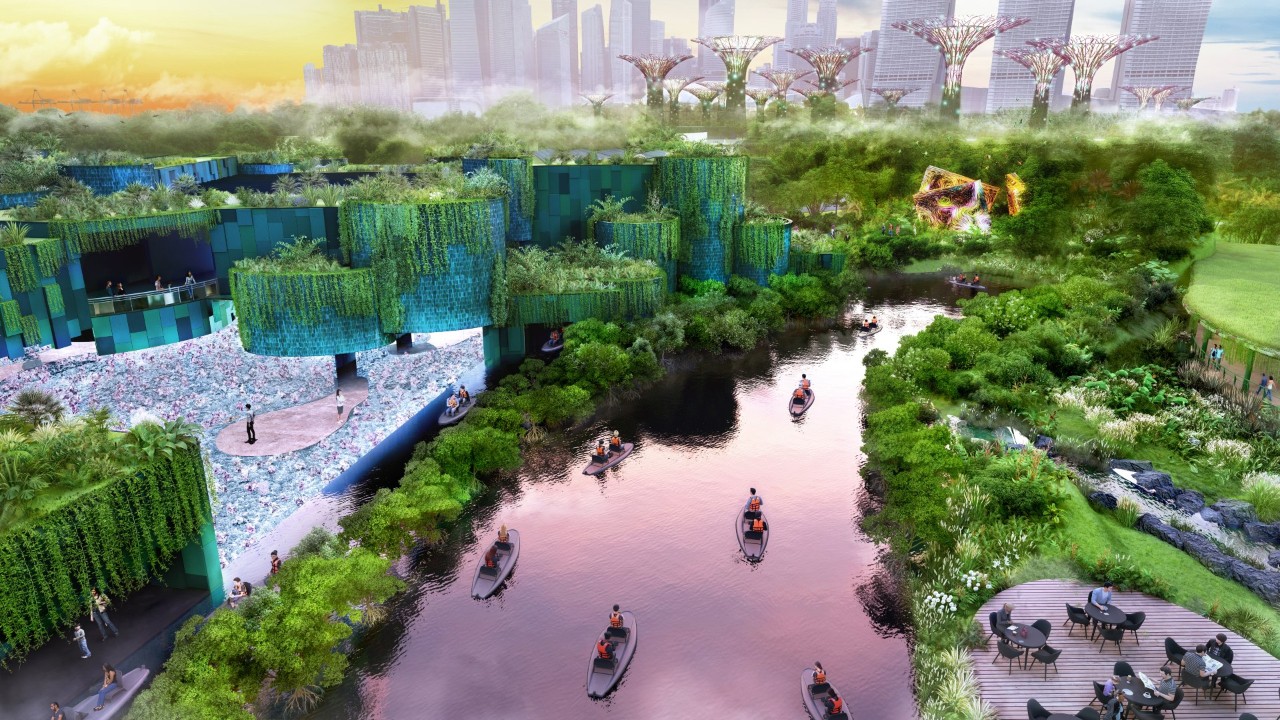 A reference image of the upcoming teamLab museum at Wetlands by the Bay.
Gardens by the Bay will embark on its next phase of development with a major new space known as Wetlands by the Bay. Spanning about 5 hectares, the new space will expand the existing Kingfisher Wetlands precinct along the waterfront promenade near Gardens by the Bay MRT station. The development will include teamLab’s museum featuring the first-ever multi-sensory voyage that seamlessly moves between indoor galleries and the open landscape, bringing visitors up close to freshwater wetlands habitats.
Enhancing the wetlands experience, a newly designed cantilevered canopy boardwalk will extend over Kingfisher Wetlands, providing an elevated pathway that strengthens connectivity from Gardens by the Bay MRT station to Bay South Garden’s key attractions, while offering visitors a stunning over-water encounter with nature. A new community space, Glade Lawn will host a variety of community activities. Construction of Wetlands by the Bay is slated to commence in the first quarter of 2027, with progressive opening targeted by end 2028.
Wetlands by the Bay will complement the development of Bay East Garden, which will open in 2027, with Founders’ Memorial within to open in 2028. A new bridge linking Bay South Garden and Bay East Garden will improve accessibility between the two gardens while offering visitors panoramic waterfront views and a continuous, uninterrupted journey through the different garden spaces. Construction of the bridge will begin in the second quarter of 2026 and is slated for completion in 2028.
Gardens by the Bay CEO Mr Felix Loh said, “Gardens by the Bay is ever evolving to continuously provide fresh experiences for both Singaporeans and visitors from all over the world, and Wetlands by the Bay is our latest transformation. Last year, more than 16 million people visited Gardens by the Bay to experience our offerings – our highest visitorship to date – and it is timely to look at expanding our range of attractions. Wetlands by the Bay will strengthen Gardens by the Bay's reputation as a must-visit destination in Singapore where people can enjoy one-of-a-kind nature-based experiences. Together with the upcoming Bay South-Bay East bridge, these new additions to the Marina Bay area contribute to a prime waterfront experience and are another step forward in Singapore’s City in Nature vision.”
An expanded urban wetland with public spaces and teamLab museum
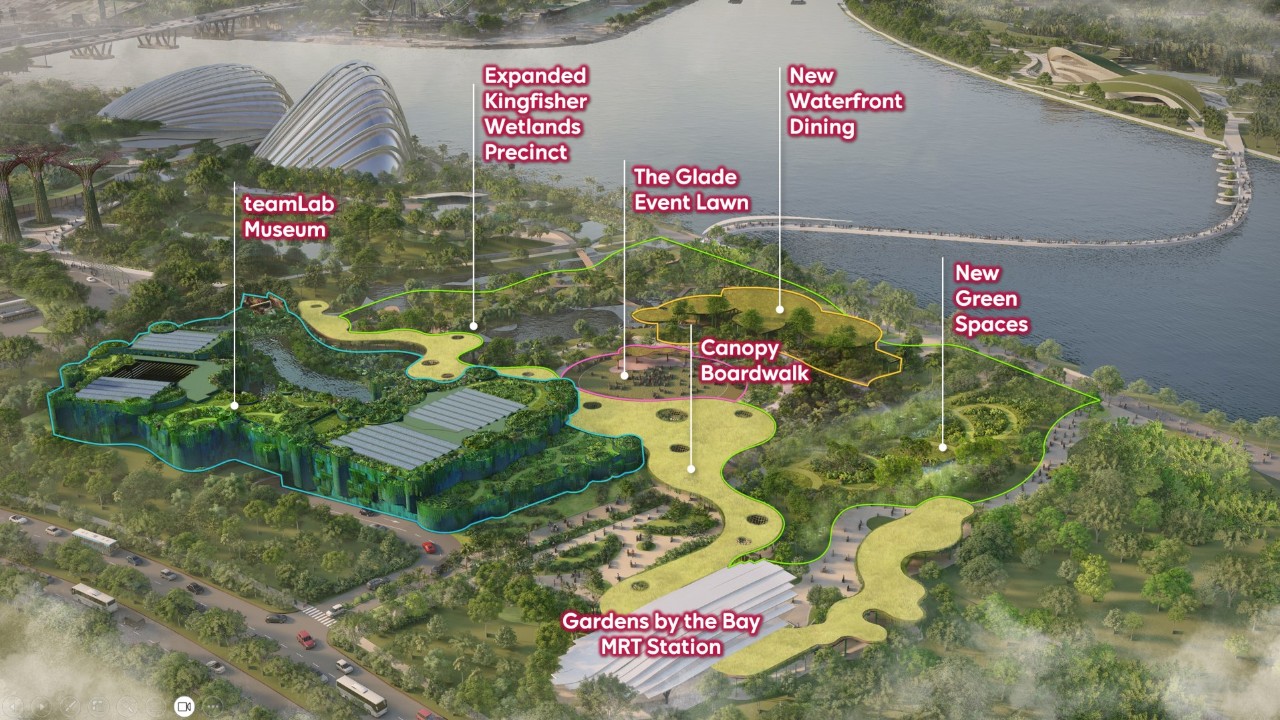 A reference image of the aerial view of Wetlands by the Bay.
The key highlights of Wetlands by the Bay are:
- An expanded urban wetland with more than 600 mangroves and coastal plants
- Additional community green spaces for the public
- Refreshed waterfront dining with indoor and outdoor spaces
- A new teamLab museum
An expanded urban wetland with more than 600 mangroves and coastal plants
When the 15,000 sqm Kingfisher Wetlands opened in 2021, it was the rare urban wetlands located in Singapore’s city centre and a place for biodiversity to flourish even on reclaimed land. The results of an ecological study on Kingfisher Wetlands that was released in 2023 showed that several mangrove species that otherwise thrive in coastal saline or brackish water can also do well in freshwater conditions, and carbon sequestration had also increased as these mangroves grew.
The new Wetlands by the Bay will expand on this success, with more than 600 mangroves and coastal plants in the area. This is three times the number of mangroves now at the Kingfisher Wetlands precinct. Collected from around the world, the mangroves and coastal plants at Wetlands by the Bay originate from other equatorial countries such as Ecuador, Costa Rica, Sri Lanka, and Timor Leste, and includes critically endangered species. In total, there will be more than 50,000 plants at Wetlands by the Bay.
A larger and lusher green space will attract biodiversity, providing new habitats at Gardens by the Bay for fauna such as birds, of which locally endangered and vulnerable species have been spotted in the area. It will also serve as an example of a potential natured-based climate solution for densely urban cities.
Additional community green spaces for the public
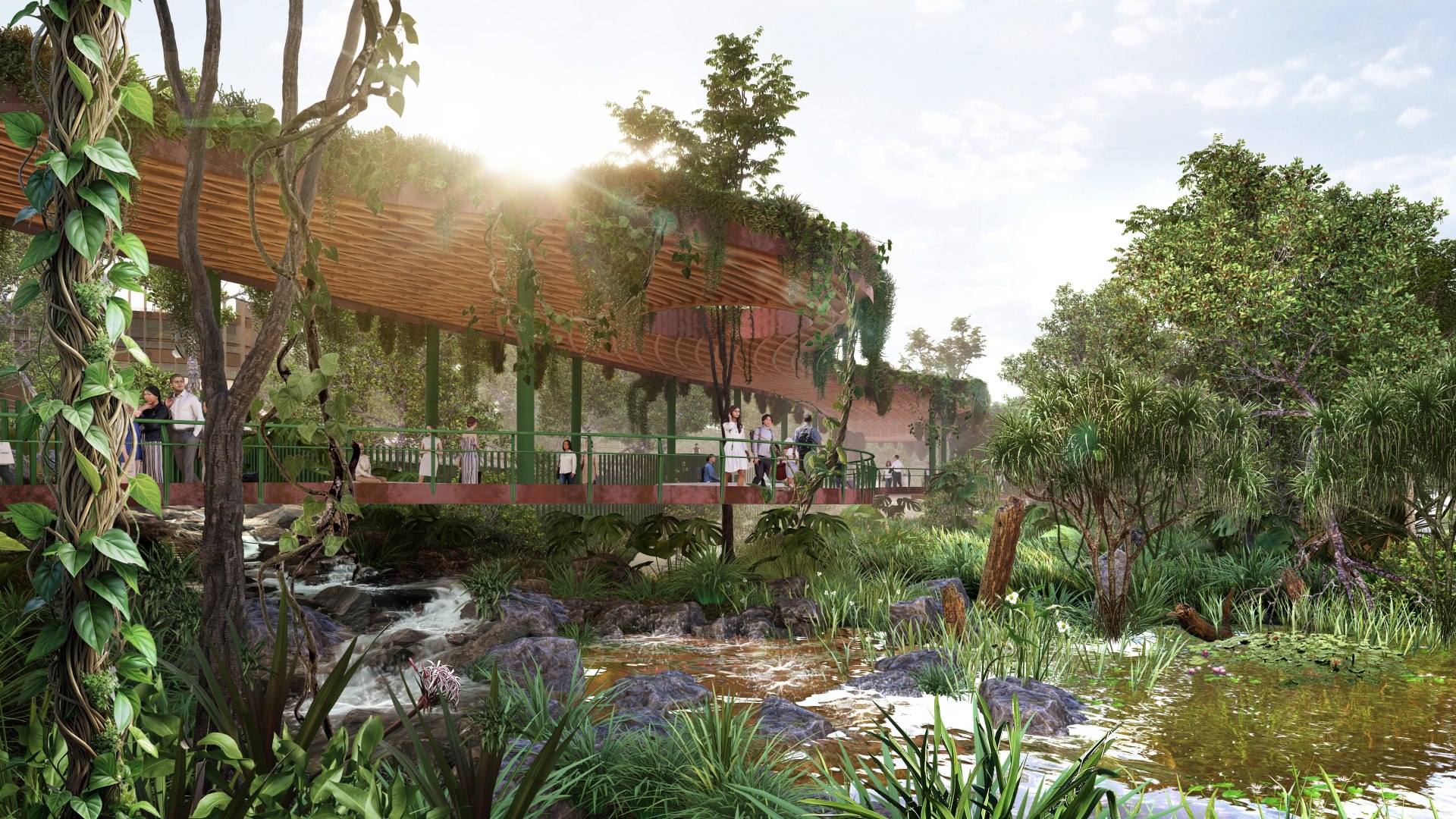
A canopy boardwalk (pictured) that is cantilevered above the wetlands will not only offer panoramic views of the surrounding greenery but also serve as an elevated linkway between Gardens by the Bay MRT station and the Main Entrance of Gardens by the Bay.
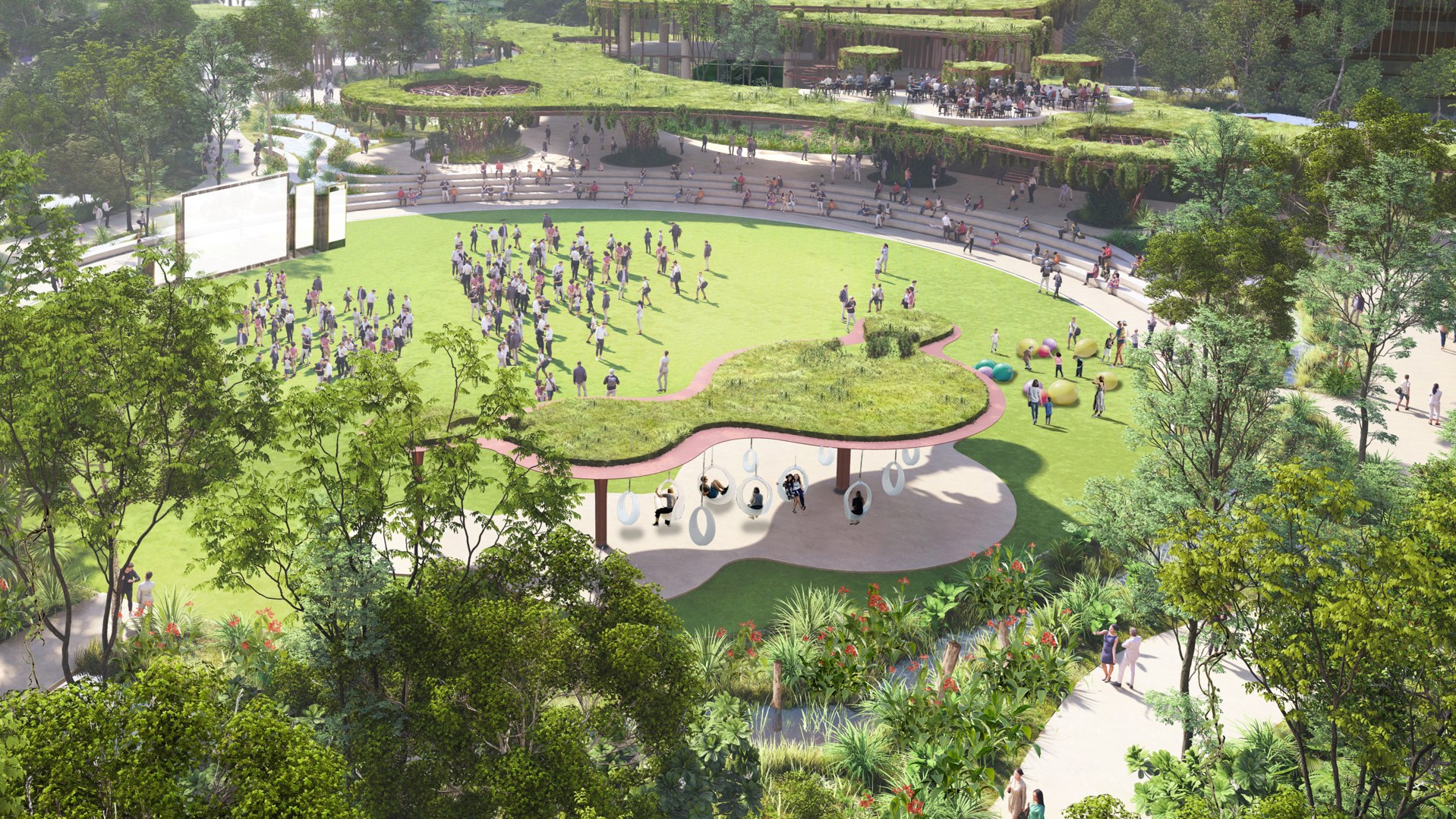
The additional community green spaces also include the 3,500 sqm Glade Lawn (pictured) where events can be held. This is in line with Gardens by the Bay’s role as a national garden with a year-round calendar of community events and activities.
There will also be a more than 8,000 sqm open garden that creates continuous corridors for a pollinator network.
Refreshed waterfront dining with indoor and outdoor spaces
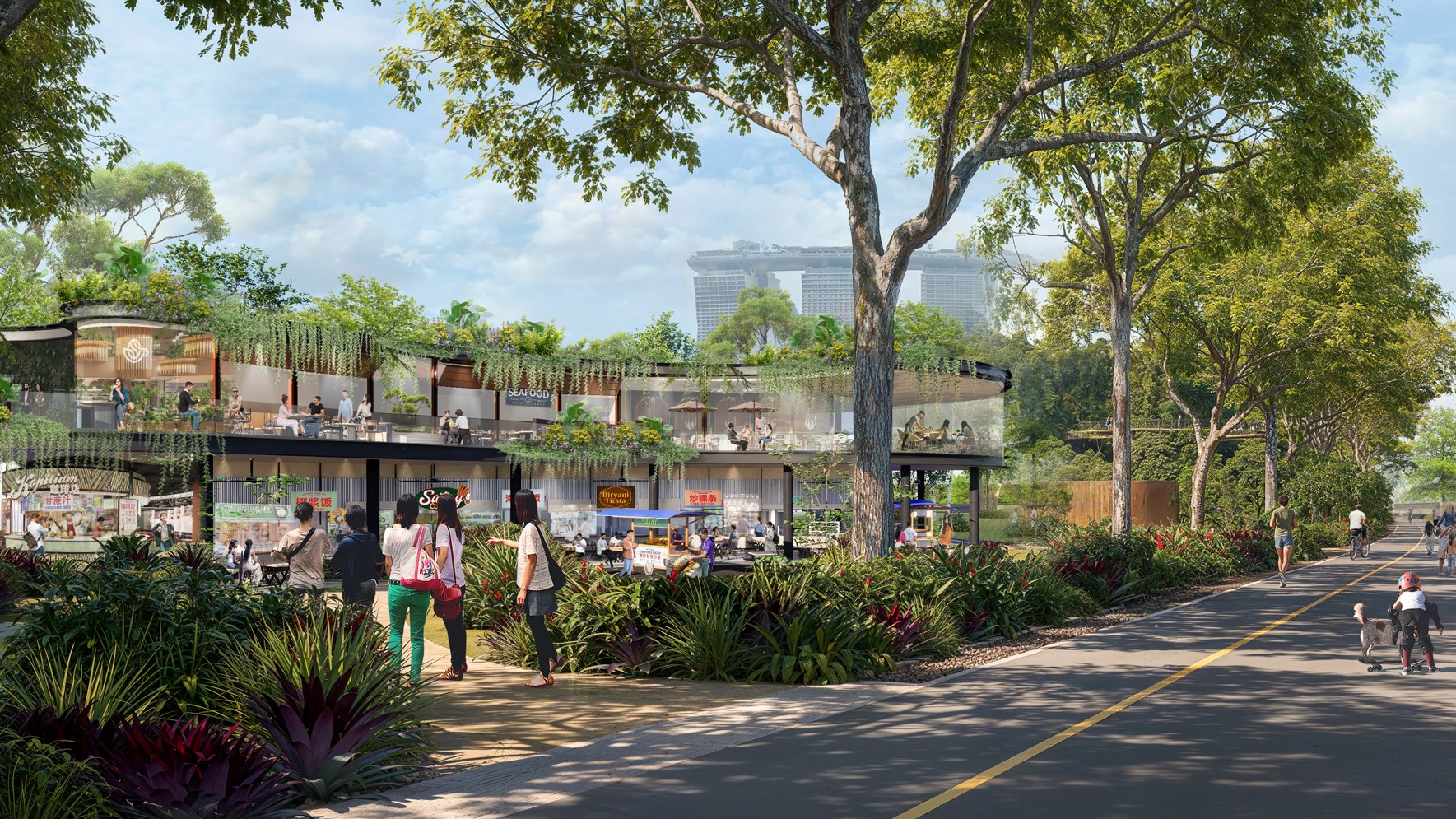
A refreshed, contemporary food court concept on the ground level will be complemented by a mix of waterfront casual-dining restaurants on the upper deck. Featuring both indoor and alfresco spaces, the reimagined space will offer diners sweeping views of the surrounding wetland landscape, while an upper-level viewing gallery will provide a striking vantage point overlooking the Marina Reservoir and the iconic architecture of the Founders’ Memorial.
A new teamLab museum
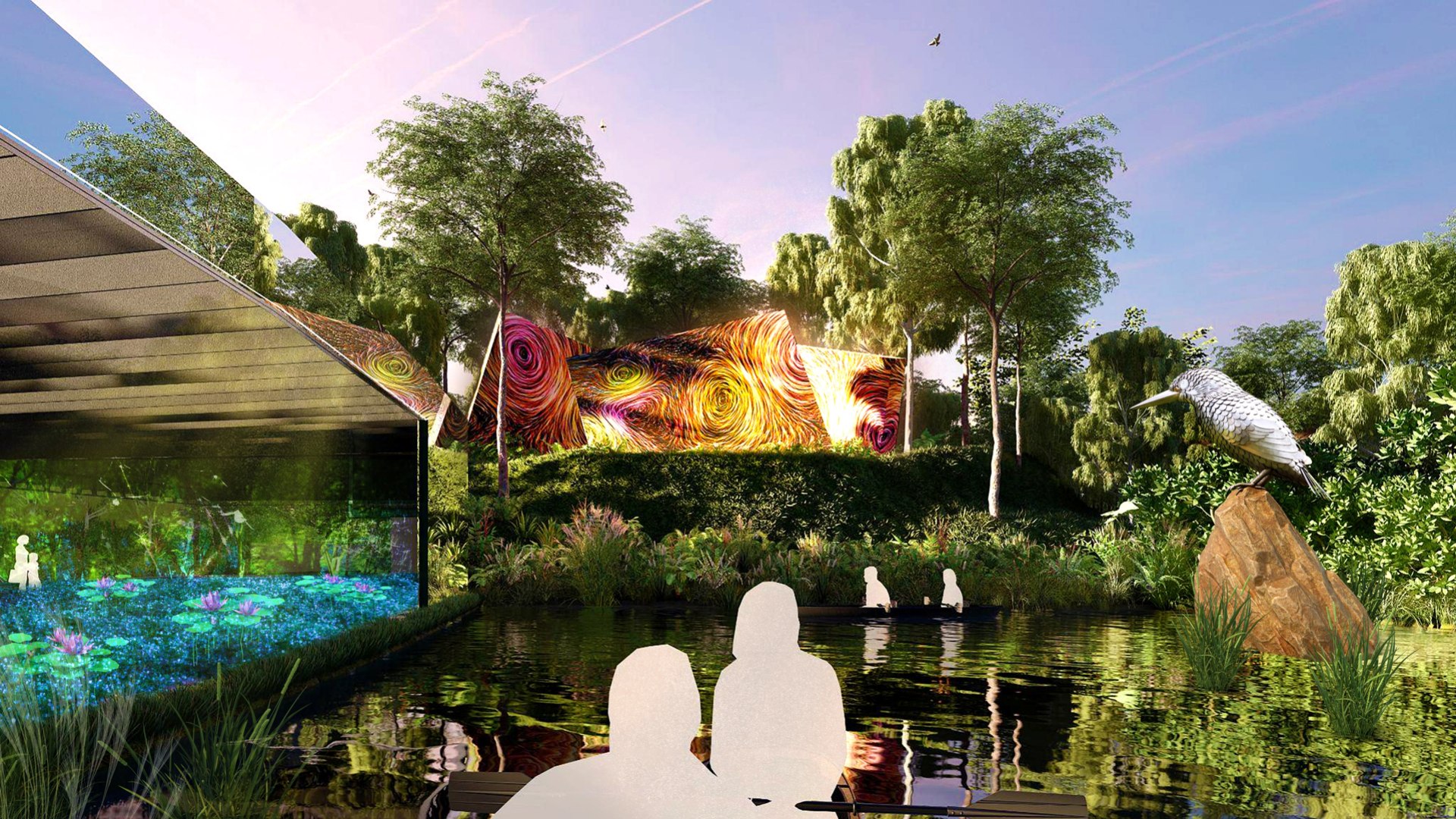
The teamLab museum built on a 12,000 sqm site will feature the international art collective’s first-ever multi-sensory indoor and outdoor voyage experience, where visitors can take a custom designed pedal kayak that traverses a controlled waterway for an active water experience.
teamLab, founded in 2001, is an international art collective. Their collaborative practice seeks to navigate the confluence of art, science, technology, and the natural world. Through art, the interdisciplinary group of specialists, including artists, programmers, engineers, CG animators, mathematicians, and architects, aims to explore the relationship between the self and the world, and new forms of perception.
Gardens by the Bay offers diverse experiences set within nature to appeal to a broad audience. Urban wetlands are rare in Singapore, and the teamLab experience is a unique and dynamic way for city-dwellers to get up close with such semi-aquatic ecosystems and see the biodiversity they support – an experience only possible at the Gardens.
An infographic of Wetlands by the Bay is here.
A bridge to connect Bay South and Bay East Gardens
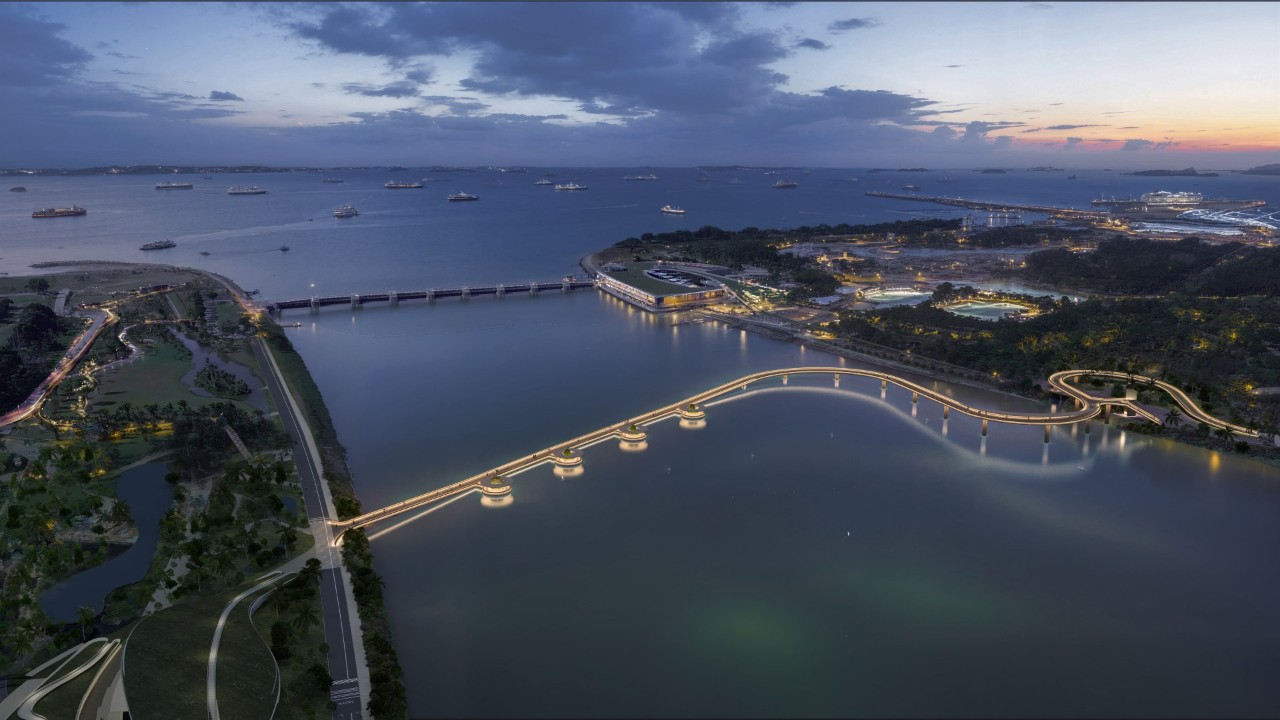
The construction of the bridge that will connect Bay South Garden with Bay East Garden across the Marina Reservoir will start in the second quarter of 2026.
It is marked by its sinuous curve design, which is elevated at the Bay South Garden end, then gently slopes downwards at the other end at Bay East Garden, until it rests just above the surface of the Marina Reservoir. The design offers visitors the unique experience of “walking on water” over this latter 175m-long stretch.
In addition to the enhanced accessibility, the public can also enjoy panoramic views of the Singapore skyline, including the two cooled conservatories and Supertrees at Bay South Garden, and the upcoming Founders’ Memorial at the redeveloped Bay East Garden.
To facilitate construction of the bridge, parts of Bay South Garden will have hoarding, and pedestrians and cyclists will be diverted to alternative routes. Please refer to the diversion map here.
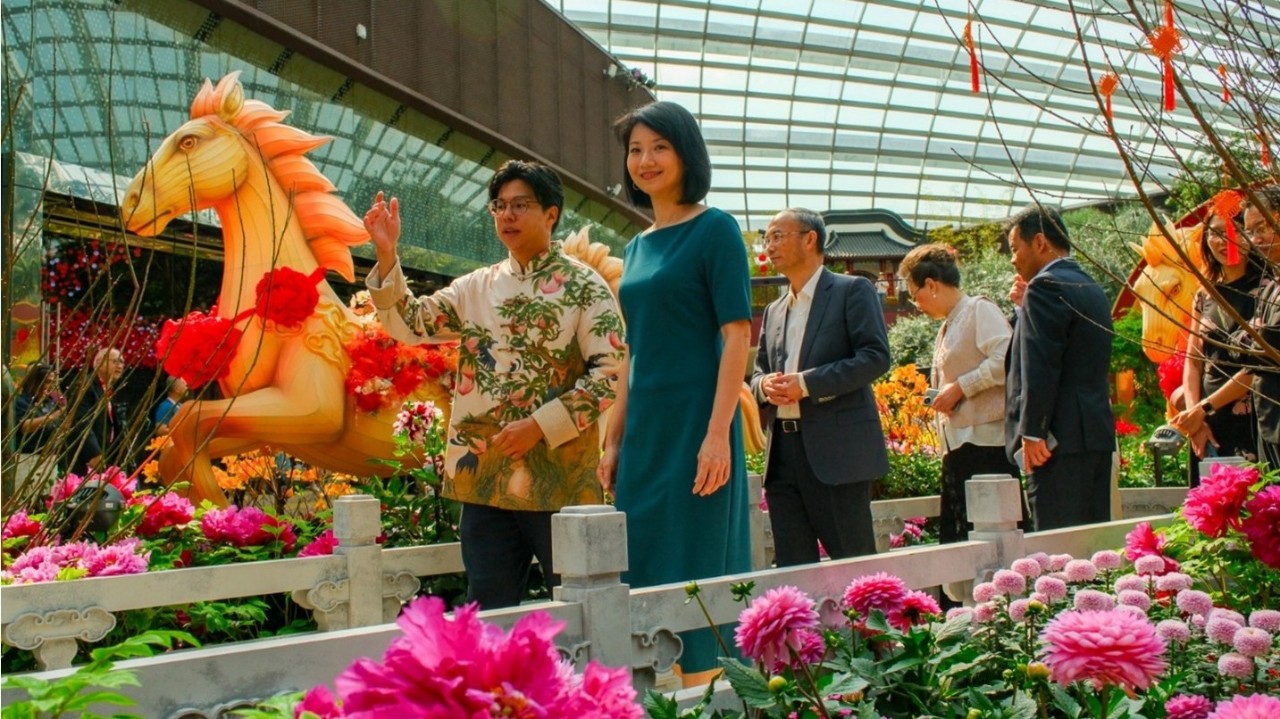 (From left) Director of Conservatory Operations Mr Mihkaail Ng, Senior Minister of State for National Development and Transport Ms Sun Xueling, and Ambassador of the People’s Republic of China to Singapore His Excellency Cao Zhongming tour the Spring Blossoms: Gallop into Prosperity floral display.
Eight magnificent, life-sized horse lanterns, crafted using 1,000-year-old techniques, gallop amongst the “Four Gentlemen” in Chinese art and philosophy – the plum blossom, bamboo, orchid and chrysanthemum – as Gardens by the Bay celebrates the Year of Horse at Flower Dome.
This year’s Spring Blossoms: Gallop into Prosperity (春花盛开之骏马奔腾) floral display is designed in collaboration with Shanghai Gardens Group, the renowned Chinese landscape company behind landmark projects such as Shanghai Disney and Shanghai Expo Culture Park. Their design expertise brings the elegance and symbolism of classical Jiangnan-style gardens to life.
The floral display, which will run until March 1, was launched today by Senior Minister of State for National Development and Transport Ms Sun Xueling, Gardens by the Bay CEO Mr Felix Loh, and the Ambassador of the People’s Republic of China to Singapore His Excellency Cao Zhongming.
Gardens by the Bay CEO Mr Felix Loh said, “Spring Blossoms is a joyful fusion of nature with some of the best elements of traditional Chinese culture, which we hope brings good tidings during the Chinese New Year for our visitors. The landscape inspired by Jiangnan-style Gardens, long regarded as masterpieces in classical Chinese landscapes, evoke beauty, renewal and new beginnings, while the horse lanterns symbolise strength, vitality and perseverance.”
Landscapes inspired by classical Chinese gardens and culture
Standing up to 2.6 metres tall, the lantern horses are crafted by artisans from Zigong, Sichuan — a city internationally renowned for its lantern-making heritage dating back to the Tang Dynasty, and vibrant Spring Festival lantern displays. Inspired by Ba Jun Tu (八骏图), the iconic Chinese ink painting of eight steeds in full gallop, the horses capture powerful strides that symbolise strength, vitality and success. The horses are adorned with exquisite silk flowers, meticulously handcrafted by skilled artisans using traditional Chinese techniques.
The landscape is inspired by the aesthetics of Jiangnan Gardens, celebrated for their tranquil harmony with nature and long appreciated by Chinese scholars as places for rest and reflection. Visitors can wander through moon gates, pause at pavilions, and admire seasonal blooms, echoing the literati tradition.
Cascading water features called Die Shui (叠水) and a limestone rock inspired by the Taihu rocks(太湖石)from Lake Tai in Jiangsu – renowned for being shaped by nature into abstract twisted forms – are examples of quintessential Jiangnan Gardens elements. The rockery and cascading water embody the Jiangnan ideal of “bringing mountains and rivers indoors”.
There is also the 2.5-metre-tall Blooming Drum of Spring, decorated with the classic Bao Xiang (宝相) flower motif where lotus, peony and foliage intertwine, symbolising good luck and the arrival of Spring.
A profusion of seasonal blooms amidst a Jiangnan Garden
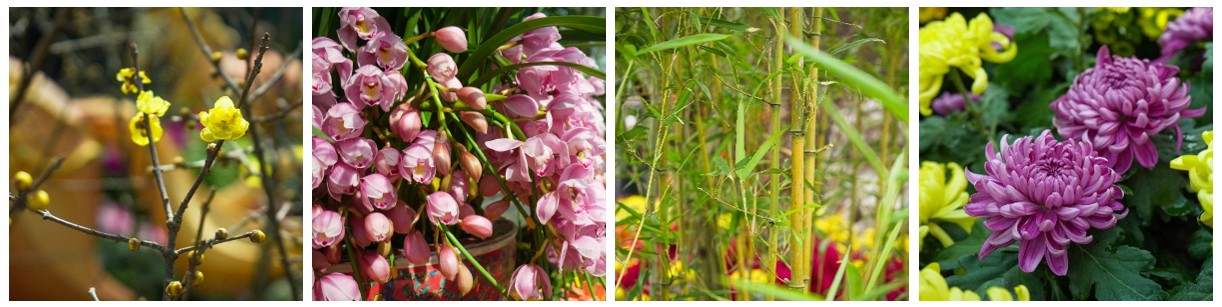 Plants that represent the Four Gentlemen and are highlights of Spring Blossoms are (from left) Wintersweet, Boat orchid, Showy Yellow Grove Bamboo and Chrysanthemum incidium Cosmo.
The Jiangnan Gardens landscape is adorned with over 10,000 plants. Taking centrestage is the “Four Gentlemen” of Chinese art and philosophy, which embody qualities of a virtuous gentleman:
- Plum blossoms, which bloom in the heart of winter, symbolise perseverance, resilience, and hope.
- While not a plum blossom, Wintersweet, a winter-flowering plant native to China with delicate, fragrant yellow blossoms, traditionally admired alongside plum blossoms in Chinese gardens, is a bloom to look out for. Gardens by the Bay is bringing in Wintersweet for the first time and it is the only place in Singapore that the flower can be seen in its full glory.
- Orchids embody nobility, integrity, and refined character.
- Boat orchids, also known as Cymbidiums, with their elegant, cascading form were lauded by Confucius and have a long association with Chinese culture.
- Bamboo stands for honesty and humility.
- The Showy Yellow Grove Bamboo, with its radiant golden stems streaked with green that evokes an elegant blend of gold and jade, is one of China’s four famous bamboo species.
- Chrysanthemums represent endurance.
- Chrysanthemum incidium Cosmo hybrids have forms that echo chrysanthemums often portrayed in traditional Chinese paintings.
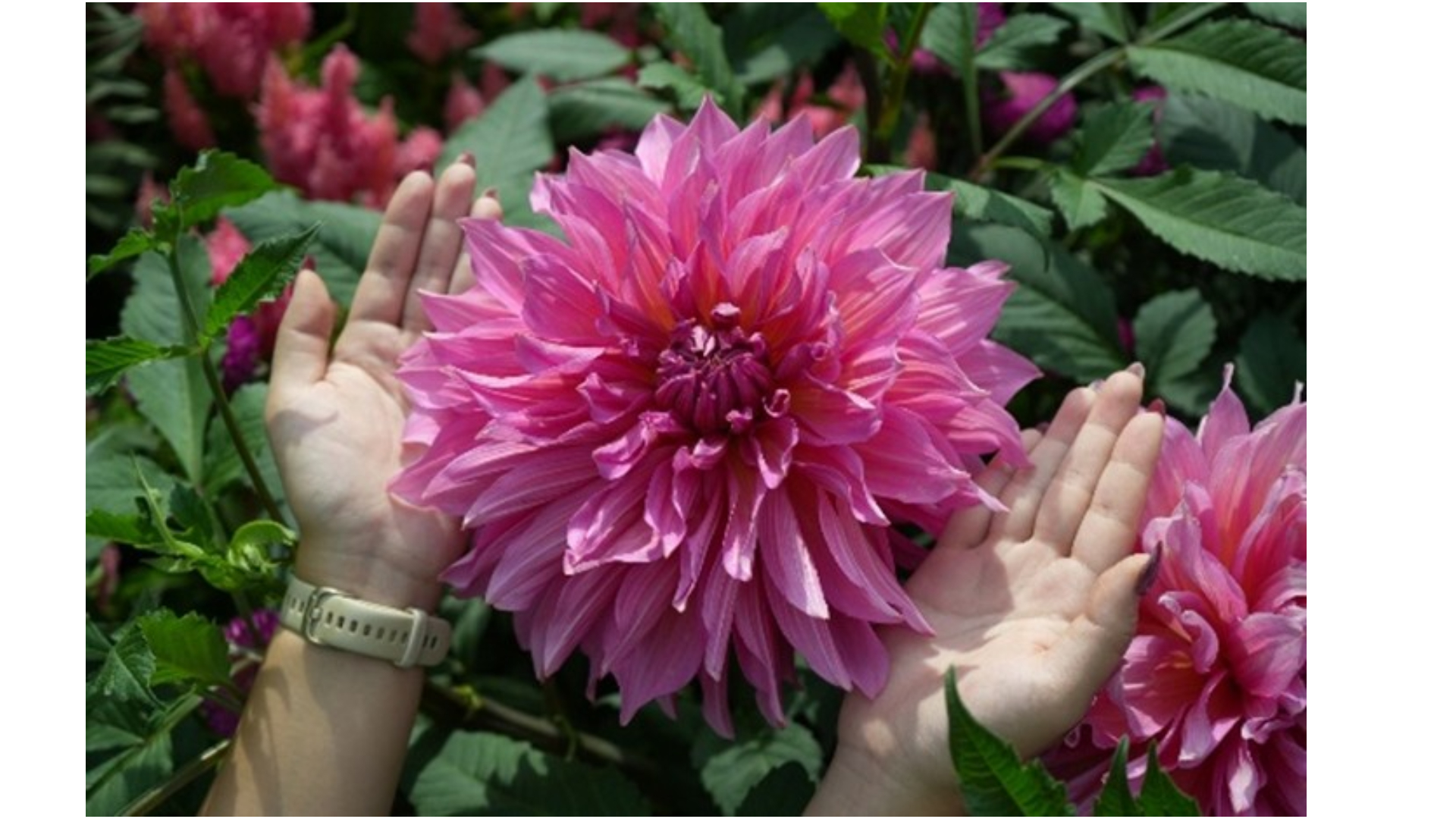
Visitors can also enjoy more than 800 dahlias across 46 varieties, all grown in-house by Gardens by the Bay’s researchers. Crowd favourites, the jumbo-sized dinnerplate dahlias, make a return. One massive example is Dahlia Kohara Coast (left photo), which produces blooms up to 25cm in diameter — bigger than a human face! Featuring pink petals, this cultivar makes its debut at Gardens by the Bay. The dahlias are complemented by time-honoured festive favourites such as azaleas, cockscombs, kumquats and peonies.
Other Chinese New Year events at Gardens by the Bay
From February 15 to 24, Singapore’s iconic Chinese New Year event River Hongbao returns to Gardens by the Bay for the sixth time, ushering in the Year of the Horse. Marking its 40th edition, visitors can look forward to lantern sets set amidst the outdoor gardens, including the ever-popular massive God of Fortune, fireworks displays, nightly performances, a food street, and a special anniversary exhibition showcasing the festival’s history and evolution. River Hongbao has no admission charge.
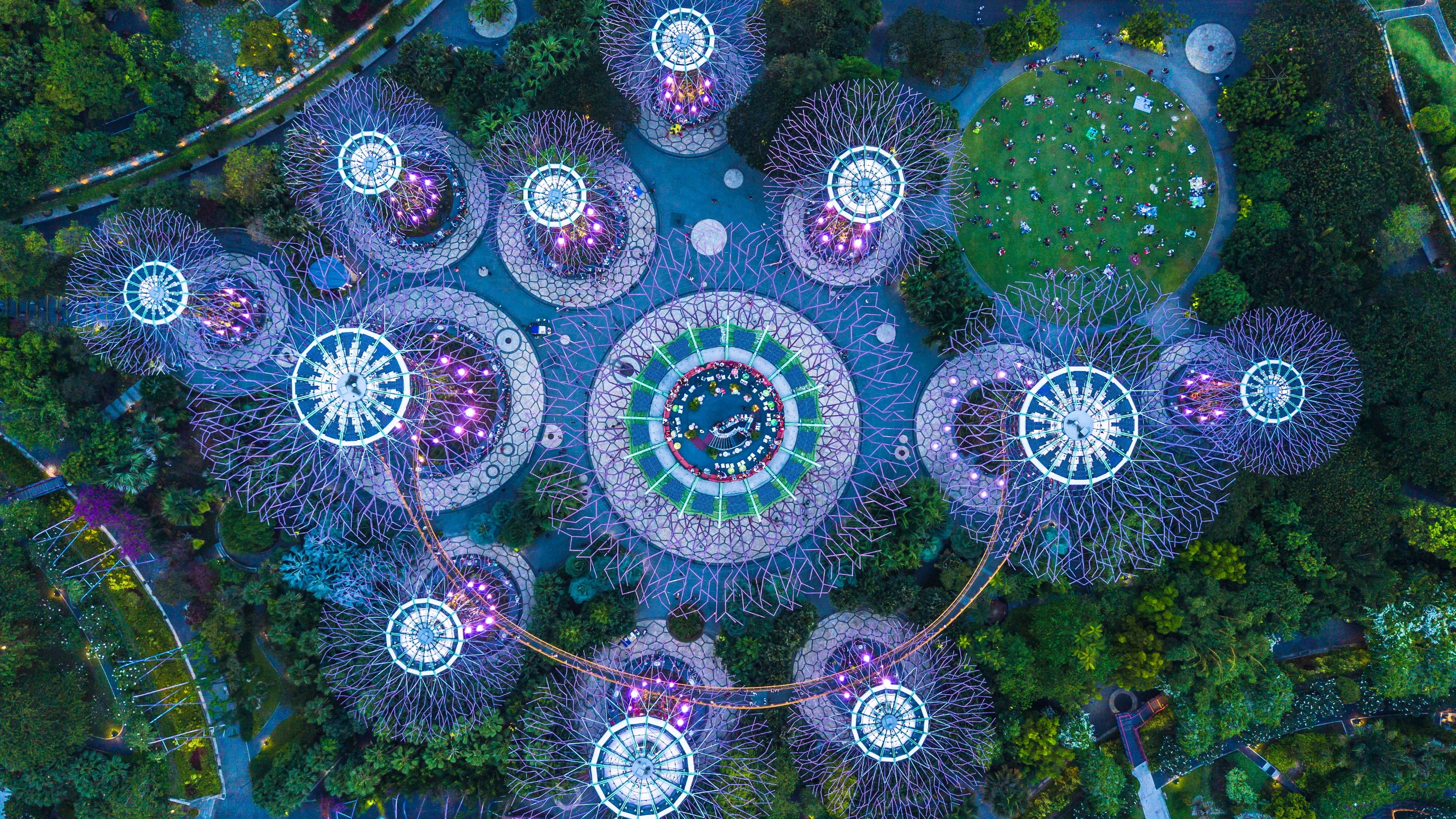
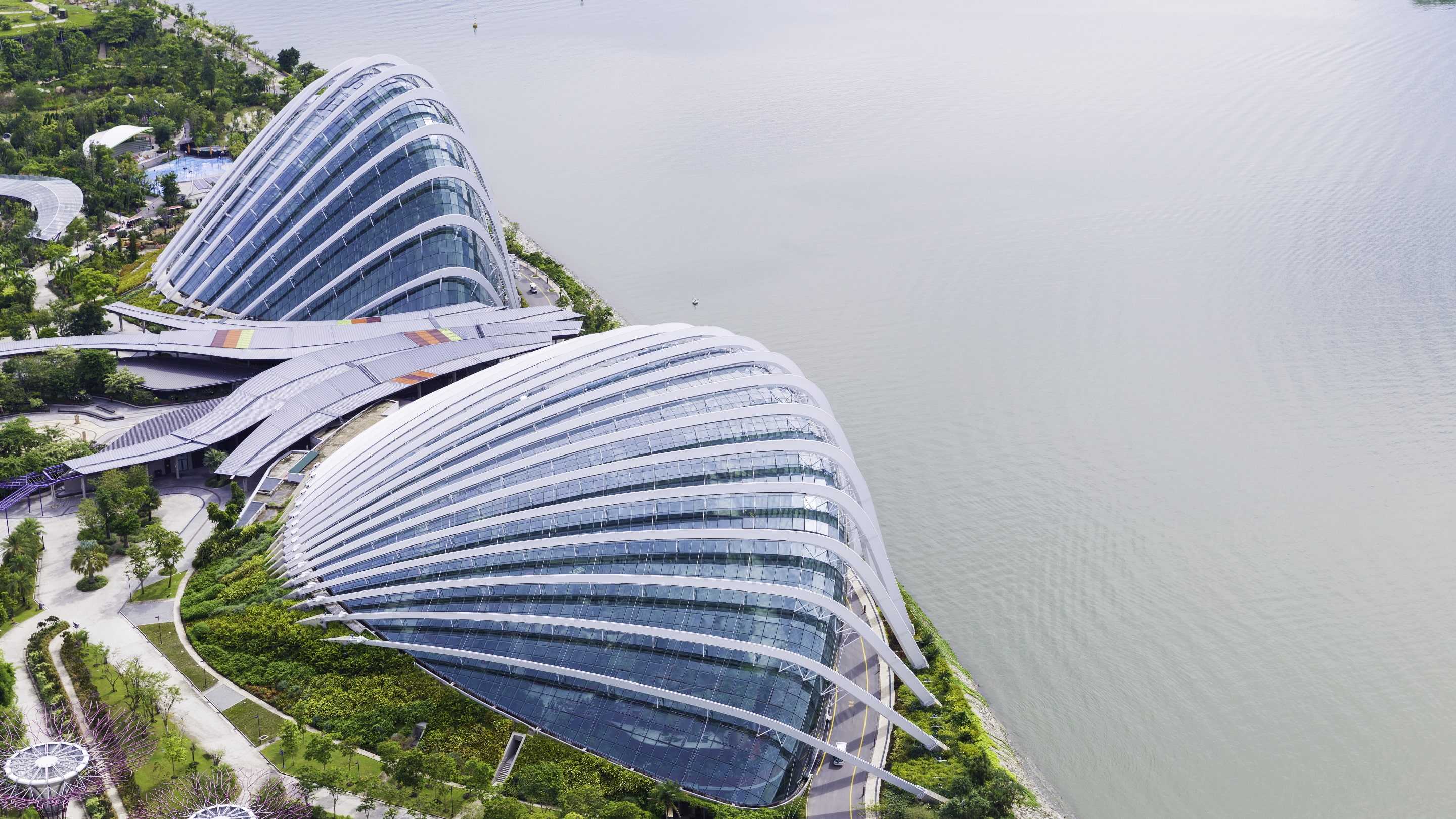
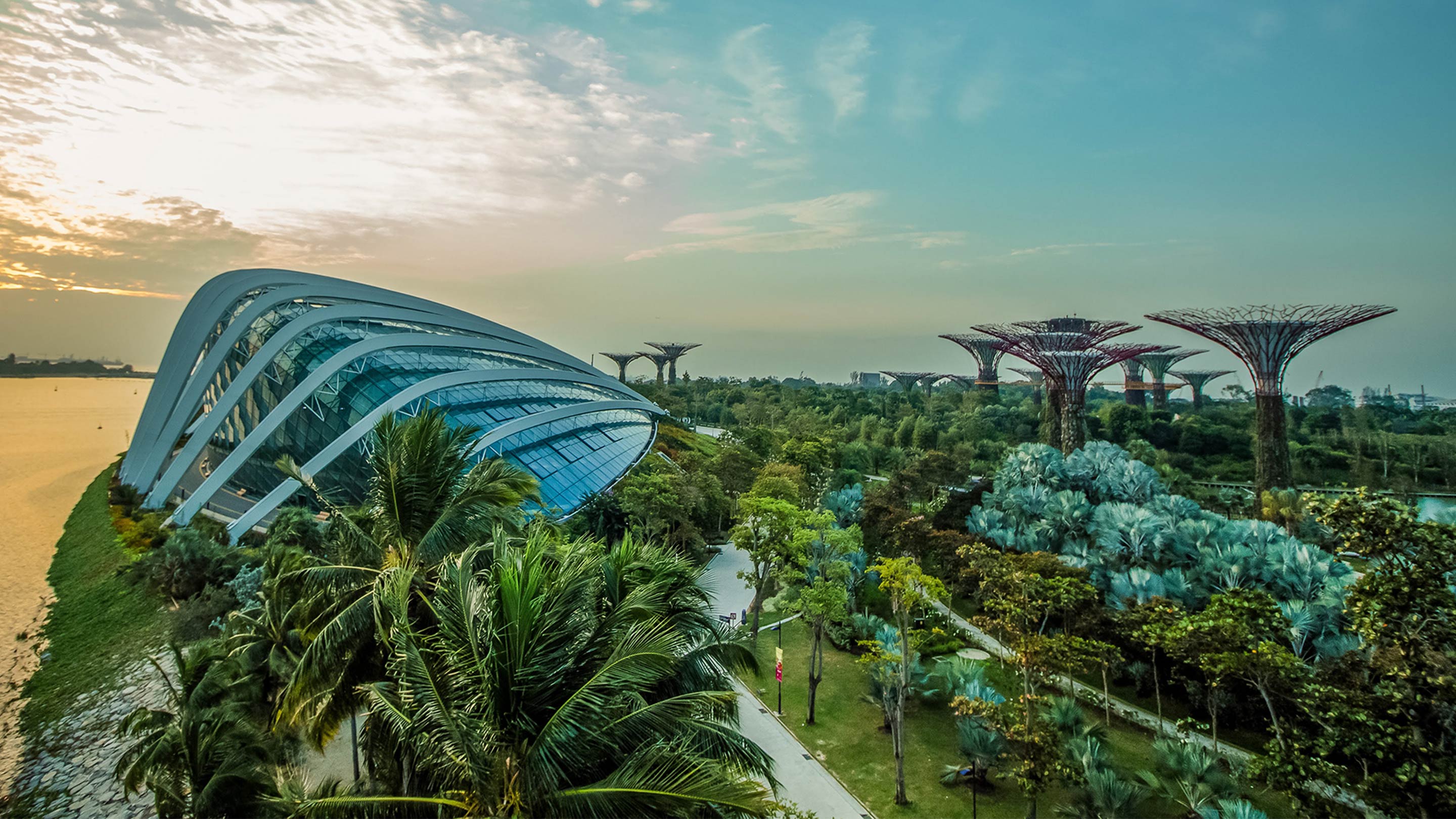
 Back To Top