 Advisory for use of tripods at Disney Garden of Wonder at Floral Fantasy
For a better visiting experience and facilitate crowd movement, we seek your kind understanding that usage of tripods and camera stands will not be permitted in Floral Fantasy.
Bay South–Bay East Bridge Construction from 4 May 2026
To facilitate the construction of the bridge linking Bay South Garden and Bay East Garden, there will be no access for cyclists along the Waterfront Promenade from 4 May 2026. During the construction of the bridge, cyclists heading towards Marina Barrage are advised to take an alternative route around the perimeter of Bay South Garden. Pedestrians may still access the Waterfront Promenade, with a slight diversion to their route.
Click here to download the diversion map.

{{ suggestion.item }}
{{ noOfResults }} results found for "{{ submittedQuery }}"
Filter by
({{ currentFilters.length }})

Showing {{ searchResults.length }} out of {{ noOfResults }}
{{ result.category.label }}
We’re sorry. 0 results found for "{{ submittedQuery }}"
Try doing these:
- Check your spelling
- Try more general words
- Try different keywords
Malayan Monitor Lizard
Throughout the Gardens
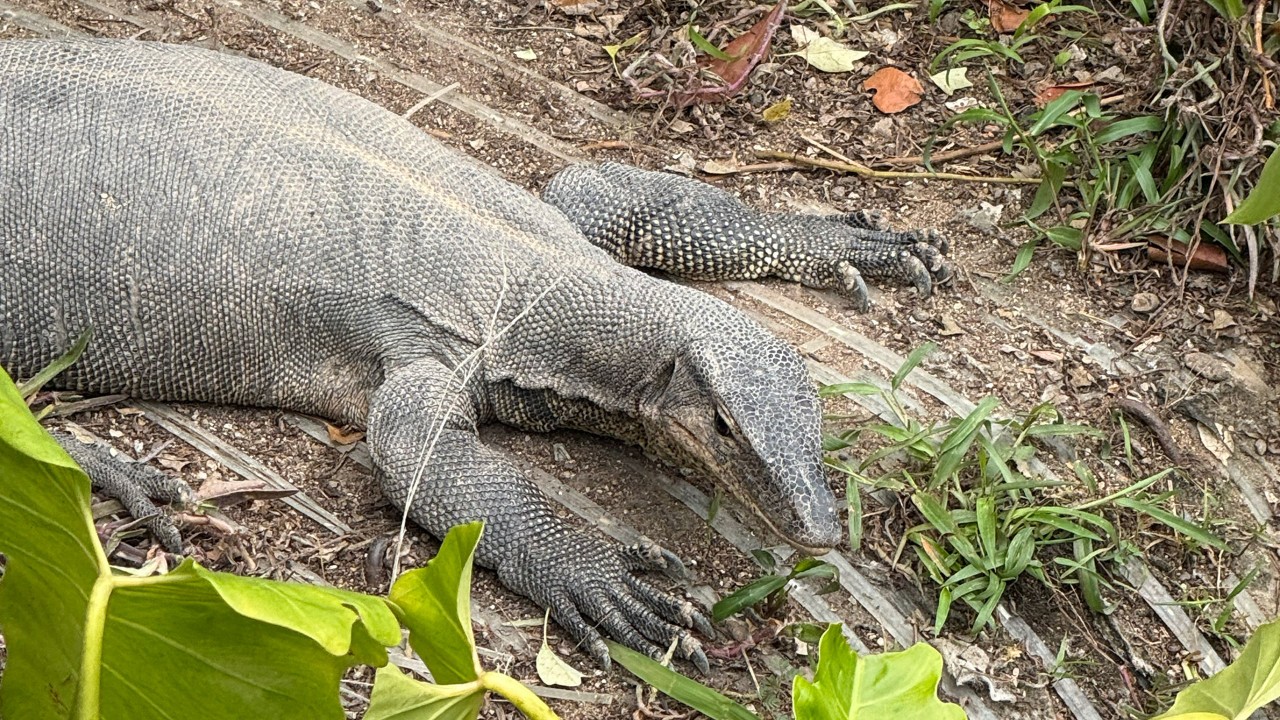
Singapore is home to three species of monitor lizard, but one stands above the rest — in every sense. The Malayan water monitor (Varanus salvator) is the most common and can reach up to 3 metres in length. Closely related to the Komodo dragon, the largest extant lizard, it is characterised by its long body, powerful limbs, muscular tail, and flickering forked tongue, it is an unmistakable presence in our parks, mangrove swamps, forests, and even the occasional concrete canal.
Its ecological contribution is significant. V. salvator is a carnivore with a remarkably diverse diet — insects, crabs, snakes, and fish all feature on the menu — allowing it to regulate prey populations across multiple species. It is also an important scavenger, consuming carrion and accelerating biomass decomposition and nutrient recycling. Remove it from the ecosystem and you lose a natural pest controller, a waste processor, and a food source for larger predators such as crocodiles. It is, in short, irreplaceable.
Despite their imposing size, monitor lizards are generally shy animals that will not attack humans unless provoked or cornered. The guidance is straightforward: keep a safe distance, do not chase or corner the animal, and it will go about its business undisturbed.
You may also be
interested in
 Back To Top