 Closure of Cloud Forest on 26 Oct 2026
Cloud Forest will be closed on 26 Oct 2026 for Maintenance.
Traffic Advisory for Garmin Run Marathon Series 2026 Singapore on Sun, 25 Oct 2026
Please note the following carpark arrangements to facilitate the Garmin Run Marathon Series 2026 Singapore:
- Satay by the Bay Carpark: Closed from 12.01am to 8.00am.
- Main Entrance Basement Carpark: Opens earlier at 3.00am.
- Bayfront Plaza and The Meadow Carparks: Remain accessible throughout the event.
Traffic delays may be expected at the Gardens' carparks due to the Garmin Run Marathon Series 2026 Singapore.
For more details, click here for more details.
Advisory for use of tripods at Disney Garden of Wonder at Floral Fantasy
For a better visiting experience and facilitate crowd movement, we seek your kind understanding that usage of tripods and camera stands will not be permitted in Floral Fantasy.
Bay South–Bay East Bridge Construction from 4 May 2026
To facilitate the construction of the bridge linking Bay South Garden and Bay East Garden, there will be no access for cyclists along the Waterfront Promenade from 4 May 2026. During the construction of the bridge, cyclists heading towards Marina Barrage are advised to take an alternative route around the perimeter of Bay South Garden. Pedestrians may still access the Waterfront Promenade, with a slight diversion to their route.
Click here to download the diversion map.

{{ suggestion.item }}
{{ noOfResults }} results found for "{{ submittedQuery }}"
Filter by
({{ currentFilters.length }})

Showing {{ searchResults.length }} out of {{ noOfResults }}
{{ result.category.label }}
We’re sorry. 0 results found for "{{ submittedQuery }}"
Try doing these:
- Check your spelling
- Try more general words
- Try different keywords
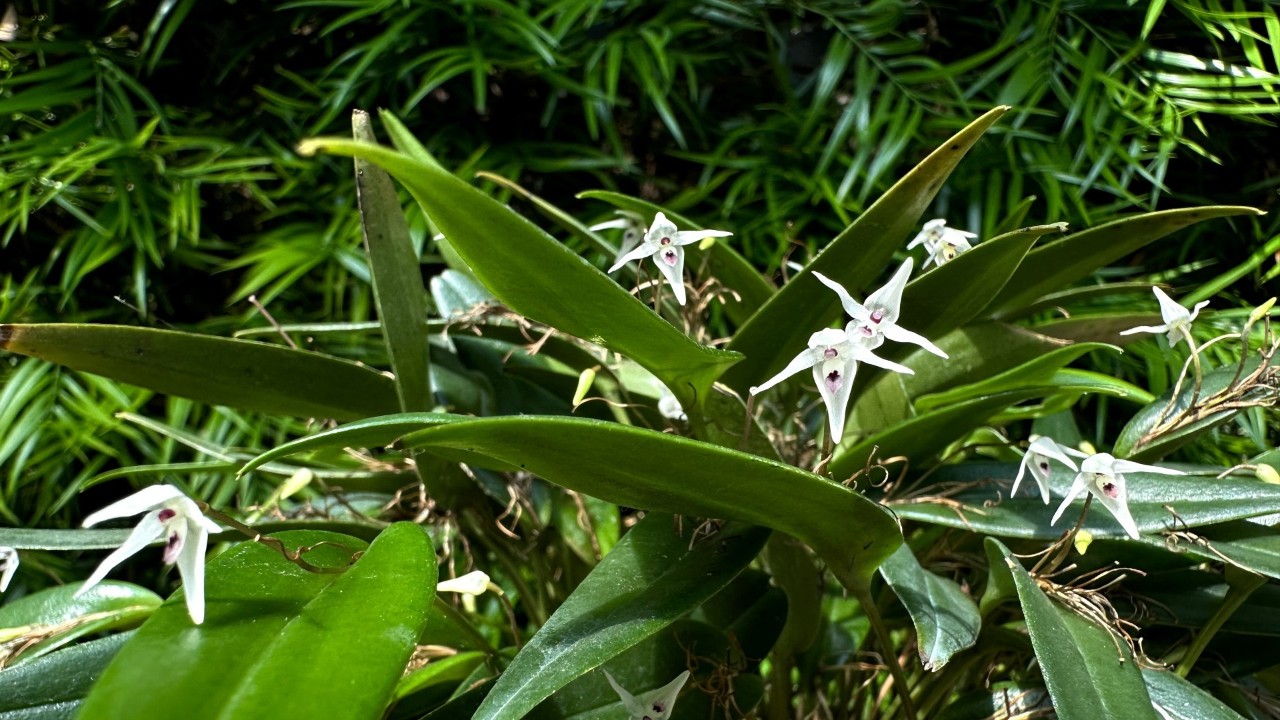
When most people think of orchids, they picture the flamboyant, palm-sized blooms found in shops, like the common phalaenopsis/moth orchids or dendrobium. However, the orchid world has a secret side filled with tiny, intricate wonders. The long-stemmed pleurothallis (Pleurothallis eumecocaulon), a miniature-flowered species, proves that you don’t need to be big to be breathtaking!
This orchid is a delicate epiphyte, growing on tree trunks or branches, and is native to the high-altitude cloud forests of Central America, specifically within Costa Rica and Panama. It thrives in cool, damp environments where mist and moisture are constant companions, often clinging to mossy tree branches deep within the canopy.
Scientifically, Pleurothallis eumecocaulon belongs to the orchid family (Orchidaceae). The genus Pleurothallis was once a "catch-all" group containing thousands of species, making it one of the largest and most complex genera in the plant kingdom. Botanists often refer to the large category of orchids, which are closely related to Pleurothallis as “Pleurothallids”, (including genera like Lepanthes, Stelis, Masdevallia, Dracula and so on), known for their unique lack of pseudobulbs (the swollen, water-storage organ seen in many other orchids).
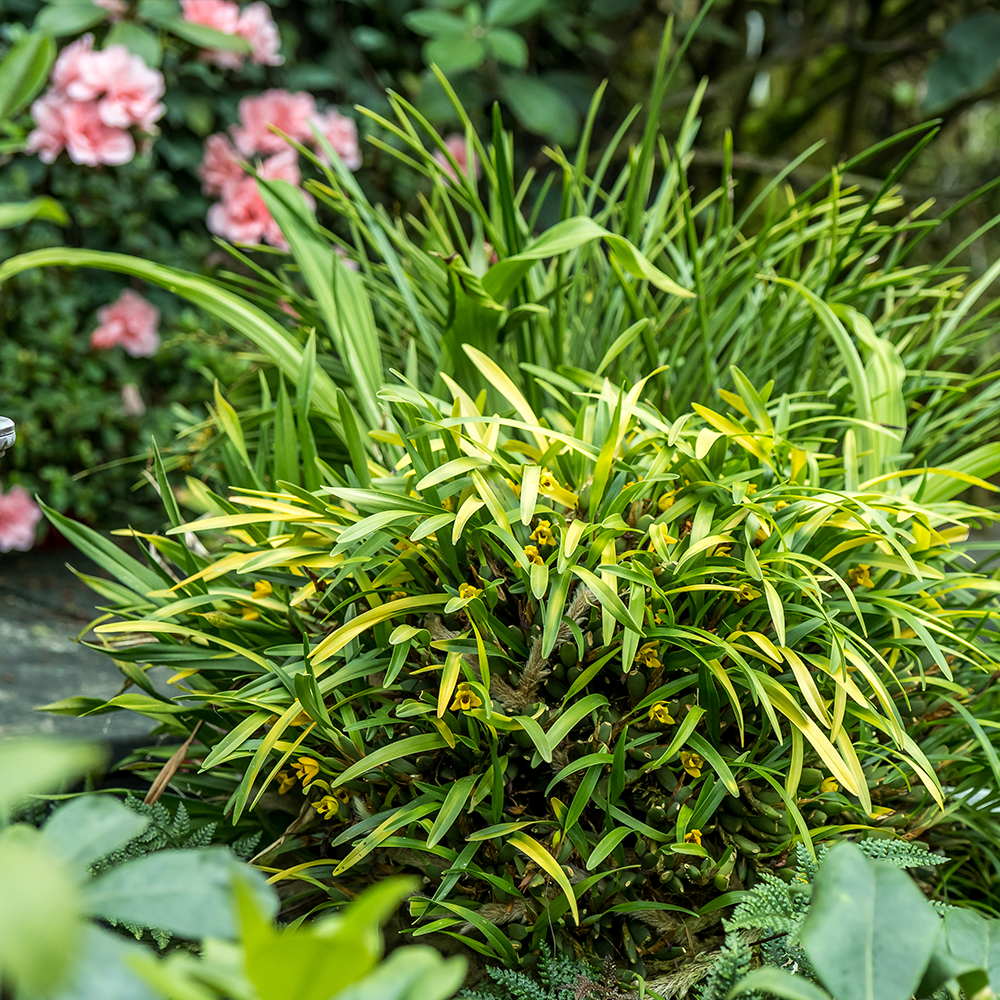
Unlike common orchids that have thick, bulbous stems, P. eumecocaulon is caespitose, meaning it grows in tidy, dense clumps. At the top of each stem sits a single, leathery, heart-shaped or elliptical leaf. This minimalist structure allows the plant to stay compact while maximising its ability to catch dappled sunlight sieved through the lush canopy.
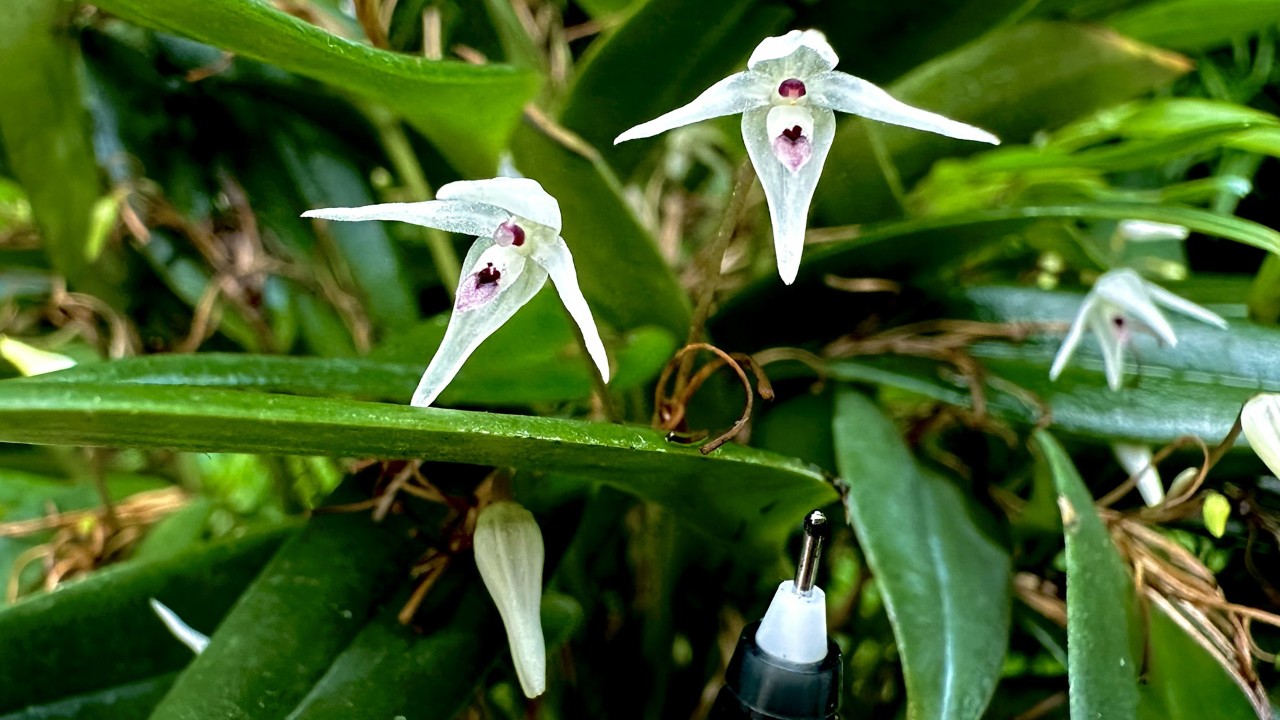 The bud and flowers of P. eumecocaulon in comparison with the tip of a pen. The upper sepal and the fused lower sepals are like a bonnet, encasing the petals, lip and column.
The true magic happens when it blooms. The flowers are tiny—often less than a centimeter wide—emerging from the base of the leaf. The flower possesses a "bonnet-like" appearance, where the upper sepal and the fused lower sepals create a protective hood around the delicate petals, lip and column. The blooms are typically translucent or pale white, often decorated with striking maroon or deep purple patches on the lip and column. This translucent quality gives them a glass-like shimmer when caught in the light.
The pollinators of P. eumecocaulon still remain undocumented. However, according to the scientific literature, many Pleurothallis species with small flowers don't attract bees or butterflies, but instead rely on tiny fungus gnats or flies for pollination. These orchids emit subtle scents that mimic fungi, tricking the gnats or flies to visit the flowers, and then complete the pollination. P. eumecocaulon could adopt the same mechanism as well.
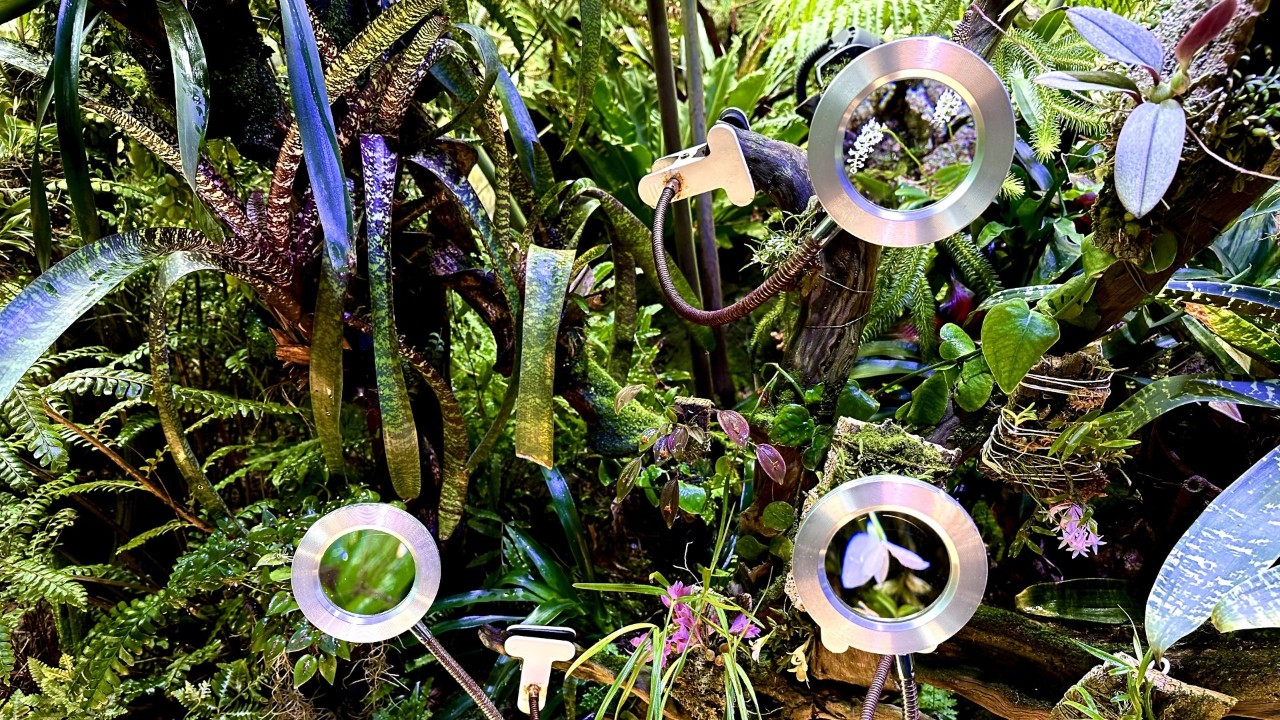 Some of the miniature orchids in display in the Secret Garden miniature orchid exhibit - look through the magnifying glasses to admire their tiny and delicate flowers!
Come to Cloud Forest and check out this tiny orchid flower in our Miniature Orchid Display at Secret Garden, on your way to the exit! In addition to P. eumecocaulon, in Secret Garden we also showcase several other miniature orchid species with tiny and enchanting blooms. These orchids are part of our global collection and are being rotated in display whenever they flower. So do come often to find out what's new in our expansive collection!
Zeke Chen, Manager (Conservatory Operations)
Ever since his tiny hands could hold on to a small toy shovel and sowed the first apricot seed in the garden, the passion for plants has started to grow in Zeke’s heart.
This article is part of our What's Blooming series.
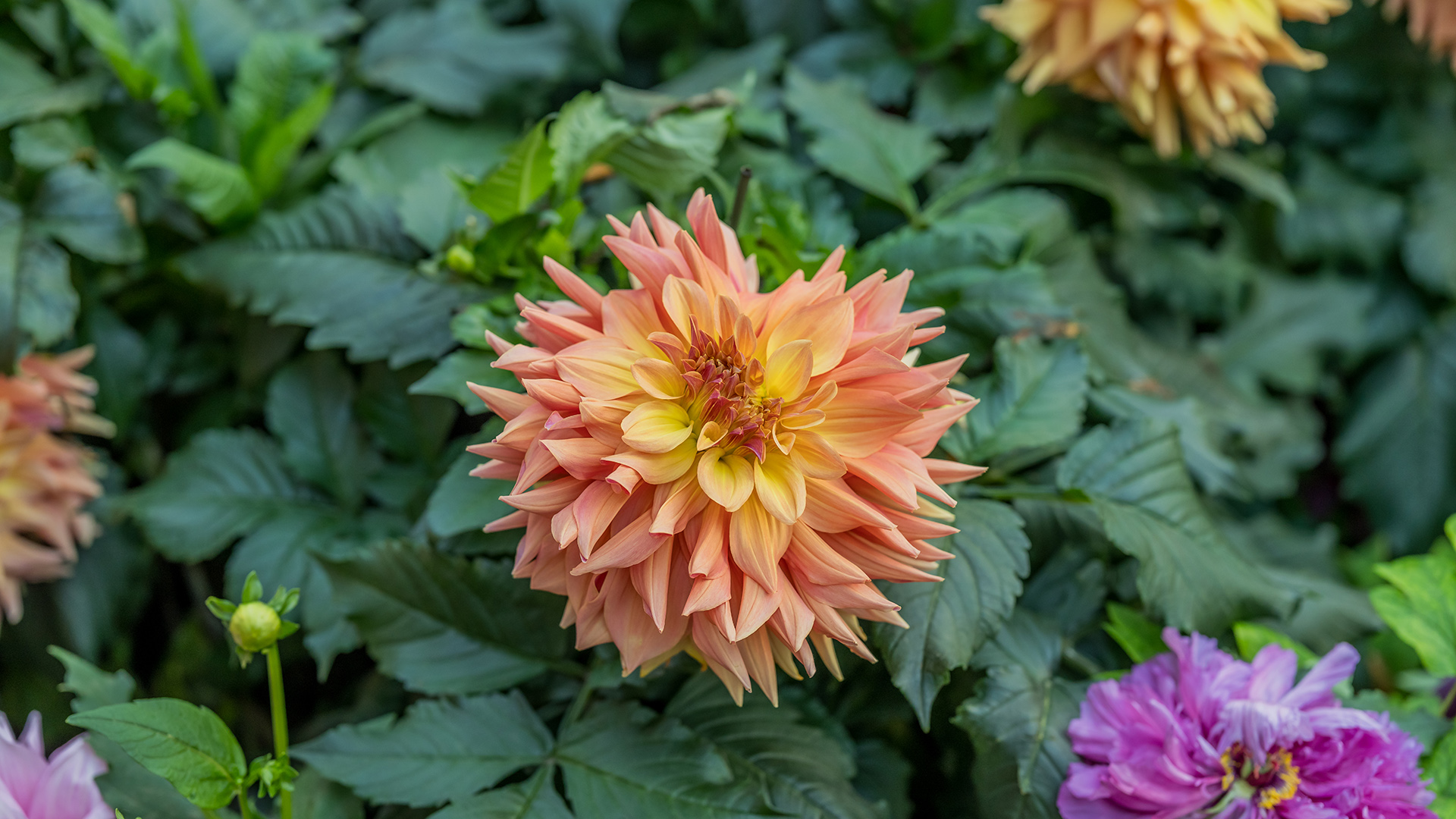
Read Next: Dahlia (Dahlia cultivars and hybrids)
Welcoming the Lunar New Year with its huge blooms over 20cm in diameter, the dinnerplate dahlias are on display!
You may also be
interested in
 Back To Top