 Closure of Cloud Forest on 26 Oct 2026
Cloud Forest will be closed on 26 Oct 2026 for Maintenance.
Traffic Advisory for Garmin Run Marathon Series 2026 Singapore on Sun, 25 Oct 2026
Please note the following carpark arrangements to facilitate the Garmin Run Marathon Series 2026 Singapore:
- Satay by the Bay Carpark: Closed from 12.01am to 8.00am.
- Main Entrance Basement Carpark: Opens earlier at 3.00am.
- Bayfront Plaza and The Meadow Carparks: Remain accessible throughout the event.
Traffic delays may be expected at the Gardens' carparks due to the Garmin Run Marathon Series 2026 Singapore.
For more details, click here for more details.
Advisory for use of tripods at Disney Garden of Wonder at Floral Fantasy
For a better visiting experience and facilitate crowd movement, we seek your kind understanding that usage of tripods and camera stands will not be permitted in Floral Fantasy.
Bay South–Bay East Bridge Construction from 4 May 2026
To facilitate the construction of the bridge linking Bay South Garden and Bay East Garden, there will be no access for cyclists along the Waterfront Promenade from 4 May 2026. During the construction of the bridge, cyclists heading towards Marina Barrage are advised to take an alternative route around the perimeter of Bay South Garden. Pedestrians may still access the Waterfront Promenade, with a slight diversion to their route.
Click here to download the diversion map.

{{ suggestion.item }}
{{ noOfResults }} results found for "{{ submittedQuery }}"
Filter by
({{ currentFilters.length }})

Showing {{ searchResults.length }} out of {{ noOfResults }}
{{ result.category.label }}
We’re sorry. 0 results found for "{{ submittedQuery }}"
Try doing these:
- Check your spelling
- Try more general words
- Try different keywords
Grammatophyllum multiflorum var. multiflorum
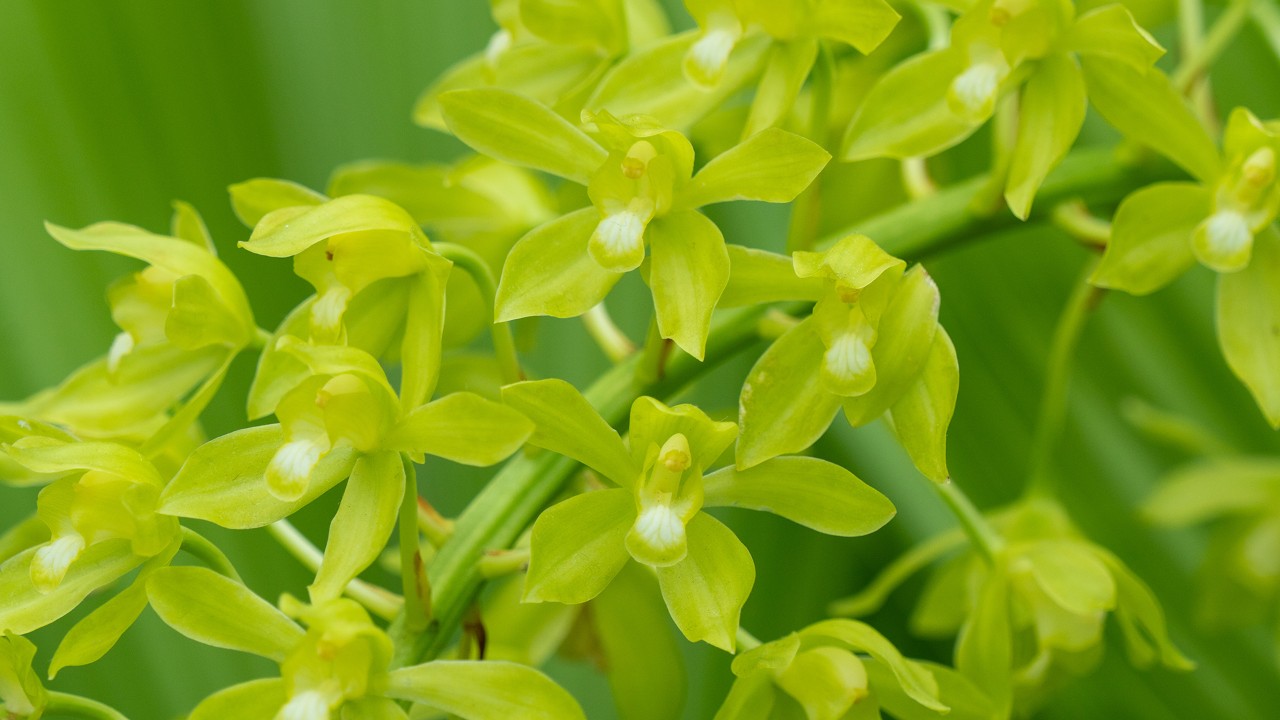
Grammatophyllum multiflorum var. multiflorum is an impressive tropical orchid belonging to the family Orchidaceae, one of the largest families of flowering plants with approximately 30,000 known species. It is part of the genus Grammatophyllum, which comprises only 13 species, including the famous tiger orchid (Grammatophyllum speciosum), widely recognised as the largest orchid species in the world by plant size and weight, with specimens reaching up to two tonnes and bearing stems up to 7.6m in length. Grammatophyllum multiflorum var. multiflorum is native to the Philippines, where it grows naturally in warm, humid tropical forests as a pseudobulbous epiphyte.
Like many members of the genus, G. multiflorum var. multiflorum grows primarily as an epiphyte, attaching itself to the trunks and branches of large trees. Rather than drawing nutrients from its host, it uses the tree solely for support while its thick, spreading roots absorb moisture, minerals, and organic matter from rainwater and decomposing debris. This growth habit allows the plant to occupy brighter positions within the forest canopy without competing for space on the forest floor.
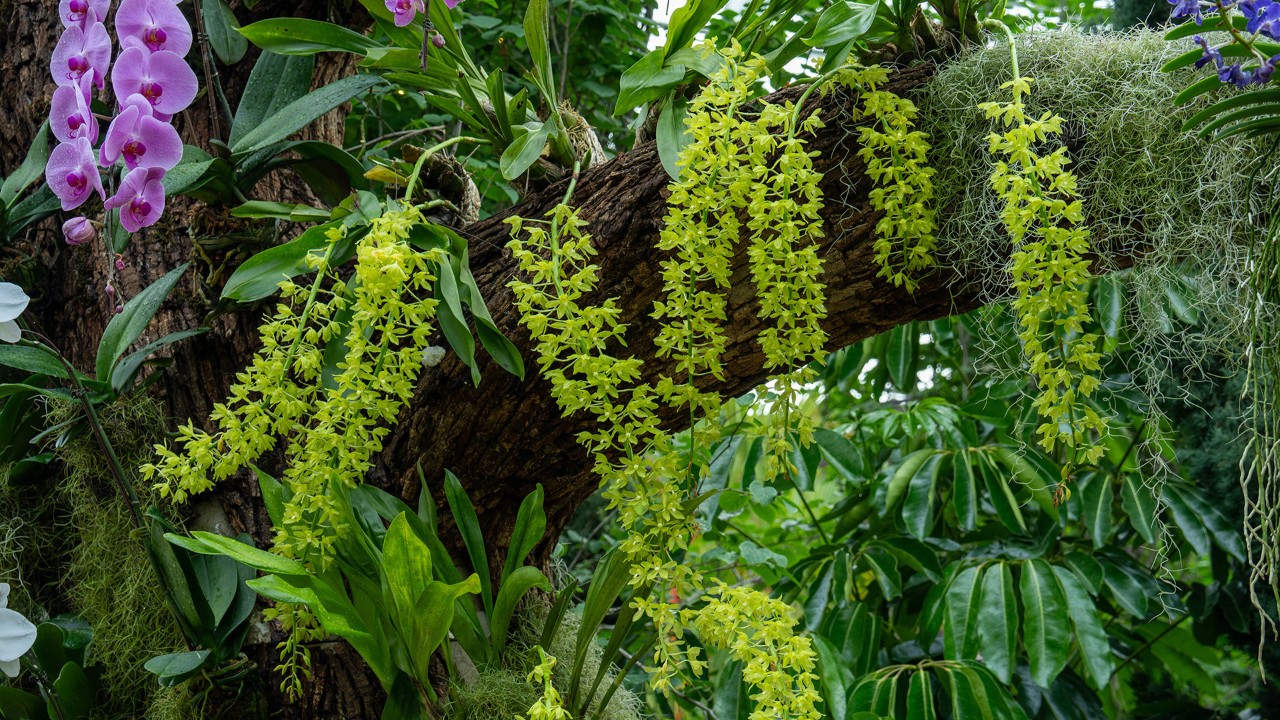 As an epiphyte - a plant that grows on the surface of other plants, Grammatophyllum multiflorum var. multiflorum naturally sprouts from windblown seed that finds a soft landing on moist tree trunks and branches. Here in our display, you can see it mounted on driftwood, replicating its natural habitat in tropical forests.
This large and heat-loving epiphytic orchid that develops pseudobulbs approximately 15 cm in length. Each mature pseudobulb supports about four thick, smooth, oblanceolate leaves with pointed tips, providing the plant with ample photosynthetic capacity. During late spring and summer, mature pseudobulbs produce long, arching inflorescences from their base, often reaching up to 1.5 metres in length. Each flower spike may bear over 100 blooms, creating a spectacular cascading display. Individual flowers measure approximately 5 cm across and are prized for their waxy texture and longevity.
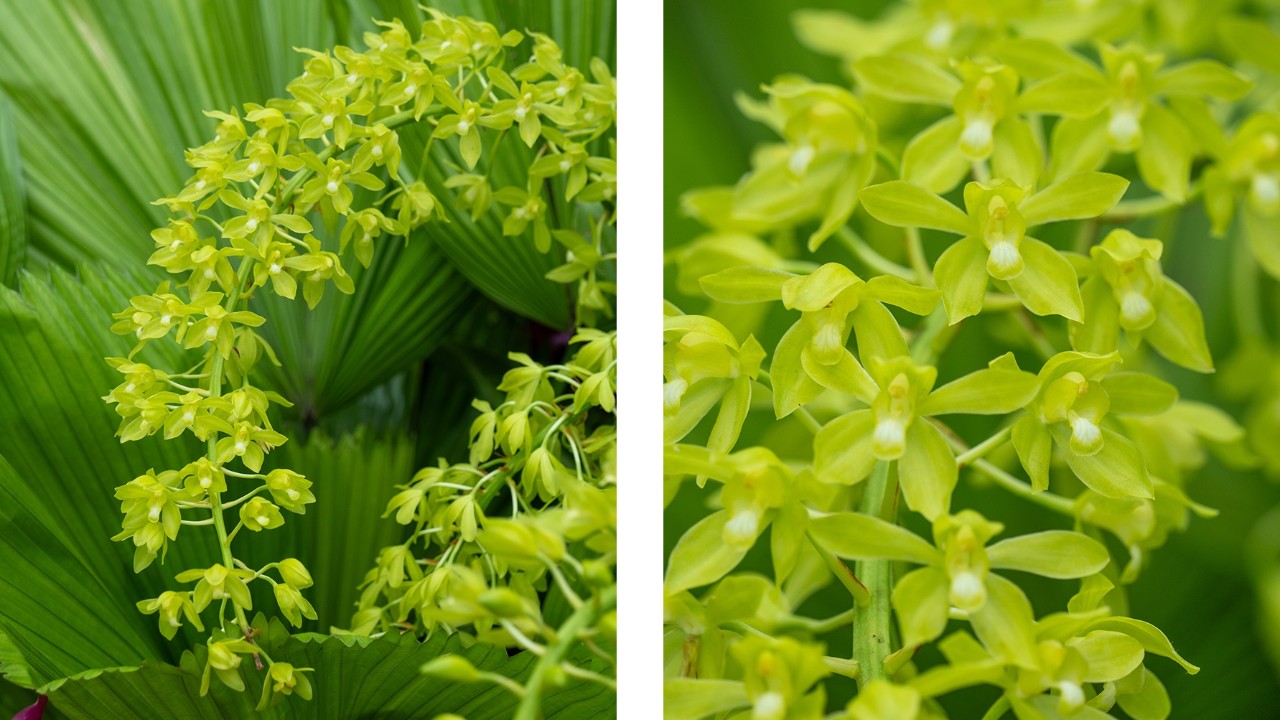 A single mature inflorescence may exceed 1.5 metres in length and support over 100 flowers, each measuring approximately 5 cm across. The sequential opening of the blooms ensures an extended display of flowers.
The defining feature of this variety lies in its unique flower colour. The more common form, Grammatophyllum multiflorum var. tigrinum, bears yellow flowers heavily marked with dark brown blotches, giving them a leopard-like appearance. In contrast, G. multiflorum var. multiflorum lacks these brown pigments, resulting in flowers of a uniform chartreuse-green colour. This uncommon colour variation, combined with its high flower count and long-lasting blooms, makes it all the more impressive!
However, in an interesting taxonomic twist, the rarer yellow form is considered to be the type variety of the species, so it bears the type variety designation of the species: Grammatophyllum multiflorum var. multiflorum. The more common brown and yellow variety of which the yellow variety is likely a mutation from has a different variety name: Grammatophyllum multiflorum var. tigrinum, for its brown markings!
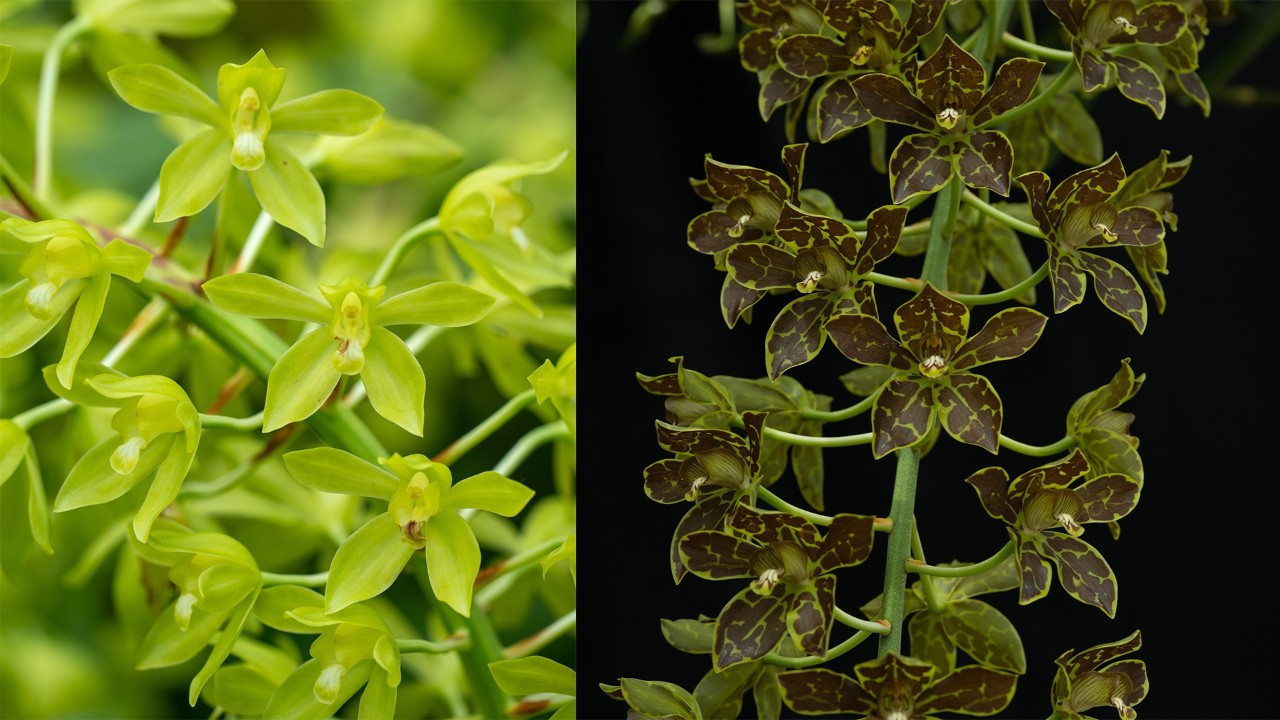 The flower of Grammatophyllum multiflorum var multiflorum exhibits an uncommon chartreuse colour form (L), characterised by the absence of reddish-brown pigmentation observed in Grammatophyllum multiflorum var tigrinum flowers (R).
Come check out this chartreuse beauty at the Orchid Extravaganza floral display at Flower Dome, from now till 10 August 2026!
Written by: Sharifah Osman, Senior Manager (Research and Horticulture)
As an avid flora photographer, Sharifah is consistently curious about the natural world that surrounds her. So much so that she eventually pursued a career in horticulture while dabbling in botanical art and photography during her free time.
This article is part of our What's Blooming series.
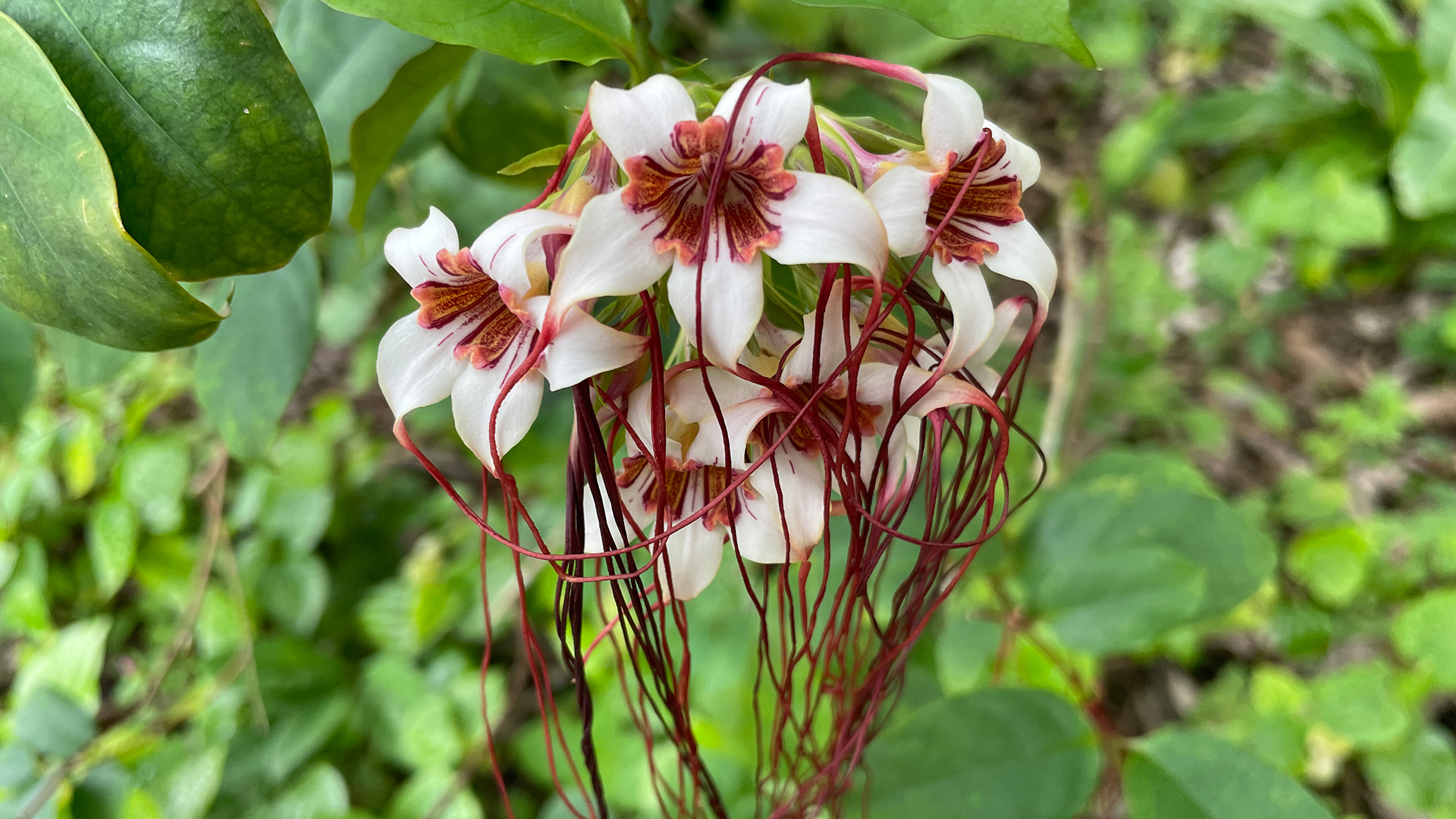
Read Next: Strophanthus preussii
If spiders had luxurious locks, might they look like this? With corolla tendrils up to 30cm long, it’s no surprise one of the common names for this plant is ‘spider tresses’!
You may also be
interested in
 Back To Top