 Closure of Floral Fantasy on 13 Oct 2026
Floral Fantasy will be closed on 13 Oct 2026 for Maintenance.
Closure of OCBC Skyway on 14 Oct 2026
OCBC Skyway will be closed on 14 Oct 2026 for maintenance.
Closure of Supertree Observatory on 15 Oct 2026
Supertree Observatory will be closed on 15 Oct 2026 for Maintenance.
Advisory for use of tripods at Disney Garden of Wonder at Floral Fantasy
For a better visiting experience and facilitate crowd movement, we seek your kind understanding that usage of tripods and camera stands will not be permitted in Floral Fantasy.
Bay South–Bay East Bridge Construction from 4 May 2026
To facilitate the construction of the bridge linking Bay South Garden and Bay East Garden, there will be no access for cyclists along the Waterfront Promenade from 4 May 2026. During the construction of the bridge, cyclists heading towards Marina Barrage are advised to take an alternative route around the perimeter of Bay South Garden. Pedestrians may still access the Waterfront Promenade, with a slight diversion to their route.
Click here to download the diversion map.

{{ suggestion.item }}
{{ noOfResults }} results found for "{{ submittedQuery }}"
Filter by
({{ currentFilters.length }})

Showing {{ searchResults.length }} out of {{ noOfResults }}
{{ result.category.label }}
We’re sorry. 0 results found for "{{ submittedQuery }}"
Try doing these:
- Check your spelling
- Try more general words
- Try different keywords
Lowland Breadfruit Fig (Ficus brusii)
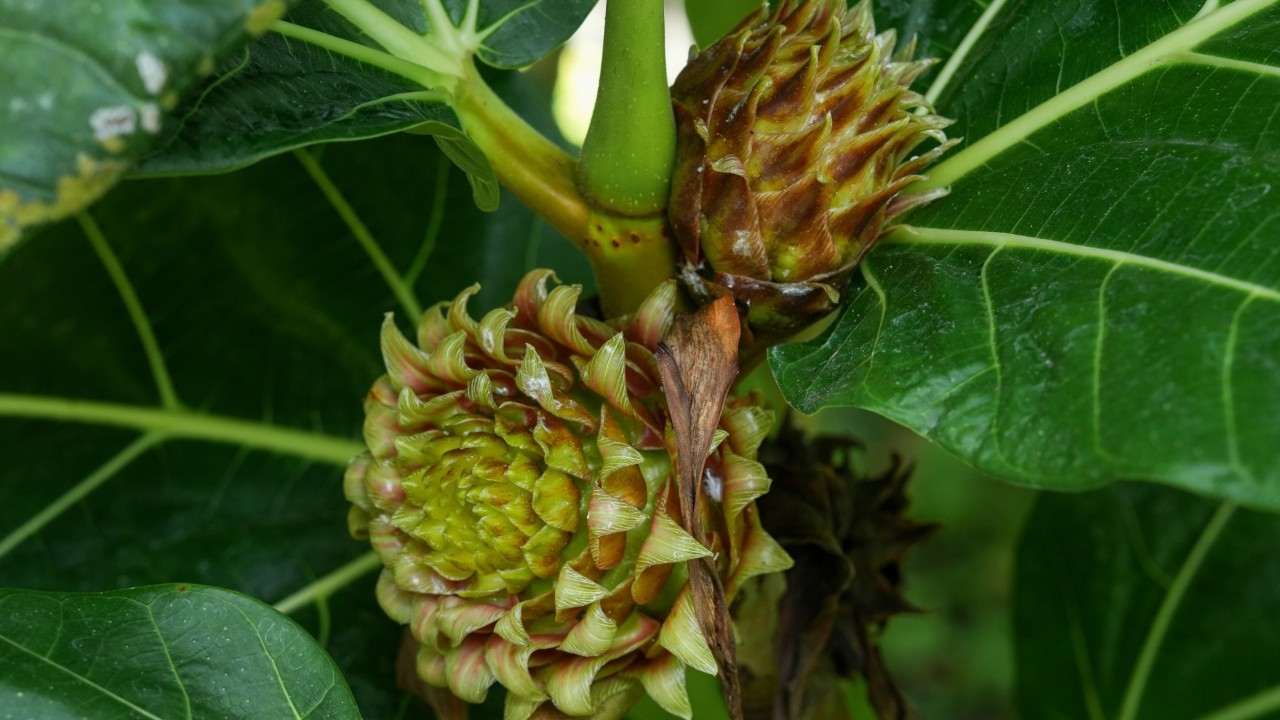
The lowland breadfruit fig (Ficus brusii) belongs to the diverse genus Ficus from the Mulberry family (Moraceae), which comprises over 900 species in the genus Ficus, out of a total 1318 species, including familiar fruits like mulberry (Morus spp.), jackfruit (Artocarpus heterophyllus), and breadfruit (Artocarpus altilis). The common fig, Ficus carica, is the most widely consumed and is native to the Mediterranean through central Asia and western Himalayas, but the genus shows its greatest diversity in Southeast Asia and Australasia. Species of Ficus occur in many forms, including large canopy trees, shrubs, climbers, vines, and epiphytes, and they play a crucial ecological role in tropical forests by providing habitats, food, and other resources for wildlife.
Ficus brusii is endemic to New Guinea, where it is typically found growing along streams and rivers in lowland rainforests within 900 metres above sea level and bears large leaves and big fruits up to 8.5cm in diameter. It was only recently described in 2019 and is a relative of Ficus dammaropsis – the highland breadfruit fig, a highland species occurring at greater elevations above 1200 metres that produces even larger fruits of up to 18cm in diameter – the largest fruit produced by a fig.
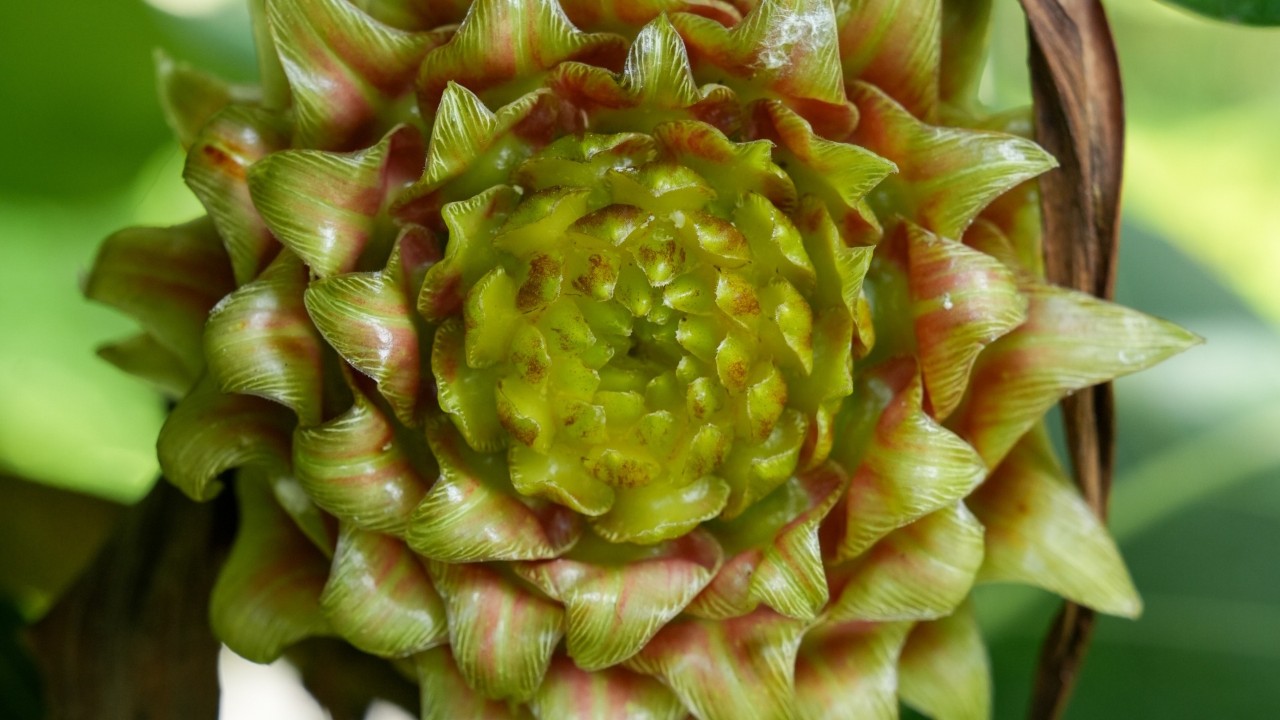 Closeup of the bottom of the syconium of the lowland breadfruit fig, showing the beautiful arrangement of its many outward curving bracts. Can you find the ostiole – a tiny opening for their pollinating species of fig wasp to enter into the syconium and pollinate its flowers – at the very centre of the bracts?
This species forms a small tree reaching up to approximately 13 metres in height. It is notable for its impressive foliage, with large, single leaves arranged spirally along the stems. The leaves may grow up to 80 cm long and 60 cm wide, giving the tree a bold and architectural appearance. When fully expanded, the leaf laminas are smooth and only weakly pleated, a feature that distinguishes it from its highland counterpart.
The fruits of Ficus brusii are particularly striking. Like all figs, what we call a “fruit” or “fig” is actually a syconium — a hollow, fleshy structure lined on the inside with numerous tiny flowers. These tiny flowers or florets are pollinated by a single species of female fig wasp (Ceratosolen abnormis) and develop into minute, hard-coated, single-seeded fruit which themselves look like seeds. The large, colourful syconia of Ficus brusii are densely covered in modified leaves called bracts, giving them the appearance of a giant flowers or cones. Ficus brusii, is distinguished from Ficus dammaropsis by its much smaller syconia bearing lateral bracts that are outward-bending (recurved), with sharply-pointed (acute) to long, tapering (acuminate) bract tips.
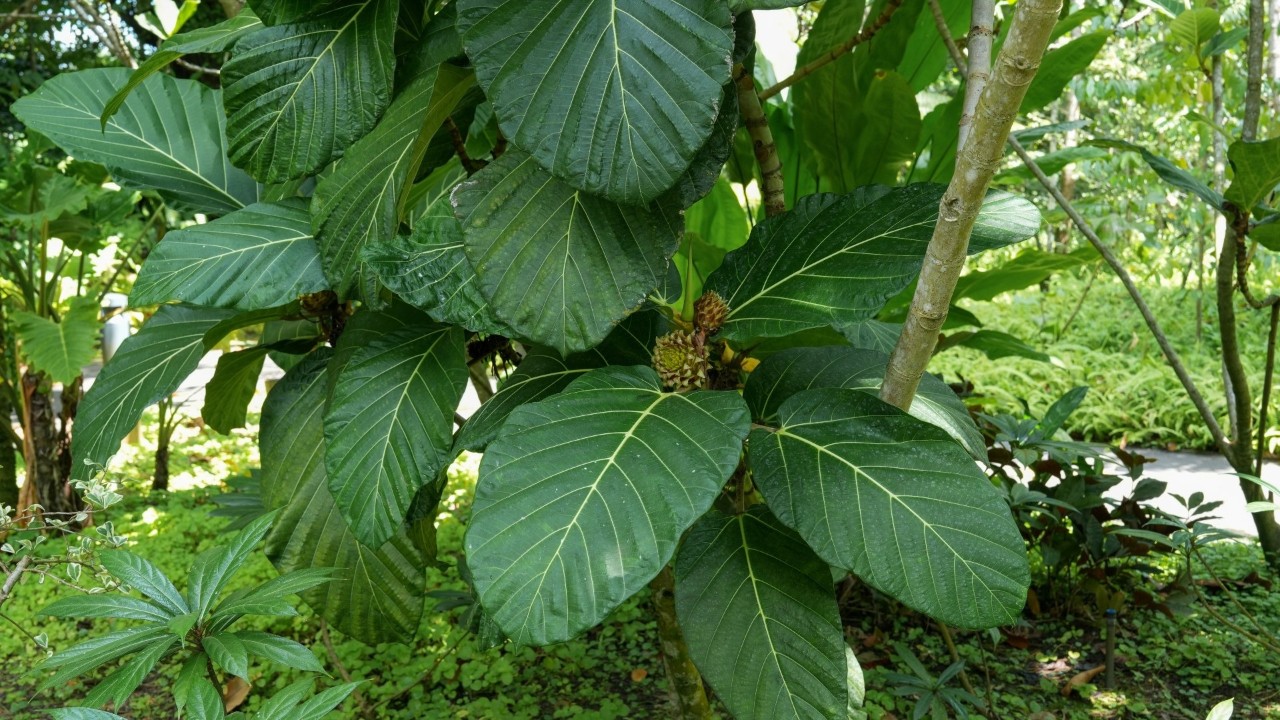 The leaves of Ficus brusii grow to an impressive size: up to 80cm in length and 60cm in width!
Ecologically, the lowland breadfruit fig supports a range of fruit-eating animals or frugivores that help disperse its seeds. While most of these animals bite into or remove figs from plants, some small birds and bats attracted to this species instead lap up the seed-filled gelatinous contents of mature syconia as they are extruded through the ostiole. This specialised feeding interaction highlights the important role of this fig species within lowland rainforest ecosystems. While the figs and seeds are not eaten, the people of New Guinea use their older leaves to wrap food for cooking and their young, tender leaves eaten as cooked greens.
Come check out this unique tree and its funky fruit at Web of Life planting among its other cousins in the Mulberry family, such as the small-fruited fig (Ficus microcarpa), breadnut (Artocarpus camansi) and terap (Artocarpus elasticus).
Written by: Sharifah Osman, Senior Manager (Research and Horticulture)
As an avid flora photographer, Sharifah is consistently curious about the natural world that surrounds her. So much so that she eventually pursued a career in horticulture while dabbling in botanical art and photography during her free time.
This article is part of our What's Blooming series.
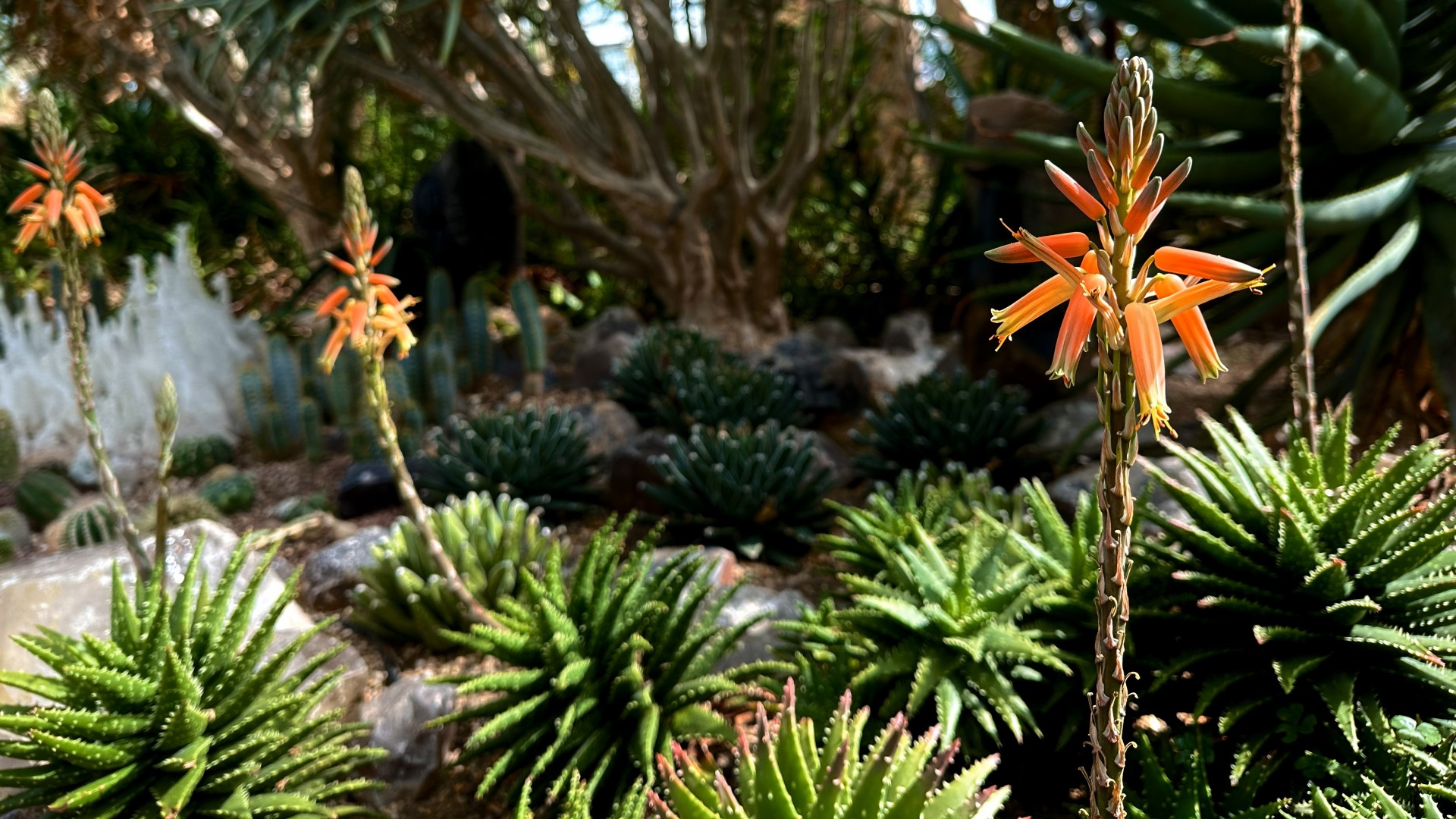
Read Next: Aloe 'Crosby’s Prolific'
Ready for the fireworks at Marina Bay on New Year's Eve? Before the countdown, how about coming to Gardens by the Bay to view these joyful floral fireworks in our Flower Dome?
You may also be
interested in
/1000x1000-thumb-deer-antlered%20phalaenopsis-01.jpg)
-/1000x1000-thumb-horned-tulip-01.jpg)
 Back To Top